.svg)
Gestiona los pedidos alineados con las restricciones reales de suministro
Ve más allá de un software de gestión de pedidos puramente ejecutivo. Alinea los compromisos de entrega, la priorización y las decisiones de cumplimiento con las previsiones de demanda, los objetivos de inventario y las restricciones de suministro.
Agenda una demo.svg)
Compromisos de pedido realistas
Promete solo lo que tu cadena de suministro puede realmente entregar.
.svg)
Promesas de pedido basadas en el suministro
Compromisos de entrega fiables
Prioriza los pedidos cuando el suministro está limitado
No todos los pedidos deben tratarse de la misma forma.
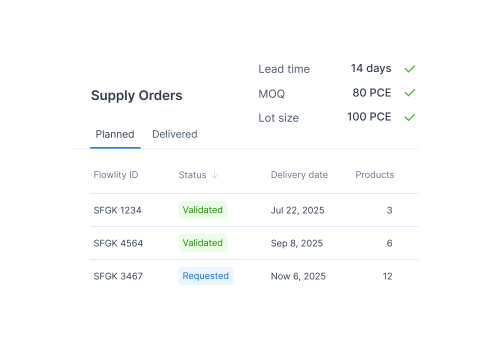
Priorización inteligente de pedidos
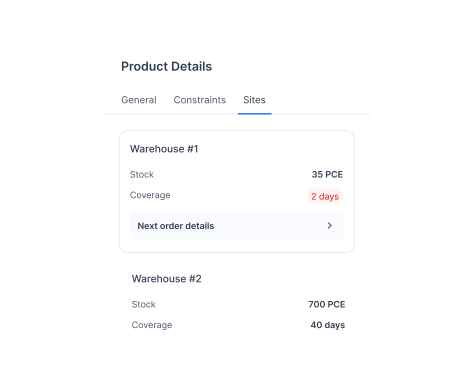
Gestión de desabastos y asignación de stock
Conecta la gestión de pedidos con la planificación de la cadena de suministro
Los pedidos no deben gestionarse de forma aislada.
.svg)
Pedidos alineados con los planes de demanda e inventario
.svg)
Gestión de pedidos orientada a la decisión
De un OMS centrado en la ejecución a una gestión de pedidos orientada al suministro


Una gestión de pedidos más inteligente empieza por una planificación más inteligente
Por qué la mayoría de los procesos de pedidos hacen perder tiempo a los planificadores

La mayoría de los equipos de Supply Chain conocen la sensación: decenas de pedidos de compra que revisar cada día, casi todos rutinarios, pero cada uno exigiendo una verificación manual antes de salir. La causa de fondo no es falta de disciplina: es que el sistema tradicional basado en ERP trata cada reaprovisionamiento de la misma forma, sea un restock estándar o un compromiso crítico durante una rotura.
Este enfoque único tiene un coste real. Los planificadores acaban sepultados bajo trabajo transaccional, revisando cantidades que podrían haberse validado de forma automática. Mientras tanto, los pedidos que sí necesitan atención (un proveedor que se retrasa, un pico de demanda sobre un producto clave, un riesgo de margen sobre un compromiso importante) reciben el mismo tratamiento apresurado que el resto. El problema no es el volumen de pedidos: es la incapacidad de distinguir lo que importa de lo que no.
Los equipos que ya han avanzado hacia la Supply Planning automatizada suelen descubrir que arreglar la capa de pedidos es el siguiente paso natural: una vez que tus previsiones y tus objetivos de stock son fiables, tiene poco sentido seguir procesando cada pedido a mano.
Para quién está diseñada la gestión de pedidos de proveedores de Flowlity
La gestión de pedidos de proveedores se vuelve estratégica cuando el volumen diario de órdenes de compra supera lo que los equipos de planificación pueden revisar manualmente. Flowlity está diseñado para compradores y planificadores de empresas mid-market en retail, distribución mayorista e industria manufacturera, que gestionan un amplio catálogo de referencias repartidas entre decenas de proveedores con plazos y fiabilidad heterogéneos. Encaja con Demand Planners y Supply Chain Managers responsables de mantener alineadas las previsiones de demanda, los niveles objetivo de stock y los compromisos de pedido, que ya no pueden permitirse validar cada línea manualmente. Acompaña también a directores de Supply Chain y COOs de empresas mid-market que quieren retomar el control del flujo de proveedores sin lanzar un proyecto de transformación pesado ni sustituir su ERP.
It fits Demand Planners and Supply Chain Managers responsible for keeping demand forecasts, target inventory levels and order commitments aligned, who can no longer afford to validate every line manually. It also supports Supply Chain directors and COOs in mid-market companies who want to regain control of the supplier flow without launching a heavy transformation project or replacing their ERP.
Los puntos de dolor son estructurales. Los equipos pasan sus días aprobando órdenes de compra rutinarias generadas por el ERP, sin jerarquía entre un reaprovisionamiento estándar y un compromiso crítico. Las promesas de entrega se apoyan en reglas de disponibilidad estáticas que ignoran el estado real del stock entrante. Cuando un proveedor falla, la asignación se hace caso por caso en una hoja de cálculo, al margen del sistema. Los planificadores siguen absorbidos por el trabajo transaccional en lugar de arbitrar excepciones de alto impacto. Una gestión moderna de pedidos de proveedores debe convertir estas situaciones en excepciones señaladas por la herramienta, no en la rutina diaria.
Qué buscar en una solución moderna de gestión de pedidos
Integración con la planificación
No todas las herramientas de pedidos son iguales. Algunas se centran únicamente en los flujos de bonos de compra (aprobaciones, enrutamiento, comunicación con proveedores) sin tocar la lógica que decide qué se pide y cuándo. Otras viven dentro del ERP y heredan su rigidez: puntos de pedido fijos, plazos estáticos, ninguna sensibilidad a lo que está pasando realmente en la demanda.
El verdadero diferenciador es si la solución conecta la gestión de pedidos Supply Chain con tu capa de planificación. ¿Puede integrar tus últimas previsiones de demanda al calcular las cantidades? ¿Ajusta la variabilidad de los plazos de proveedor? ¿Es capaz de incorporar tu lógica MRP o DRP en vez de trabajar en silo?
Escalabilidad
La escalabilidad también pesa. Muchas empresas mid-market en distribución mayorista o industria empiezan automatizando sus principales proveedores y pronto se dan cuenta de que necesitan la misma inteligencia sobre el portafolio completo. Una solución que exige meses de configuración por proveedor no aguantará el ritmo. Para el retail especialmente, donde la proliferación de SKU y las variaciones estacionales añaden presión constante, seguir buenas prácticas probadas para automatizar el Supply Chain retail puede marcar la diferencia entre escalar con fluidez o ahogarse en ajustes manuales.
Automatizar la rutina, centrarse en lo que cuenta
La mayor ganancia de productividad no viene de acelerar el procesamiento de pedidos: viene de eliminar el procesamiento innecesario. Cuando un reaprovisionamiento es directo (demanda estable, proveedor fiable, cantidad estándar), no hay razón para que un planificador pierda tiempo en él. Debería calcularse, validarse y enviarse de forma automática.
Lo que los planificadores realmente necesitan es un sistema que haga emerger únicamente las excepciones: un pedido cuyo compromiso supera un umbral de margen, un proveedor cuyo desempeño reciente sugiere un riesgo, un producto cuya demanda se ha desplazado de forma significativa desde el último plan. Ahí es donde el juicio humano genera valor, no en validar mecánicamente bonos de compra rutinarios.
Esa es la lógica del enfoque por excepciones. Plataformas como Flowlity utilizan agentes IA para gestionar el ciclo completo de los pedidos estándar y alertar sobre los pocos que merecen atención. El dashboard del planificador se convierte en una cabina de decisión, no en una cola de procesamiento.
Plum Living, marca de mobiliario que gestiona 630 SKU en dos almacenes, lo vivió en primera persona: tras sustituir la gestión manual basada en hojas de cálculo por Flowlity, redujo su stock un 21 % desde el arranque, y con el tiempo el valor de su inventario cayó un 38 %.
Pedidos que reflejan la realidad del Supply Chain
Uno de los problemas más frecuentes en la gestión tradicional de pedidos Supply Chain es que las cantidades de compra están desconectadas de la realidad operativa. Los puntos de pedido se fijaron hace seis meses. Los niveles de stock de seguridad no reflejan las variaciones recientes de demanda. Los plazos de proveedor del sistema no coinciden con lo que se ve en el terreno.
¿El resultado? Pedidos técnicamente "a tiempo" pero estratégicamente equivocados: demasiado de un producto, poco de otro, y un día a día apagando fuegos para cubrir los huecos. Como ha mostrado la investigación sobre la planificación y el reaprovisionamiento colaborativos, las organizaciones más eficaces son las que alinean ejecución y planificación, no las que las optimizan por separado.
Flowlity responde a esto generando cada pedido a partir de datos vivos: previsiones de demanda dirigidas por IA, niveles de stock de seguridad optimizados, visibilidad en tiempo real del stock en toda la red y distribuciones de plazos de proveedor. El pedido ya no se limita a salir: está bien dimensionado, bien posicionado en el tiempo y alineado con lo que tu Supply Chain puede realmente sostener.
Saint-Gobain Sekurit lo experimentó a gran escala: gestionando más de 10 000 referencias de vidrio para automoción en 30 centros de distribución y 3 plantas, mejoró la disponibilidad de producto del 95,8 % al 97,2 % a la vez que reducía el inventario un 9,25 %, porque cada pedido se apoyaba por fin en previsiones IA precisas en vez de en parámetros obsoletos.
Cómo Flowlity transforma la gestión de pedidos
Una gestión de pedidos pensada desde la planificación
Flowlity no añade simplemente una capa de pedidos sobre tu ERP: replantea el proceso desde la planificación. Los bonos de compra se generan desde la misma herramienta que produce tus previsiones de demanda y tus objetivos de stock, lo que garantiza que cada pedido sea coherente con tu estrategia Supply Chain global.
Rutina automatizada, excepciones señaladas
Para los reaprovisionamientos rutinarios, el ciclo está totalmente automatizado: Flowlity calcula la cantidad óptima, la valida contra tus reglas de negocio y la envía al proveedor. Los planificadores solo ven estos pedidos cuando salta una alerta. Para situaciones complejas (oferta restringida, compromisos de alto valor, lanzamientos de nuevos productos), el sistema presenta los arbitrajes en un dashboard claro para decidir con confianza.
Un impacto tangible
El impacto es concreto. Camif, pure player de e-commerce comprometido con el ecodiseño, absorbió un 44 % de crecimiento de su facturación sin añadir una sola persona a su equipo Supply Chain tras desplegar Flowlity. Las roturas de stock retrocedieron 6 puntos, liberando alrededor de 40 000 € de ingresos anuales adicionales, y el equipo ahorró el equivalente a un FTE solo en el procesamiento de pedidos. No se trata de sacar al planificador del proceso, sino de asegurar que su tiempo va donde realmente aporta valor.
Empezar sin lanzar un proyecto de transformación
Lo que frena a muchas empresas es el miedo a una implementación larga y compleja. Las plataformas de pedidos de gama alta suelen exigir meses de configuración, recursos de IT dedicados y una personalización profunda del ERP antes de generar el menor resultado.
Flowlity adopta un enfoque diferente. La plataforma se conecta a tu ERP existente (SAP, Oracle, Microsoft Dynamics, entre otros) y puede entrar en producción en semanas. No hace falta reemplazar tus sistemas actuales: Flowlity los acompaña, enriqueciendo tu proceso de pedidos con una inteligencia de planificación que tu ERP simplemente no tiene.
Eso lo hace especialmente adecuado para equipos mid-market que necesitan resultados rápidos. Tanto si eres un distribuidor mayorista gestionando miles de SKU como un industrial lidiando con redes complejas de proveedores, puedes arrancar con tus flujos más críticos y escalar progresivamente a tu propio ritmo.
Y una vez que los planificadores recuperan las horas que dedicaban a procesar pedidos rutinarios, pueden reinvertir ese tiempo donde realmente impulsa el rendimiento: mejorar las condiciones con proveedores, preparar los picos estacionales, gestionar las disrupciones de forma proactiva y contribuir a las discusiones S&OP con análisis concretos y respaldados por datos. Para las organizaciones que quieren pasar de una ejecución reactiva a una planificación proactiva pilotada por IA, optimizar la gestión Supply Chain y la gestión de pedidos es uno de los puntos de partida con mayor ROI, y con Flowlity, uno de los más rápidos de implantar.
FAQ
Find everything you need to know right here.
¿Qué es un software de gestión de pedidos a proveedores?
Un software de gestión de pedidos a proveedores es un sistema que automatiza y optimiza la creación, validación y seguimiento de las órdenes de compra enviadas a los proveedores. Cubre todo el ciclo de vida del pedido — desde el cálculo de las necesidades de reaprovisionamiento hasta el envío de las órdenes de compra y el seguimiento de las entregas. Las soluciones avanzadas van más allá de la gestión transaccional al conectar los pedidos con las previsiones de demanda, las políticas de inventario y la planificación de la Supply Chain para garantizar que cada pedido esté alineado con las necesidades reales del negocio.
¿Cuál es la diferencia entre gestión de pedidos y compras (procurement)?
El procurement cubre todo el proceso estratégico de búsqueda de proveedores, negociación y gestión de las relaciones con proveedores. La gestión de pedidos se centra específicamente en la capa de ejecución: generar órdenes de compra, hacer seguimiento del cumplimiento y gestionar excepciones. Mientras que el procurement determina a quién comprar y en qué condiciones, la gestión de pedidos determina cuándo, cuánto y con qué eficacia se ejecutan esos pedidos. Las plataformas modernas de Supply Chain integran ambos para asegurar que las estrategias de compra se reflejen en cada decisión de pedido.
Gestión de pedidos a proveedores vs. MRP tradicional: ¿cuál es la diferencia?
El MRP tradicional (Material Requirements Planning) calcula qué materiales se necesitan basándose en listas de materiales, programas de producción y niveles de inventario. Genera sugerencias de pedido, pero la lógica es determinista y no tiene en cuenta la variabilidad de la demanda, la fiabilidad de los proveedores o las posiciones de inventario en tiempo real en las distintas ubicaciones. Un software de gestión de pedidos a proveedores va más allá aplicando optimización impulsada por IA, automatizando pedidos rutinarios y señalando excepciones — transformando las necesidades brutas de materiales en decisiones de compra inteligentes y orientadas al aprovisionamiento.
¿Cuál es la diferencia entre la gestión de pedidos de aprovisionamiento y el order-to-cash?
El order-to-cash (O2C) cubre el lado de las ventas: desde la recepción de un pedido de cliente hasta la facturación y el cobro. La gestión de pedidos de aprovisionamiento se sitúa en el lado de las compras: gestiona las órdenes de compra enviadas a los proveedores para reponer inventario y satisfacer la demanda. Aunque ambos implican flujos de trabajo de pedidos, sirven a extremos opuestos de la Supply Chain. Las empresas necesitan ambos para funcionar correctamente, pero la inteligencia de planificación requerida en el lado del aprovisionamiento — conectar pedidos con previsiones, stocks de seguridad y restricciones de proveedores — es fundamentalmente diferente de la optimización de los procesos O2C.
¿Cómo automatiza Flowlity la gestión de pedidos a proveedores?
Flowlity utiliza IA para generar órdenes de compra óptimas basadas en previsiones de demanda, objetivos de inventario y datos de plazos de entrega de proveedores. Los pedidos de reaprovisionamiento rutinarios se calculan, validan y envían automáticamente — sin revisión manual. Los pedidos que superan umbrales definidos (impacto en margen, riesgo de aprovisionamiento, anomalías de volumen) se señalan como excepciones para revisión del planificador. Esta automatización cubre el ciclo completo desde la sugerencia de pedido hasta el envío al proveedor, permitiendo a los planificadores centrarse únicamente en las decisiones que requieren experiencia humana.
¿Puede Flowlity conectar la gestión de pedidos con la previsión de demanda?
Sí — es un diferenciador clave. A diferencia de las herramientas de gestión de pedidos autónomas que se basan en puntos de pedido estáticos, Flowlity conecta cada orden de compra con sus previsiones de demanda impulsadas por IA y su motor de optimización de inventario. Esto significa que las cantidades y el timing de los pedidos reflejan la demanda realmente esperada, los niveles de confianza de las previsiones y los objetivos de stock de seguridad en lugar de reglas fijas establecidas hace meses. El resultado: pedidos sistemáticamente bien dimensionados, reduciendo tanto las roturas de stock como el exceso de inventario.
¿Qué tipos de empresas se benefician más de la gestión de pedidos a proveedores con IA?
La gestión de pedidos a proveedores impulsada por IA genera el mayor impacto en empresas mid-market de retail, distribución mayorista y manufactura que gestionan un gran número de referencias con múltiples proveedores. Estas organizaciones suelen contar con equipos de planificación reducidos que dedican demasiado tiempo a pedidos rutinarios, dejando poca capacidad para el trabajo estratégico. Las empresas que gestionan demanda estacional, plazos de entrega largos o variables, o reaprovisionamiento multi-ubicación complejo obtienen resultados particularmente sólidos — logrando a menudo reducciones significativas de inventario mientras mejoran los niveles de servicio.