.svg)
.svg)
Camif


Digital transformation in Supply Chain replaces fragmented spreadsheets with a single AI-powered planning model. Camif, a French sustainable furniture retailer, modernized its Supply Chain by adopting probabilistic forecasting and dynamic inventory optimization. This case study shows how the team gained control over stock, lead times, and service in a complex, multi-supplier catalogue.
Digital transformation in supply chain is often discussed in abstract terms — AI, automation, predictive analytics, resilience. But what does it actually look like inside a retail organization facing real growth, real volatility, and real operational pressure?
This page explores a concrete retail supply chain digital transformation case study: Camif, a sustainable furniture e-commerce player that redesigned its planning and procurement processes to absorb 44% growth without increasing headcount.
Beyond the transformation story itself, this case reveals strategic insights that any retail or e-commerce supply chain leader can apply.
What digital transformation in Supply Chain really means
Digital transformation in supply chain is not simply the implementation of new software. It is the structural redesign of how decisions are made.
In traditional retail supply chains, planning is often:
- Spreadsheet-driven
- Based on historical averages
- Highly manual
- Reactive to disruptions
Digital supply chain transformation replaces static planning with dynamic, data-driven decision systems. It enables organizations to anticipate variability instead of reacting to it.
The goal is not technological sophistication for its own sake. The goal is operational control in an uncertain environment.
In retail especially, where SKU counts are high and margins are thin, this shift becomes strategic rather than operational.
Why DTC sustainable furniture brands need a new planning model
Sustainable furniture e-commerce sits at the crossroads of three sectoral pressures. First, rapid demand growth driven by the home interior boom and the shift to online retail: catalogue references and supplier counts both rise faster than planning teams can scale. Second, supply complexity tied to a fragmented, often artisan supplier base, which means lead times vary widely SKU by SKU. Third, rising sustainability expectations that translate directly into stock and shipment decisions: split shipments, overstock, and unnecessary warehouse space all carry a measurable carbon cost. In this environment, planning errors are doubly penalizing: a stockout means a lost sale and a brand promise broken, while overstock locks cash and adds emissions. Mid-sized retailers like Camif sit in the most exposed zone, big enough to need data-driven planning, small enough that the existing operations team cannot absorb that complexity manually.
Camif’s context: growth exposing structural limits
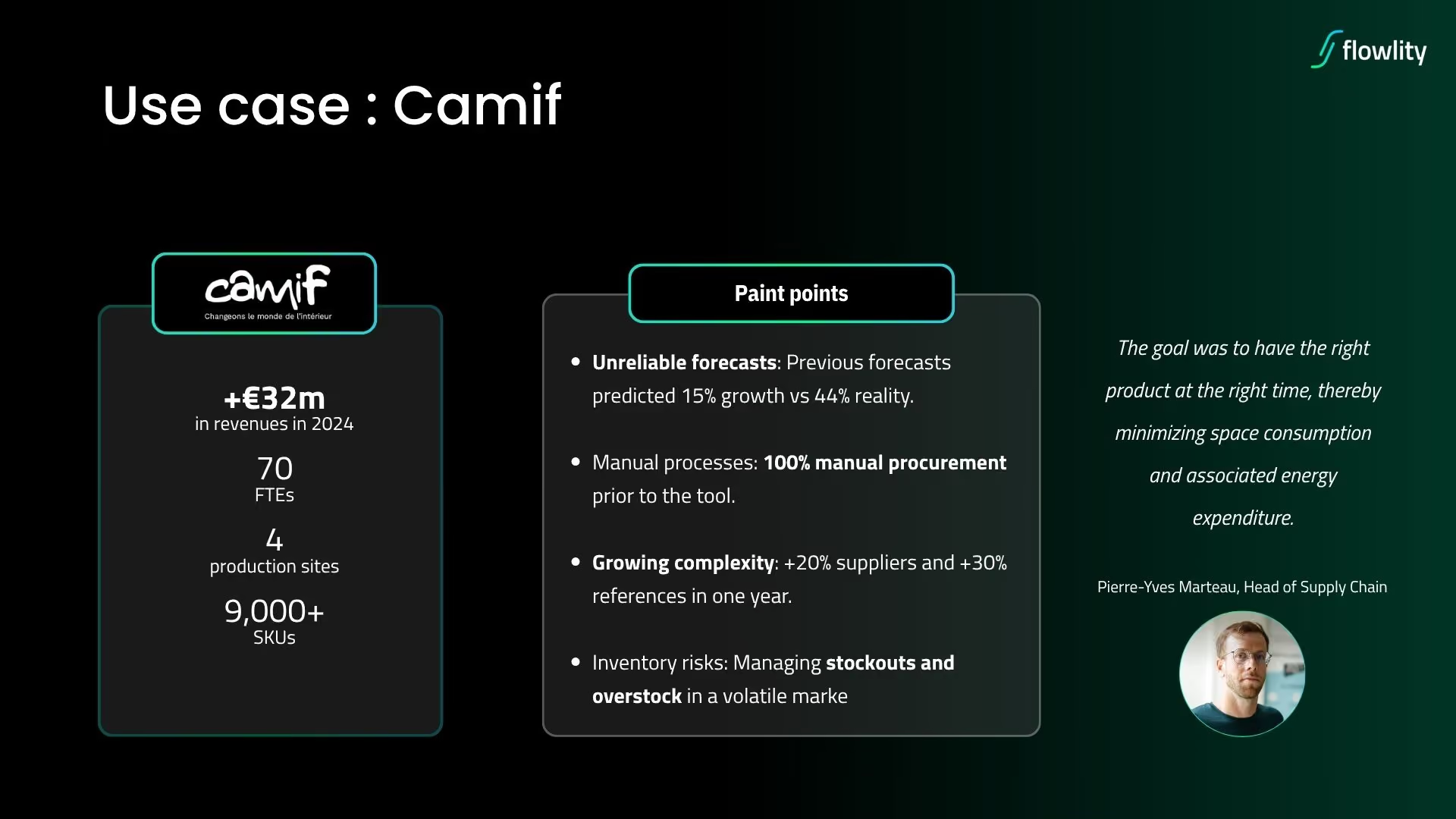
Camif operates in sustainable furniture e-commerce. In 2020, the company experienced 44% growth, while forecasts had anticipated only 15%.
This gap revealed a structural issue: the planning process was not built to handle acceleration.
“The process, previously 100% manual, based on budgetary assumptions, historical sales and planner intuition, was no longer compatible with growth and the ambitions of the e-commerce business.” Pierre-Yves Marteau, Head of Supply Chain at Camif
At the same time, complexity was rising sharply:
- Supplier count increased by 20% in one year
- Product references increased by 30%
- Demand volatility intensified due to the pandemic
Retail growth, combined with supply tension, created a perfect storm. Without structural change, scaling would have required either massive hiring or acceptance of operational fragility.
Camif chose transformation instead.
The strategic objective: control, not just automation
The objective was not merely to digitize for modernization purposes. Camif was looking for sharper demand anticipation and a more structured supply base, with the end-to-end visibility needed to cut stock disruptions and stay synchronized with its supplier network.
In parallel, a core ambition: “Have the right product at the right time, thereby minimizing space consumption and associated energy expenditure.”
This statement is important. It connects operational excellence with sustainability — a defining theme of modern retail supply chains.
Digital transformation was therefore positioned as a lever for both efficiency and responsible growth.
From manual procurement to AI-driven planning
After a 3-month proof of concept (POC), Camif deployed Flowlity's planning and supply chain optimization solution across four sites.
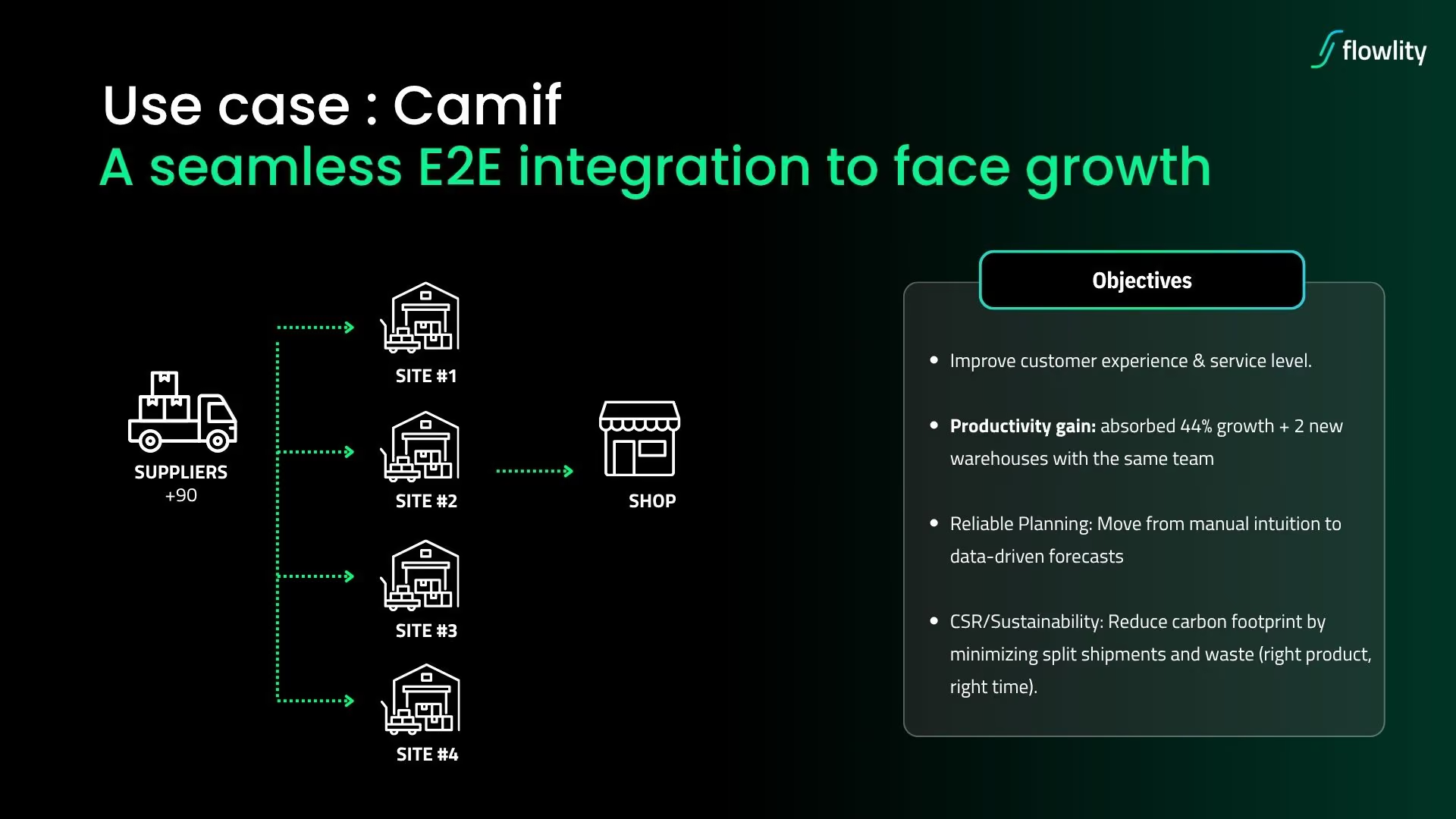
Before transformation, procurement decisions were fully manual. Planners relied on spreadsheets and intuition. This approach worked at smaller scale but became fragile under volatility.
The digital transformation introduced structured demand forecasting and automated replenishment logic, connected end to end across the four sites and extended to supplier synchronization.
By 2021, 60% of order flows were already piloted via the solution, demonstrating rapid adoption.
Importantly, the transformation did not replace planners. It redefined their role. Instead of spending time calculating quantities manually, teams focused on exception management and strategic alignment.
This shift illustrates a critical principle of digital transformation in supply chain:
Technology should elevate decision-making, not overwhelm it.
Managing crisis and volatility through digitalization
The transformation occurred during one of the most unstable supply environments in recent history.
“The pandemic caused a surge in sales that was not necessarily sustainable in the coming years. We had to work on forecasting and integrate this exceptional event into our algorithms.”
Additionally:
“Supply tensions in 2020 (supplier shutdowns) and in 2021 (raw material shortages) disrupted stock optimization.”
This context matters.
Digital transformation was not executed in a stable environment. It was executed during systemic uncertainty.
This reinforces a broader insight: supply chain resilience is not a theoretical benefit of digital transformation — it is a practical one.
Measurable results: performance gains beyond technology
Transformation only becomes strategic when it delivers measurable results. Camif achieved:
- Improved Supply Chain visibility and better demand anticipation
- Structured procurement processes
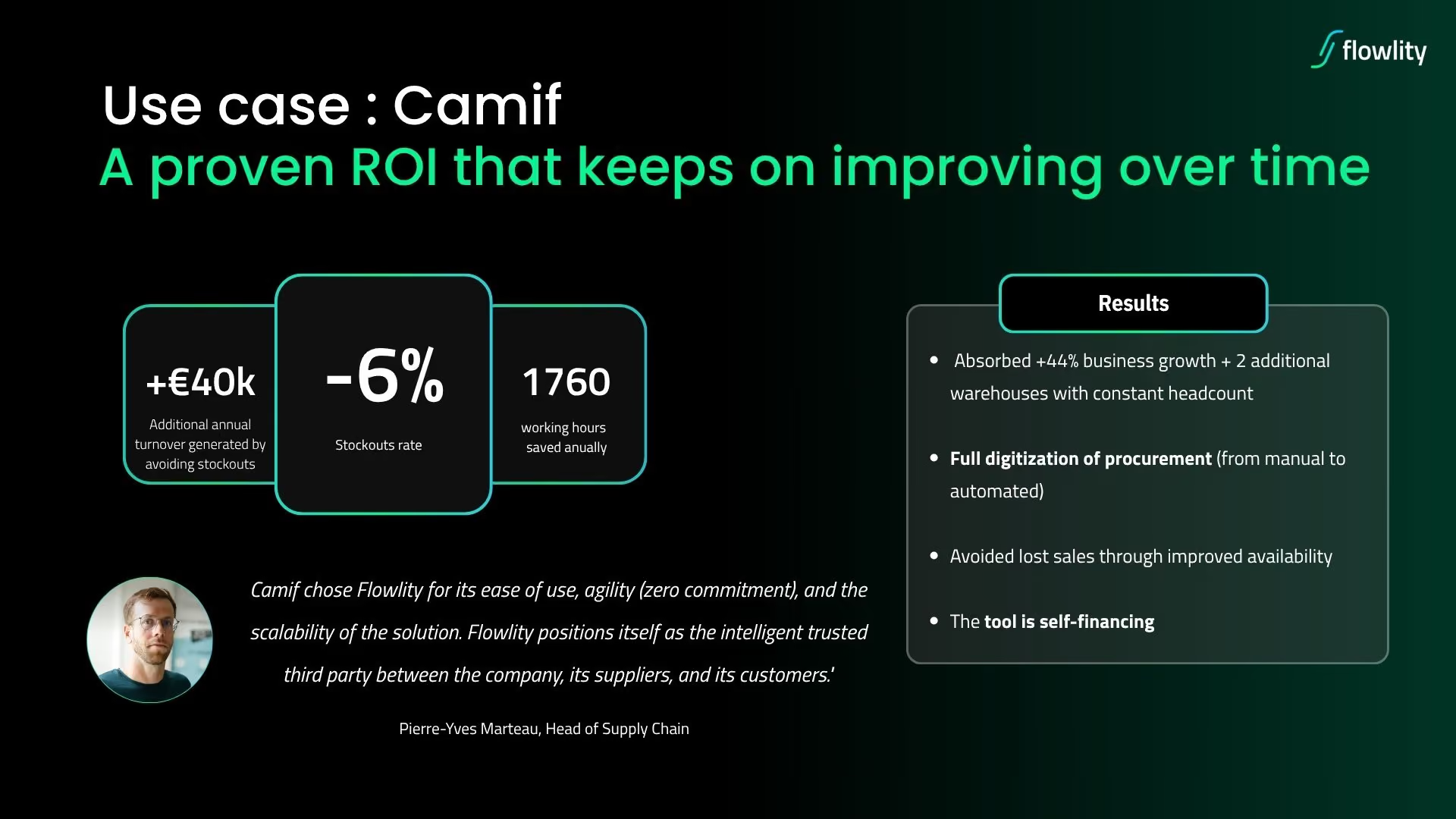
- Increased team efficiency: 44% growth and 2 additional warehouses managed with equal capacity since the implementation of Flowlity (estimated gain of 1 FTE).
In practical terms, Camif absorbed significant business expansion without increasing operational workforce proportionally. The ROI is proven, with a 6-point reduction in stockouts and additional turnover generated by avoiding stock disruptions (estimated €40k impact). Those results make the tool "self-financing"
The financial implication is clear: digital transformation can generate revenue protection while improving efficiency.
This is a critical narrative for CFO-level discussions.
Strategic takeaways for retail Supply Chain leaders
The Camif case offers lessons that extend beyond one company.
1. Growth is a stress test for planning systems
Many supply chains appear stable until growth accelerates. When volumes increase and complexity rises, manual processes collapse under cognitive overload. If your planning process is still heavily spreadsheet-based, growth will expose its fragility.
Digital transformation should precede scaling — not follow crisis.
2. Visibility precedes optimization
Camif emphasized improved visibility as a first benefit. Without shared, reliable data across sites and suppliers, optimization efforts remain theoretical.
Digital supply chain transformation first creates a unified view of stock and demand. Only then can intelligent decision-making follow.
3. Automation enables strategic focus
The estimated 1 FTE gain does not simply represent cost savings. It represents freed capacity. Teams can dedicate more time to:
- Supplier collaboration
- Portfolio rationalization
- Risk mitigation
- Sustainability initiatives
Automation reduces operational noise, allowing strategic thinking.
4. Resilience is a competitive advantage
In a post-COVID environment, fragilities are more visible than ever.
“In a post-COVID context where supply chain fragilities have appeared stronger and more present than ever, this project makes Camif an innovative company more than ever in tune with the times.”
Retailers that build dynamic planning capabilities gain structural resilience.
This is not incremental improvement — it is competitive differentiation.
5. Sustainability and efficiency are aligned
Camif’s objective to minimize space consumption and energy expenditure shows how digitalization supports environmental performance. Optimized inventory reduces:
- Overstock waste
- Emergency shipments
- Excess storage
Digital transformation in supply chain can therefore serve both financial and ESG goals.
Broader implications for retail Supply Chains
Retail supply chains are entering a permanent state of volatility. Demand is less predictable. Supply networks are more fragile. Customers are less tolerant of stockouts. In this environment, traditional deterministic planning systems create structural risk. Digital supply chain transformation introduces:
- Probabilistic forecasting
- Continuous recalibration
- Automated replenishment
- Network synchronization
- Real-time visibility
The Camif case demonstrates that such transformation is achievable even for mid-sized retailers — not only global conglomerates.
This democratization of advanced planning tools changes the competitive landscape.
How to begin your own Supply Chain digital transformation
If you are evaluating your own transformation journey, start by asking:
- How much of our procurement is manual?
- How much time do planners spend adjusting spreadsheets?
- Can we absorb 30–40% growth without hiring?
- How visible is our stock across sites and suppliers?
- Do we measure stockouts in financial terms?
Transformation does not start with technology. It starts with recognizing structural limits. From there, prioritize solutions that:
- Integrate quickly
- Provide probabilistic forecasting
- Automate routine decisions
- Enhance collaboration
- Deliver measurable ROI
Digital transformation should strengthen your organization — not overwhelm it.
From case study to strategic blueprint
This retail supply chain digital transformation case study demonstrates that digitalization is not theoretical.
Camif moved from 100% manual procurement to automated planning, absorbed 44% growth, reduced stockouts, and improved visibility — all during one of the most volatile periods in recent history.
The lesson is not about technology adoption. It is about regaining control.
Retailers that embrace digital transformation in supply chain gain:
- Scalability
- Resilience
- Efficiency
- Sustainability alignment
- Strategic clarity
Those that delay risk being trapped in reactive firefighting cycles.
Level up your supply chain with AI.
Get a demo
.avif)

FAQ
Find everything you need to know right here.
Why does Camif describe its Flowlity project as self-financing?

Camif describes the Flowlity tool as self-financing because the project generates enough operational savings, in fewer stockouts, lower inventory exposure, and freed planner time, to cover its own cost within the first year of use. The combination of avoided lost sales (€40k annual revenue protected) and 1 FTE worth of freed time (1,760 hours per year, valued at the loaded cost of a planner) more than offsets the platform investment. The self-financing framing matters strategically because it changes how the CFO evaluates the project: instead of a software cost competing with other investments, it becomes a budget-neutral operational improvement that also delivers strategic gains. The framework is reproducible: any retailer with manual procurement, recurring stockouts, and a planning team stretched by growth has the same value levers available. The first-year payback is also what makes the project feasible for mid-market retailers like Camif, where multi-year ROI commitments are harder to defend. For Camif specifically, this economic profile was a key selection criterion alongside ease of use, agility, and scalability.
How did Camif reduce stockouts by 6 points with Flowlity?
The new system gave Camif's planners SKU-level forecasts, automated replenishment recommendations, and shared visibility with the ~90 suppliers, replacing budget-driven assumptions with probabilistic demand signals. The 6-point reduction in stockouts translated into roughly €40k of additional annual revenue protected from lost sales, which on its own contributes to the tool being self-financing. The mechanism is granular: each stockout that the AI prevented represented either a sale that would have been lost, a customer who would have bought from a competitor, or a brand experience that would have been broken. Aggregated across 9,000+ SKUs and 4 production sites, the cumulative effect is meaningful even though no single SKU shows a dramatic shift. The 6-point gain also reduced operational firefighting: every stockout in the old system triggered emergency procurement, accelerated shipping, and customer service escalations. Eliminating those events freed time across multiple teams beyond just planning, which compounds the productivity gain measured in the 1,760 hours saved annually.
How quickly did Camif go live with Flowlity?
Camif ran a 3-month proof of concept in 2020 and went into production in January 2021. The deployment itself lasted three months, with a dedicated Customer Success Manager handling the weekly follow-up on the Flowlity side. From Q2 2021, the project entered an expansion phase focused on supplier synchronization, with a pilot supplier portal launched alongside Première Impression, Tiksoja and Cofel. By the end of 2021, 60% of Camif's flows were already piloted via Flowlity, with the target moving to 70% by the end of 2022. Similar phased rollouts have been documented in other DTC retail cases like Plum Living's machine learning rollout.
How does Camif's planning support sustainability goals?
Camif's stated objective for the Flowlity project explicitly connected operational efficiency with sustainability: have the right product at the right time, thereby minimizing space consumption and associated energy expenditure. This framing appears alongside Camif's CSR objectives, which list reducing carbon footprint by minimizing split shipments and waste among the goals of the digital transformation. For a sustainable furniture e-commerce retailer where eco-design and made-in-France/Europe sourcing are core brand promises, AI-powered Supply Chain planning becomes a lever for both operational efficiency and responsible growth.
How did Camif absorb +44% growth without hiring more planners?
By moving procurement from 100% manual to data-driven planning across its 4 production sites. Camif freed roughly one FTE worth of planner time (around 1,760 hours per year) and managed +44% growth plus 2 additional warehouses with the same team. The previous process, based on budgetary assumptions, historical sales and planner intuition, was no longer compatible with the company's growth and e-commerce ambitions, as the 2021 Rois de la Supply Chain submission states. Automating this workload is what allowed Camif to scale without proportional headcount.
Why did Camif start a Supply Chain digital transformation in 2020?
Camif, a French sustainable furniture e-commerce retailer with around €32 million in revenue (2024), 70 employees, 4 production sites, and 9,000+ SKUs, experienced 44% growth in 2020 while forecasts had anticipated only 15%. This gap revealed a structural issue: the planning process was not built for acceleration. The procurement process was 100% manual, based on budgetary assumptions, historical sales, and a bit of planner intuition, which was no longer compatible with the growth and ambition of the e-commerce business. At the same time, complexity was rising sharply: supplier count increased 20% in one year, product references increased 30%, and demand volatility intensified due to the pandemic. Retail growth combined with supply tension created a perfect storm: without structural change, scaling would have required either massive hiring or acceptance of operational fragility. Camif chose transformation instead, partnering with Flowlity after a 3-month proof of concept and going into production in January 2021.