.svg)
Vos décisions Supply Chain réunies en un seul tableau de bord
Une vision exhaustive et en temps réelle de votre Supply Chain ?Concentrez-vous sur l’essentiel et prenez rapidement des décisions éclairées grâce au tableau de bord Supply Chain et aux fonctionnalités analytics IA de Flowlity.
Demander une démoUne visibilité maximale sur l’ensemble de votreSupply Chain
Fini les données fragmentées et les zones d’ombre
Une visibilité sur l’entièreté de votre Supply Chain
.svg)
Source unique de vérité
Concentrez-vous sur ce qui nécessite réellement une action
Moins de bruit. Plus de clarté.
.svg)
Indicateurs orientés action
Vues par exceptions
Anticipez les problèmes et prenez de meilleures décisions, plus rapidement
Passez d'un suivi réactif à une prise de décision proactive.
.svg)
Insights prédictifs
.svg)
Tableau de bord d’aide à la décision
Du reporting classique au cockpit de décision


Comment obtenir une visibilité en temps réel sur vos opérations ?
En savoir plus sur les tableaux de bord et l'analytics Supply Chain
Pourquoi les équipes Supply Chain ont besoin d'un tableau de bord unifié

Aujourd'hui, les responsables Supply Chain font face à un défi croissant : les décisions doivent être prises plus vite, alors que les données opérationnelles n'ont jamais été aussi fragmentées.
Signaux de demande, niveaux de stock, performance des fournisseurs, contraintes logistiques et indicateurs financiers résident souvent dans des systèmes distincts. Les rapports ERP, les fichiers Excel et les tableaux de bord décisionnels n'apportent que des informations partielles, rarement la visibilité de bout en bout indispensable au pilotage d'une Supply Chain moderne.
Un tableau de bord Supply Chain unifié résout ce problème en regroupant les données opérationnelles au sein d'une interface de décision unique. Plutôt que de passer des heures à rassembler l'information depuis plusieurs outils, les planificateurs obtiennent une vue d'ensemble claire de ce qui se passe sur tout le réseau.
Plus important encore, les tableaux de bord modernes vont bien au-delà du simple reporting. Associés à l'analytics prédictive et à l'IA, ils aident les équipes à anticiper les ruptures, à identifier les risques plus tôt et à prioriser les actions à plus fort impact opérationnel.
Des plateformes comme Flowlity réunissent des processus de planification clés comme la prévision de la demande, la gestion des stocks, le Supply Planning et bien d'autres, permettant aux entreprises de passer d'un suivi réactif à une prise de décision proactive.
Pourquoi les tableaux de bord traditionnels ne suffisent plus pour piloter la Supply Chain
Beaucoup d'entreprises pensent disposer déjà de tableaux de bord parce que leur ERP ou leurs outils de Business Intelligence génèrent des rapports. En pratique, ces tableaux de bord peinent souvent à soutenir les décisions opérationnelles.
Le principal problème tient à la façon dont les données Supply Chain sont structurées et exploitées. Les tableaux de bord traditionnels souffrent généralement de trois limites majeures :
Des sources de données fragmentées
Les données opérationnelles sont éparpillées entre les ERP, les plateformes d'entrepôt, les outils d'achat et les fichiers Excel, ce qui rend difficile l'obtention d'une vue complète de la Supply Chain.
Un reporting statique
La plupart des tableaux de bord se concentrent sur des indicateurs historiques au lieu d'anticiper les risques à venir.
La surcharge d'informations
Lorsque des dizaines de KPI s'affichent simultanément, les planificateurs ont du mal à identifier les problèmes qui exigent réellement une action.
Résultat : les équipes reviennent souvent à l'analyse manuelle. Les planificateurs consacrent un temps précieux à éplucher des rapports au lieu de se concentrer sur les décisions stratégiques.
Les plateformes Supply Chain modernes répondent à ce problème en introduisant des tableaux de bord par exception, où l'analytics met automatiquement en évidence les situations qui nécessitent une attention.
L'automatisation joue également un rôle clé. En combinant alertes, analytics prédictive et outils de planification, les tableaux de bord intelligents réduisent drastiquement l'analyse manuelle et améliorent la réactivité.
À qui s'adresse le logiciel de tableau de bord Supply Chain de Flowlity ?
Un tableau de bord ne devient opérationnel que lorsqu'il sert de vraies décisions, et pas seulement le reporting. Le tableau de bord Supply Chain de Flowlity est conçu pour les directeurs Supply Chain et les COO qui ont besoin d'une vue unique et fiable sur la demande, les stocks, l'approvisionnement et le service, sans avoir à extraire les données de cinq outils chaque lundi matin. Il convient aux responsables S&OP et aux contrôleurs des opérations qui animent des revues transverses où chaque équipe arrive avec sa propre version de la vérité. Et il accompagne les demand planners et les gestionnaires de stocks du retail, de la distribution et de l'industrie qui doivent repérer les risques émergents (couverture de stock qui se dégrade, écarts de demande, retards fournisseurs) avant qu'ils ne deviennent des problèmes de taux de service.
Les difficultés sont bien connues : des données opérationnelles dispersées entre l'ERP, le WMS, les outils de BI et les fichiers Excel, sans source de vérité partagée ; un reporting historique qui indique ce qui s'est passé le mois dernier mais pas ce qui va se rompre la semaine prochaine ; des dizaines de KPI qui se disputent l'attention sans signal clair sur ceux qui exigent réellement une action ; et des planificateurs qui passent des heures à construire des rapports ad hoc au lieu de décider. Un véritable tableau de bord Supply Chain inverse ce rapport.
Comment Flowlity offre une visibilité Supply Chain en temps réel
Les modules Dashboard et Analytics de Flowlity sont conçus pour offrir aux équipes Supply Chain une vue d'ensemble immédiate et fiable de leurs opérations.
L'onglet Dashboard de Flowlity
Dès l'ouverture de Flowlity, le Dashboard fait office de tableau de bord central de la plateforme. Il synthétise les indicateurs opérationnels les plus importants pour que les planificateurs évaluent rapidement la santé de la Supply Chain avant d'entrer dans le détail des décisions de planification.
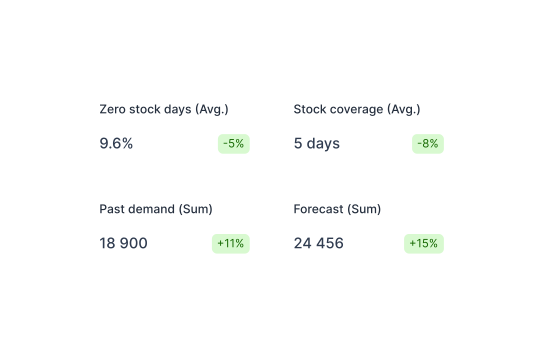
En haut du Dashboard, un panneau de KPI met en avant quatre métriques essentielles :
- le niveau de stock, qui indique la position globale des stocks sur le réseau
- les jours de stock à zéro, qui identifient les périodes d'indisponibilité des produits
- la couverture de stock, qui indique combien de temps le stock actuel tiendra compte tenu de la demande
- la demande passée, qui aide les planificateurs à comprendre l'évolution récente de la demande
Chaque KPI est affiché avec des comparaisons aux périodes précédentes, ce qui permet aux équipes d'identifier immédiatement les tendances et de détecter les anomalies.
Sous ce panneau de KPI, des graphiques chronologiques visualisent l'évolution des indicateurs clés dans le temps. Les planificateurs voient rapidement si les niveaux de stock augmentent, si la couverture de stock se dégrade ou si les tendances de demande évoluent.
Cette visibilité de haut niveau fait du Dashboard le point de départ naturel du suivi quotidien de la Supply Chain.
Le module Analytics de Flowlity
Lorsqu'une analyse plus poussée s'impose, le module Analytics offre une vue plus détaillée des données opérationnelles et de la performance du système.
Au sein d'Analytics, les équipes peuvent explorer plusieurs domaines clés :
- le suivi de la synchronisation des données, qui garantit que la demande, les commandes et les prévisions sont à jour
- le reporting de la qualité des données, qui met en évidence les incohérences susceptibles d'affecter la fiabilité de la planification
- la vue d'ensemble de la performance globale, qui agrège les métriques de tous les sites et entrepôts
- les alertes opérationnelles, qui font remonter les anomalies et exceptions nécessitant une attention
Cette combinaison de visibilité de haut niveau et d'analytics avancée permet aux planificateurs de passer rapidement de l'observation à l'investigation puis à l'action.
Parce que ces tableaux de bord sont directement connectés aux modules de planification de Flowlity, notamment la prévision de la demande, la gestion des stocks, le Supply Planning et le S&OP, les analyses générées dans le tableau de bord se traduisent immédiatement en décisions opérationnelles.
Au lieu de passer du temps à construire des rapports, les équipes Supply Chain peuvent se concentrer sur l'essentiel : anticiper les ruptures et optimiser les stocks sur l'ensemble du réseau.
Les KPI Supply Chain clés que tout tableau de bord décisionnel doit suivre
Un tableau de bord bien conçu se concentre sur les métriques qui font réellement la performance de la Supply Chain. Si les KPI exacts dépendent du secteur et du modèle opérationnel, plusieurs indicateurs sont universellement importants.
Parmi les métriques les plus critiques suivies par les responsables Supply Chain figurent :
Le taux de service
Mesure la capacité à satisfaire la demande client sans retard ni rupture.
La fiabilité des prévisions
Évalue l'écart entre la demande prévue et les ventes réelles.
La rotation des stocks
Indique l'efficacité avec laquelle les stocks sont réapprovisionnés et consommés.
Le taux de rupture
Suit la fréquence à laquelle les produits sont indisponibles au moment où les clients les demandent.
La couverture de stock en jours
Indique combien de temps le stock existant tiendra compte tenu de la demande attendue.
Le délai cash-to-cash
Mesure la vitesse à laquelle les investissements en stock se transforment en chiffre d'affaires.
Ces indicateurs aident les entreprises à équilibrer deux objectifs essentiels :
- maintenir une forte disponibilité produit
- limiter les surstocks et les coûts opérationnels
L'impact de l'amélioration de ces KPI peut être significatif lorsque les entreprises gagnent en visibilité et renforcent leurs capacités de planification sur l'ensemble de la Supply Chain.
Par exemple, Saint-Gobain a amélioré sa fiabilité des prévisions de 15% au niveau SKU, tout en augmentant la disponibilité produit et les taux de service sur son réseau. Des prévisions plus justes ont permis à l'entreprise de mieux anticiper la variabilité de la demande et de réduire l'incertitude opérationnelle.
D'autres organisations se sont concentrées sur l'optimisation des stocks. Dans le retail, le même schéma se retrouve. Sport 2000 a réduit ses stocks multi-magasins de 39% tout en préservant le service, en transformant la prévision et le réapprovisionnement en un processus unique et piloté depuis un tableau de bord, au lieu de dizaines de fichiers Excel locaux. Le besoin en fonds de roulement ainsi libéré est directement réinjecté dans les opérations.
Ces résultats illustrent comment le renforcement de processus de planification fondamentaux comme la prévision de la demande et la gestion des stocks peut transformer la performance de la Supply Chain. En améliorant la visibilité sur la variabilité de la demande et la dynamique des stocks, les entreprises parviennent à concilier taux de service et efficacité des stocks de manière bien plus durable.
Du tableau de bord de reporting à la control tower Supply Chain
Les tableaux de bord traditionnels aident les organisations à comprendre ce qui s'est passé. Les plateformes d'analytics modernes leur permettent de comprendre ce qui va se passer ensuite et quelles actions engager.
Cette évolution est souvent décrite comme le passage du tableau de bord aux control towers Supply Chain.
Une control tower intègre plusieurs capacités :
- la visibilité opérationnelle en temps réel
- l'analytics prédictive
- les alertes automatisées
- les recommandations de décision
Au lieu de présenter des métriques isolées, elle analyse les relations entre les signaux de demande, les contraintes d'approvisionnement et les niveaux de stock.
Par exemple, l'analytics prédictive peut détecter qu'un pic de demande sur une référence précise risque d'entraîner une rupture dans plusieurs semaines. Les planificateurs peuvent alors ajuster leurs stratégies de réapprovisionnement, redistribuer les stocks ou réviser les niveaux de stock de sécurité avant que la perturbation ne survienne.
Cette approche proactive améliore nettement la résilience opérationnelle et aide les organisations à mieux gérer l'incertitude.
Elle s'intègre aussi étroitement à des processus de planification comme le Supply Planning, où les décisions opérationnelles doivent s'adapter vite aux conditions changeantes.
Plum Living illustre ce que cela donne au niveau opérationnel. En un an, l'équipe a réduit la valeur de ses stocks de 38% (de 598 k€ à 367 k€), en agissant directement sur les signaux de demande et les vues de couverture de stock remontés dans le tableau de bord de planification, plutôt qu'en attendant les rapports mensuels pour révéler le déséquilibre.
Comment l'intelligence artificielle enrichit l'analytics Supply Chain
L'intelligence artificielle transforme la façon dont les tableaux de bord soutiennent la prise de décision Supply Chain.
Au lieu de s'appuyer sur des rapports statiques, l'IA analyse en continu les données opérationnelles pour détecter des tendances, anticiper les ruptures et orienter les décisions de planification.
Parmi les capacités les plus impactantes :
Prévision probabiliste de la demande
Les modèles d'IA génèrent des fourchettes de scénarios de demande possibles plutôt qu'une prévision unique.
Détection d'anomalies
Les algorithmes repèrent les comportements inhabituels : pics de demande, retards fournisseurs ou mouvements de stock inattendus.
Simulation de scénarios
Les entreprises peuvent tester l'impact de décisions de planification avant de les mettre en œuvre.
Recommandations de décision
Les systèmes d'IA peuvent suggérer des actions comme ajuster les niveaux de stock de sécurité ou modifier les stratégies de réapprovisionnement.
Ces capacités transforment les tableaux de bord en véritables plateformes de decision intelligence.
Saint-Gobain Sekurit AGR illustre ce basculement. En passant d'un reporting statique à une prévision probabiliste pilotée par l'IA, l'équipe a gagné 15 points de fiabilité des prévisions au niveau SKU et porté la disponibilité produit moyenne au-delà de 97% sur plus de 10 000 références, tout en gardant le stock de sécurité sous contrôle.
Par exemple, la modélisation de scénarios permet aux planificateurs de tester l'impact de variations de taux de service, de délais fournisseurs ou de volatilité de la demande. Cette approche prend toute sa valeur lorsqu'elle est combinée aux Strategic Simulations, qui permettent de tester différents scénarios et d'évaluer l'impact de perturbations ou de changements de politique avant de les appliquer en conditions réelles. Pour faire face à une volatilité et une incertitude croissantes, les entreprises doivent adopter des stratégies Supply Chain innovantes qui repensent les approches de planification traditionnelles.
Des résultats mesurables obtenus grâce aux tableaux de bord Supply Chain pilotés par l'IA
Les entreprises qui déploient des tableaux de bord de planification intelligents constatent souvent des améliorations mesurables sur plusieurs dimensions de la performance Supply Chain.
L'un des impacts les plus visibles est l'optimisation des stocks. En combinant analytics prédictive et visibilité opérationnelle, les entreprises alignent bien plus étroitement leurs niveaux de stock sur la demande réelle. Concrètement, cela se traduit par moins de stock de sécurité, une meilleure anticipation de la variabilité de la demande et des décisions de réapprovisionnement plus précises.
Dans la distribution, ce schéma se vérifie. Chez Ukal, distributeur d'équipements pour l'agriculture et l'élevage, une meilleure visibilité sur les besoins d'approvisionnement et des prévisions plus fiables ont permis de réduire les niveaux de stock de 16%, concrétisant un objectif ambitieux de 1 M€ de réduction du besoin en fonds de roulement.
Au-delà de l'optimisation des stocks, une meilleure visibilité a aussi un impact direct sur l'efficacité opérationnelle.
L'expérience de Camif en est une bonne illustration. Avant Flowlity, les processus d'approvisionnement étaient largement manuels et la fiabilité des prévisions limitée. En introduisant une planification pilotée par la donnée et une visibilité centralisée sur ses fournisseurs et ses entrepôts, l'entreprise a nettement renforcé ses capacités de coordination. Résultat : Camif a réduit ses ruptures de 5 points, généré environ 40 000 € de chiffre d'affaires annuel supplémentaire en évitant des ventes perdues et absorbé 44% de croissance sans augmenter ses effectifs logistiques.
Les gains opérationnels sont allés au-delà de la performance financière. Selon la direction Supply Chain de l'entreprise, la plateforme a aussi généré des gains de productivité équivalents à un équivalent temps plein, grâce à l'automatisation de tâches de planification auparavant manuelles et à une prise de décision plus efficace.
L'amélioration de la performance de service est un autre résultat fréquent. Lorsqu'elles gagnent en visibilité sur la demande, les contraintes d'approvisionnement et la dynamique des stocks, les entreprises maintiennent une meilleure disponibilité produit sans augmenter leur niveau de stock global.
Par exemple, le Groupe Lemoine a amélioré son taux de service de 11%, tandis que Ravate a augmenté sa disponibilité produit de 6,3% grâce à une meilleure coordination de la planification et à une anticipation plus juste de la demande.
Pris ensemble, ces résultats traduisent un changement de fond dans la façon de piloter les Supply Chains. Les tableaux de bord intelligents ne sont plus de simples outils de reporting. Combinés à l'analytics prédictive et à des processus de planification intégrés, ils deviennent de véritables systèmes de pilotage opérationnel qui aident les entreprises à anticiper les ruptures, à prioriser les bonnes décisions et à optimiser en continu la performance sur l'ensemble de la Supply Chain.
Construire un tableau de bord Supply Chain de bout en bout
Créer un tableau de bord Supply Chain performant demande plus que la simple visualisation de KPI. La vraie valeur vient de la connexion des données sur l'ensemble de l'écosystème Supply Chain.
Cela suppose d'intégrer des informations provenant :
- des fournisseurs et des systèmes d'achat
- des données de production et de fabrication
- des opérations d'entrepôt et de logistique
- des signaux de demande issus des canaux de vente
Lorsque ces flux de données restent isolés, les planificateurs peinent à comprendre comment une décision dans un domaine affecte le reste du réseau.
Les plateformes Supply Chain modernes lèvent cet obstacle grâce à des intégrations fluides avec les ERP, les plateformes d'entrepôt et les outils de planification. Ce socle de données unifié permet aux tableaux de bord de refléter la situation opérationnelle réelle en temps réel.
Cette visibilité est particulièrement précieuse pour les processus collaboratifs comme le Sales & Operations Planning, où prévisions de demande, contraintes d'approvisionnement et objectifs financiers doivent être alignés.
Ces enjeux émergent souvent dans des environnements de planification complexes où demande, approvisionnement et objectifs financiers doivent être alignés. Mettre en place un S&OP digital avec IA et automatisation aide les organisations à connecter ces décisions et à bâtir un processus de planification Supply Chain plus résilient.
Comment choisir le bon logiciel de tableau de bord Supply Chain
À mesure que les entreprises cherchent une meilleure visibilité sur leurs opérations, beaucoup commencent à évaluer différentes plateformes et technologies. Choisir le meilleur logiciel de visibilité Supply Chain devient une étape clé vers une Supply Chain plus connectée et plus réactive. Sélectionner la bonne solution de tableau de bord suppose d'évaluer à la fois les capacités technologiques et l'impact opérationnel.
Les organisations doivent prendre en compte plusieurs critères clés.
D'abord, l'intégration des données est essentielle. La plateforme doit se connecter facilement aux systèmes existants comme l'ERP, le WMS et les outils d'achat.
Ensuite, les entreprises doivent privilégier les capacités d'analytics prédictive. Les tableaux de bord modernes doivent dépasser le reporting historique et aider à anticiper les ruptures.
La facilité d'utilisation est un autre facteur déterminant. Si les tableaux de bord sont trop complexes, les planificateurs reviennent aux fichiers Excel. Des interfaces intuitives améliorent l'adoption et garantissent que les analyses sont utilisées au quotidien.
La scalabilité compte également. À mesure que les Supply Chains se complexifient, le tableau de bord doit absorber des volumes de données et des scénarios opérationnels croissants.
Enfin, les solutions les plus puissantes associent l'analytics à des capacités de planification opérationnelle telles que :
- la prévision de la demande
- la gestion des stocks
- le Supply Planning
Cette intégration permet aux entreprises de passer en continu de l'analyse à l'action.
FAQ
Find everything you need to know right here.
Comment le tableau de bord Flowlity aide-t-il à la prise de décision Supply Chain ?
Le tableau de bord de Flowlity est conçu pour offrir aux équipes Supply Chain une visibilité immédiate sur les indicateurs opérationnels les plus critiques.
Le tableau de bord synthétise les métriques clés telles que les niveaux de stock, la couverture de stock et les tendances de la demande, permettant aux planificateurs d'évaluer rapidement la santé globale de leur Supply Chain. Les visualisations de séries temporelles aident les équipes à comprendre comment ces indicateurs évoluent dans le temps et à détecter les risques émergents.
Lorsqu'une analyse plus approfondie est nécessaire, le module Analytics de Flowlity offre des capacités supplémentaires, notamment le suivi de la qualité des données, les alertes opérationnelles et l'analyse de performance multi-sites.
Parce que le tableau de bord est directement connecté aux modules de planification tels que la Prévision de la Demande, la Gestion des Stocks, la Planification des Approvisionnements et le S&OP, les insights générés dans l'interface peuvent immédiatement se traduire en décisions opérationnelles. Cette intégration permet aux organisations de passer de la visibilité à l'action et d'optimiser en continu la performance Supply Chain.
Quelle est la différence entre un tableau de bord Supply Chain et une control tower Supply Chain ?
Un tableau de bord Supply Chain se concentre sur le suivi des KPI opérationnels, tandis qu'une control tower Supply Chain offre un environnement de gestion opérationnelle plus large et plus avancé.
Les control towers combinent plusieurs capacités, notamment la visibilité en temps réel, l'analytics prédictif, les outils de collaboration et les mécanismes d'aide à la décision. Leur objectif n'est pas seulement d'afficher des informations, mais aussi d'orchestrer les opérations Supply Chain entre de multiples parties prenantes.
Alors que les tableaux de bord fournissent une vue d'ensemble des métriques clés, les control towers analysent les relations entre les données de demande, d'approvisionnement et de stock afin d'anticiper les perturbations et coordonner les réponses.
Dans les plateformes Supply Chain modernes, les tableaux de bord servent souvent de point d'entrée vers les capacités de control tower, offrant la visibilité nécessaire pour guider les décisions opérationnelles.
Comment l'Intelligence Artificielle améliore-t-elle les tableaux de bord Supply Chain ?
L'Intelligence Artificielle améliore considérablement les capacités des tableaux de bord Supply Chain en les transformant de simples outils de reporting en systèmes prédictifs d'aide à la décision.
Les modèles d'IA peuvent analyser en continu les données opérationnelles pour détecter des tendances et des anomalies qui seraient difficiles à identifier manuellement. Par exemple, les algorithmes peuvent repérer des pics de demande inhabituels, prévoir des ruptures potentielles ou détecter des incohérences dans les flux de données.
L'IA peut également générer des prévisions de demande probabilistes, offrant aux planificateurs une gamme de scénarios possibles plutôt qu'une seule prédiction. Cela aide les organisations à mieux gérer l'incertitude et à adapter leurs stratégies de stock en conséquence.
Dans les plateformes de planification avancées, l'Intelligence Artificielle peut également soutenir les simulations de scénarios et générer des recommandations qui aident les équipes à prioriser les actions les plus impactantes.
Comment les tableaux de bord Supply Chain aident-ils à réduire les stocks ?
Les tableaux de bord Supply Chain aident à réduire les stocks en améliorant la visibilité sur la variabilité de la demande, la dynamique des stocks et les décisions de réapprovisionnement.
Lorsque les planificateurs ont accès à des indicateurs précis et en temps réel, ils peuvent identifier les situations où les niveaux de stock dépassent les besoins opérationnels. Cela facilite l'ajustement des niveaux de stock de sécurité, l'optimisation des stratégies de réapprovisionnement et la prévention de l'accumulation inutile de stock.
Les tableaux de bord aident également les équipes à détecter plus tôt les produits à faible rotation et les fluctuations de la demande, leur permettant d'adapter les plans d'approvisionnement et de production en conséquence.
Combinés à l'analyse prédictive et aux outils de prévision de la demande, les tableaux de bord fournissent les informations nécessaires pour équilibrer la disponibilité des produits et une gestion efficace des stocks.
Comment un tableau de bord Supply Chain améliore-t-il la visibilité opérationnelle ?
Les tableaux de bord Supply Chain améliorent la visibilité en consolidant les données provenant de multiples systèmes opérationnels dans une interface unique.
Dans de nombreuses organisations, les informations relatives aux prévisions de demande, aux niveaux de stock, à la performance des fournisseurs et aux opérations logistiques sont dispersées sur différentes plateformes. Cette fragmentation rend difficile pour les planificateurs d'obtenir une compréhension claire et en temps réel de la situation.
Un tableau de bord centralisé connecte ces sources de données et les présente à travers des indicateurs visuels, des graphiques de tendances et des alertes. Cela permet aux équipes Supply Chain d'identifier les problèmes plus tôt, comme une baisse de couverture de stock, des pics de demande inhabituels ou des retards fournisseurs.
Une meilleure visibilité aide finalement les entreprises à passer d'une gestion réactive à une prise de décision proactive, permettant aux planificateurs d'anticiper les perturbations plutôt que de simplement y réagir.
Quels KPI inclure dans un tableau de bord Supply Chain ?
Les tableaux de bord Supply Chain les plus efficaces se concentrent sur un nombre limité de KPI qui influencent directement la performance opérationnelle.
Parmi les indicateurs couramment suivis, on trouve le taux de service, qui mesure la capacité à répondre à la demande client sans rupture, et la précision des prévisions, qui évalue dans quelle mesure la demande prévue correspond aux ventes réelles.
Les métriques liées aux stocks sont également essentielles. Elles incluent généralement la rotation des stocks, la couverture de stock et le nombre de jours de stock disponible. Ensemble, elles aident les organisations à comprendre l'efficacité de la gestion des stocks et si les niveaux sont alignés avec les tendances de la demande.
Des indicateurs opérationnels comme le taux de rupture et le cycle cash-to-cash sont également fréquemment inclus, car ils donnent un aperçu de la disponibilité produit et de l'efficacité du fonds de roulement.
En suivant ces KPI dans un seul tableau de bord, les équipes Supply Chain peuvent rapidement identifier les déséquilibres entre les objectifs de taux de service et les coûts de stock.
Quelle est la différence entre un tableau de bord Supply Chain et l'analytics Supply Chain ?
Un tableau de bord Supply Chain se concentre principalement sur le suivi de la performance, tandis que l'analytics Supply Chain aide à analyser les données et à soutenir les décisions.
Les tableaux de bord affichent généralement des métriques clés telles que le taux de service, la précision des prévisions, la couverture de stock ou la rotation des stocks. Leur rôle est de fournir un aperçu rapide de la performance opérationnelle et d'aider les équipes à détecter les anomalies.
L'analytics Supply Chain va plus loin en permettant une investigation approfondie des causes des problèmes opérationnels. Les outils d'analyse avancés peuvent identifier des tendances dans la variabilité de la demande, mettre en évidence des problèmes de qualité de données ou simuler l'impact de différents scénarios de planification.
Les plateformes Supply Chain modernes combinent les deux capacités. Les tableaux de bord offrent une visibilité de haut niveau, tandis que les modules d'analytics permettent aux planificateurs d'explorer les données en détail et d'identifier les actions qui amélioreront la performance.
Qu'est-ce qu'un tableau de bord Supply Chain ?
Un tableau de bord Supply Chain est une interface centralisée qui agrège les données opérationnelles et présente les indicateurs clés de performance de manière claire et exploitable. Il permet aux équipes Supply Chain de suivre des métriques essentielles telles que les niveaux de stock, les tendances de la demande, la couverture de stock et les taux de service depuis un seul environnement.
Au lieu de naviguer entre plusieurs outils comme les rapports ERP, les tableurs et les plateformes d'analyse, les planificateurs peuvent rapidement comprendre l'état actuel des opérations et détecter les risques potentiels. Les tableaux de bord Supply Chain modernes sont conçus non seulement pour afficher les KPI, mais aussi pour aider les équipes à prioriser les actions et identifier les perturbations émergentes.
Lorsqu'ils sont intégrés aux plateformes de planification, les tableaux de bord deviennent un outil de décision quotidien qui favorise une meilleure coordination entre les processus de prévision, de gestion des stocks et de planification des approvisionnements.