.svg)
Logiciel MRP : planification intelligente et optimale des matières premières
Dépassez les limites des logiciels MRP traditionnels. Alignez vos approvisionnements en matières premières sur des prévisions de demande automatisées pour sécuriser votre production et libérer votre fonds de roulement.
Demander une démo
Évitez les ruptures de matières premières
Préservez votre production, même quand la demande fluctue
.svg)
Besoin de matières premières pilotés par la demande
Approvisionnement intégrant les délais fournisseurs
Réduisez les surstocks et libérez votre trésorerie
N'achetez plus en excès « au cas où ».
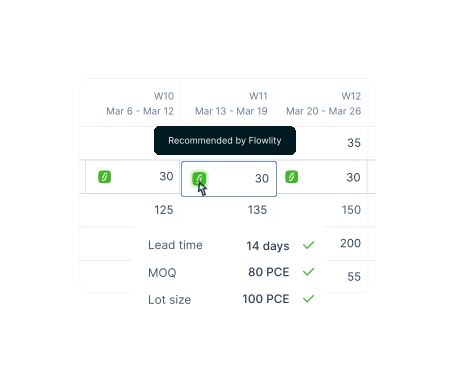
Recommandations de quantités de commande optimisées
Visibilité sur les risques de stock
Remplacez le MRP sur tableur par une automatisation fiable
Moins de travail manuel. Des décisions en confiance.
.svg)
Calculs d'approvisionnement automatisés
.svg)
Référentiel unique et partagé
Ajustez votre planification d’approvisionnement des matières premières au grès des changements
Parce que la demande et l'offre ne restent jamais figées.
Replanification continue
Alertes par exception
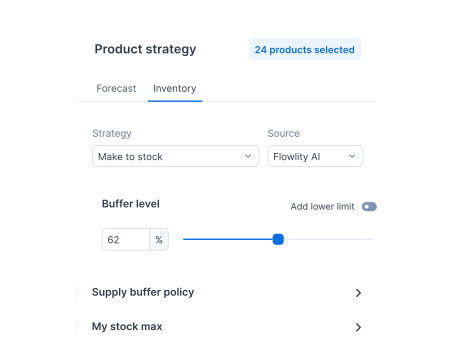
D'un MRP rigide à un approvisionnement intelligent


Logiciel MRP pour l'industrie : planification matière intelligente dans une Supply Chain volatile
Découvrez les bénéfices d'un logiciel MRP et ce qui distingue Flowlity
Pourquoi la planification matière moderne dépasse le cadre du MRP traditionnel

Le Material Requirements Planning a été conçu à l'origine pour répondre à une question opérationnelle simple : quels composants commander, à quel moment et en quelle quantité ? Pendant des décennies, cette logique a fonctionné dans des environnements industriels relativement stables, où la demande était prévisible et les ruptures d'approvisionnement rares.
Aujourd'hui, la plupart des industriels évoluent dans une Supply Chain bien plus volatile. Les variations de la demande, les pénuries de matières premières, l'allongement des délais fournisseurs et la complexité croissante des références fragilisent les modèles de planification statiques.
Les outils MRP traditionnels, souvent intégrés aux ERP, reposent sur des prévisions déterministes et des règles de planification figées. Lorsque la demande s'écarte des attentes ou que les fournisseurs accusent du retard, les planificateurs doivent ajuster manuellement les paramètres, recalculer les quantités de réapprovisionnement ou compenser en augmentant les stocks de sécurité.
Cette approche réactive génère un arbitrage structurel. Les entreprises maintiennent soit des stocks élevés pour sécuriser la continuité de production, soit des niveaux réduits qui les exposent à des ruptures.
Un logiciel MRP moderne lève ce dilemme en introduisant des capacités de planification dynamique. Au lieu de lancer des calculs rigides une fois par semaine ou par mois, les systèmes de planification intelligents adaptent en continu les décisions de réapprovisionnement en fonction des signaux de demande, des contraintes fournisseurs et de la dynamique des stocks.
L'enjeu n'est plus seulement de calculer les besoins matière avec davantage de précision, mais de transformer le MRP en une capacité de planification proactive, connectée à l'ensemble du processus de Supply Chain planning.
Comment un logiciel MRP calcule les besoins matière
Pour mesurer la valeur d'un logiciel MRP moderne, il est utile de comprendre la logique de calcul qu'il met réellement en œuvre.
Le Material Requirements Planning traduit les signaux de demande en décisions opérationnelles. Le système analyse de multiples entrées issues de la Supply Chain pour déterminer quels composants commander, à quel moment et en quelle quantité.
Le calcul démarre généralement par la prévision de la demande. Cette prévision représente la consommation attendue des produits finis dans le temps. Le système la décompose ensuite via le Bill of Materials pour identifier chaque composant nécessaire à la fabrication.
Les données de stock sont ensuite intégrées au calcul. Le système évalue les niveaux de stock actuels, les commandes d'achat entrantes et les ordres de production en cours.
Enfin, les délais fournisseurs déterminent le moment où le réapprovisionnement doit être déclenché pour que les matières soient disponibles avant le démarrage de la production.
À partir de ces entrées, le système produit plusieurs sorties opérationnelles :
- des recommandations de commandes d'achat
- des ordres de production
- des projections de niveaux de stock
- des alertes de réapprovisionnement en cas de risque de rupture
Les plateformes de planification modernes enrichissent cette logique traditionnelle en la combinant avec la prévision de la demande, l'Inventory Optimization et les processus de Supply Planning.
Cette intégration permet aux entreprises de dépasser les calculs statiques et d'adopter un modèle de planification plus adaptatif.
À qui s'adresse le logiciel MRP de Flowlity
Un logiciel MRP prend tout son sens lorsque les points de commande figés et les prévisions déterministes génèrent plus de ruptures et de surstocks qu'ils n'en résolvent. Le logiciel MRP de Flowlity est conçu pour les approvisionneurs et les responsables achats des industries manufacturières (automobile, biens de consommation, électronique, matériaux de construction), où les nomenclatures se déploient en centaines de composants et où une seule pièce manquante peut arrêter une ligne de production entière. Il convient aux planificateurs site et responsables de production travaillant en production sur stock, à la commande ou en environnement hybride, qui ont besoin d'un réapprovisionnement aligné sur la demande réelle et sur les délais fournisseurs effectifs. Il accompagne aussi les directeurs Supply Chain des ETI industrielles qui veulent cesser de compenser un MRP rigide intégré à l'ERP par des ajustements manuels sous Excel.
Les irritants sont structurels. Les matières arrivent trop tard parce que les délais paramétrés dans l'ERP ne reflètent plus la réalité. Le stock de composants en excès reste immobilisé parce que les stocks de sécurité ont été figés il y a un an. Les plans de production sont ajustés chaque semaine dans des tableurs en marge de l'outil de planification. Les planificateurs restent submergés par les tâches transactionnelles au lieu de piloter par exception. Un MRP moderne doit reléguer ces problèmes au rang d'exceptions, pas en faire la routine.
Comment choisir le bon logiciel MRP
Choisir une solution MRP ne relève pas seulement d'une décision technologique : c'est un choix structurant qui façonne le quotidien des équipes de planification.
De nombreux éditeurs se positionnent comme fournisseurs de MRP, mais leurs capacités varient fortement selon leur approche de la prévision, de l'automatisation de la planification et de la visibilité Supply Chain.
L'un des premiers critères à évaluer est la capacité à intégrer la prévision de la demande à la planification matière. Dans de nombreux systèmes legacy, prévision et réapprovisionnement sont des processus déconnectés. Les prévisions sont produites dans un outil pendant que les décisions de planification se calculent ailleurs, obligeant les planificateurs à réconcilier manuellement les deux jeux de données.
Les plateformes modernes réunissent ces capacités pour que les signaux de demande influencent immédiatement les décisions de réapprovisionnement. Cette intégration étroite devient particulièrement utile pour coordonner la planification matière avec les contraintes de production amont, comme la Production Planning et la planification de capacité.
Un autre aspect déterminant est la manière dont le système gère l'incertitude. Une solution qui se contente d'appliquer des règles de stock de sécurité figées peine à soutenir les environnements volatils. Les plateformes avancées s'appuient au contraire sur des prévisions probabilistes et des politiques de stock dynamiques, permettant aux planificateurs d'anticiper la variabilité de la demande plutôt que de la subir.
L'ergonomie joue également un rôle décisif. Les équipes de planification doivent pouvoir comprendre rapidement les recommandations et simuler des décisions alternatives lorsque les conditions évoluent. Si le système exige une configuration complexe ou un appui IT lourd, son adoption au sein des équipes opérationnelles reste souvent limitée.
Enfin, les entreprises doivent évaluer la capacité du logiciel MRP à se connecter aux processus plus larges de planification et d' Inventory Management, afin que les décisions de réapprovisionnement restent alignées avec les stratégies d'achat et les contraintes fournisseurs.
Les fonctionnalités clés à rechercher dans un logiciel MRP moderne
Les capacités des solutions MRP ont profondément évolué ces dernières années. Là où les systèmes traditionnels se concentraient principalement sur le calcul des ordres de réapprovisionnement, les plateformes de planification modernes offrent un environnement d'aide à la décision bien plus large aux équipes Supply Chain.
L'une des fonctionnalités les plus précieuses est l'Inventory Optimization dynamique. Au lieu de s'appuyer sur des paramètres de stock de sécurité figés, les systèmes avancés ajustent en continu les buffers de stock en fonction de la variabilité de la demande et des délais fournisseurs. Les entreprises peuvent ainsi réduire leurs stocks excédentaires tout en maintenant leurs niveaux de service.
Une autre capacité essentielle est la projection de stock en temps réel. Les planificateurs doivent pouvoir visualiser l'évolution future du stock en fonction des prévisions, des commandes confirmées et des réapprovisionnements recommandés. Ces projections permettent aux équipes d'anticiper les risques de rupture ou de surstock avant qu'ils n'impactent les opérations.
Les systèmes modernes permettent également la simulation de scénarios. Les équipes de planification peuvent tester des stratégies de réapprovisionnement alternatives (ajustement des quantités commandées, réaffectation entre fournisseurs) et observer immédiatement leur impact sur les trajectoires de stock.
Les outils de visualisation jouent ici un rôle déterminant. Des interfaces analytiques claires comme un tableau de bord et analytics Supply Chain permettent aux planificateurs de suivre les risques de stock, la performance fournisseurs et les tendances de demande sans recourir aux tableurs manuels.
Une autre capacité différenciante est l'intégration entre les décisions de planification et leur exécution opérationnelle. Une fois validées, les recommandations de réapprovisionnement doivent se traduire automatiquement en commandes d'achat ou ordres d'approvisionnement via les outils de Supply Order Management.
Lorsque ces fonctionnalités sont réunies dans un même environnement, le système MRP devient bien plus qu'un moteur de calcul : il se transforme en véritable cockpit de planification pour les équipes Supply Chain.
Évolution du marché : du MRP statique à la planification intelligente
Des environnements de planification stables aux Supply Chains volatiles
L'évolution des logiciels MRP reflète des transformations plus larges des Supply Chains industrielles.
Historiquement, les systèmes de planification matière ont d'abord été conçus pour soutenir des environnements de production stables, où la variabilité de la demande restait limitée. L'objectif consistait alors à garantir la disponibilité des composants pour la production tout en limitant les ruptures.
Aujourd'hui, la planification doit opérer dans un contexte où l'incertitude est devenue la norme. Pénuries de matières premières, volatilité de la demande et perturbations des approvisionnements mondiaux exigent des systèmes capables de réagir dynamiquement à des conditions changeantes.
L'essor de la planification pilotée par l'IA
L'Intelligence Artificielle joue un rôle central dans cette transformation. Les modèles de prévision basés sur l'IA génèrent des scénarios de demande probabilistes plutôt qu'une valeur unique, permettant aux planificateurs de mieux appréhender la variabilité et d'ajuster leurs stratégies de réapprovisionnement en conséquence.
Ce changement modifie également la façon dont les entreprises pensent leurs processus de planification. Plutôt que de s'appuyer uniquement sur des calculs MRP, les organisations intègrent de plus en plus la planification matière à des mécanismes de coordination Supply Chain plus larges, comme le Distribution Requirements Planning (DRP), qui permet de synchroniser les flux produits entre les réseaux de distribution.
Les industriels qui explorent ces nouvelles approches de planification commencent souvent par analyser l'impact de la volatilité de la demande sur leurs stratégies de réapprovisionnement. Une perspective utile sur ce sujet est proposée dans notre livre blanc Gérer la volatilité de la demande et son impact Supply Chain grâce à un réapprovisionnement matière plus intelligent, qui explique comment des politiques de réapprovisionnement plus fines stabilisent les flux matière.
Du MRP I à la planification intelligente moderne
Une autre évolution importante concerne la distinction historique entre MRP I et MRP II.
Le MRP I se concentrait initialement sur le calcul des besoins matière à partir des prévisions de demande et des Bills of Materials. Le MRP II a élargi cette logique en intégrant des dimensions opérationnelles supplémentaires : capacité de production, planification des ressources humaines, planification financière.
Les plateformes de planification modernes prolongent ces concepts en y ajoutant l'Intelligence Artificielle, la prévision avancée et les capacités de coordination Supply Chain.
Au lieu de séparer prévision, Inventory Optimization et Production Planning, ces systèmes les réunissent dans un environnement de planification unifié.
Pourquoi Flowlity propose une nouvelle approche du MRP
Flowlity repense le MRP en combinant prévision, Inventory Optimization et planification du réapprovisionnement au sein d'une même plateforme pilotée par l'IA.
Plutôt que de lancer des calculs périodiques fondés sur des hypothèses figées, la plateforme analyse en continu les signaux de demande et les contraintes Supply Chain pour générer des recommandations de planification adaptatives.
Au cœur de cette approche, l'environnement Planning traduit les prévisions de demande en décisions d'approvisionnement opérationnelles. Les planificateurs visualisent les trajectoires de stock projetées, évaluent les commandes recommandées et comprennent immédiatement comment le stock évoluera selon les conditions de demande.
Le système affiche un corridor de stock clair, défini par des niveaux minimum et maximum dynamiques. Tant que le stock projeté reste dans ce corridor, la politique de stock est considérée comme optimale. Dès qu'il risque d'en sortir, la plateforme signale automatiquement l'écart et suggère des actions correctives.
Parce que l'interface de planification combine données de prévision et recommandations de réapprovisionnement, les planificateurs disposent d'une vue complète du processus de décision. Ils peuvent simuler des ajustements de commandes, tester des stratégies fournisseurs alternatives et observer l'impact sur les niveaux de stock en temps réel.
Cette approche permet aux équipes de planification de sortir des ajustements réactifs sur tableurs pour adopter une méthodologie de planification proactive, soutenue par l'Intelligence Artificielle. Dans un contexte industriel ciment et mines, Magotteaux a appliqué cette planification pilotée par l'IA à son portefeuille de matières premières et composants. Résultat : une réduction de 13 % des stocks, combinée à une baisse de 22 % de la couverture et à une diminution de 8 % des ruptures. Cette progression a été obtenue en remplaçant les règles de réapprovisionnement statiques par des recalculs continus pilotés par la donnée, sans gonfler les stocks de sécurité.
Les entreprises souhaitant comprendre comment ces innovations de planification aident à prévenir les ruptures peuvent consulter le webinar "Comment prévenir les ruptures Supply Chain", qui explique comment les technologies de planification modernes dépassent les capacités du MRP traditionnel.
Impact concret d'une planification MRP intelligente
L'impact d'une planification matière avancée devient particulièrement visible chez les organisations qui gèrent des portefeuilles produits larges et complexes.
Dans les environnements de production industrielle, de petites erreurs de prévision peuvent se propager à travers les Bills of Materials et générer rapidement des ruptures sur de multiples composants. Améliorer la fiabilité des prévisions et la précision des réapprovisionnements a donc un impact direct sur les niveaux de service comme sur l'efficacité des stocks.
À titre d'exemple, Saint-Gobain a amélioré la précision de ses prévisions au niveau SKU tout en réduisant son stock de 9,25 % après le déploiement de pratiques de planification plus avancées. Cette combinaison de visibilité accrue et de politiques de stock optimisées a sensiblement réduit le risque d'expéditions d'urgence liées à des pénuries matières.
Dans un autre contexte, le fabricant de mobilier Plum Living a réduit la valeur de ses stocks de -38 %. Plutôt que de simplement abaisser les niveaux de stock, l'entreprise a affiné sa précision de planification pour que les matières arrivent au plus près du moment où elles étaient réellement nécessaires.
Ces exemples illustrent un principe plus large : une meilleure planification ne se limite pas à réduire les stocks, elle stabilise aussi les opérations de production en garantissant la disponibilité des bonnes matières au bon moment.
Les organisations confrontées à des pénuries structurelles de matières premières explorent souvent des stratégies de résilience plus larges. Le livre blanc Résilience Supply Chain face aux pénuries de matières premières apporte des éclairages complémentaires sur la façon dont les entreprises renforcent leur résilience Supply Chain lorsque les conditions d'approvisionnement deviennent incertaines.
Adopter le MRP au cœur d'une planification Supply Chain de bout en bout
Pour beaucoup d'industriels, la véritable valeur d'un logiciel MRP moderne se révèle lorsqu'il s'inscrit dans un écosystème de planification plus large.
La planification matière doit être alignée avec les décisions de production amont et les stratégies de distribution aval. Lorsque ces couches de planification fonctionnent en silos, les entreprises font fréquemment l'expérience d'objectifs contradictoires entre réduction des stocks et niveaux de service.
En intégrant les calculs MRP à la Production Planning, au Supply Planning et aux processus de coordination de la distribution, les organisations construisent un modèle de planification mieux synchronisé.
Cette approche intégrée est particulièrement pertinente dans des secteurs comme l'industrie manufacturière ou le secteur automobile, où la complexité produit et les dépendances fournisseurs créent de fortes interdépendances entre processus de planification.
Lorsque les outils de planification partagent une même base de données et des modèles analytiques communs, la prise de décision devient plus rapide et plus cohérente sur l'ensemble de la Supply Chain.
Ce type d'intégration a un impact opérationnel tangible. Le cotonnier Groupe Lemoine a relevé son taux de service de 5 points pour atteindre 98 % de disponibilité, après avoir remplacé ses stocks de sécurité figés par des buffers dynamiques pilotés par la demande et partagés sur l'ensemble de son réseau multi-sites. Le gain provient d'un alignement des décisions de réapprovisionnement sur un modèle de planification unique, plutôt que d'une coordination de prévisions site par site.
FAQ
Retrouvez ici tout ce qu'il faut savoir.
Combien de temps faut-il pour déployer un logiciel MRP moderne ?
Le délai de déploiement d’un logiciel MRP dépend fortement de la solution choisie et de la complexité de l’environnement Supply Chain.
Les modules MRP traditionnels intégrés aux systèmes ERP nécessitent souvent de longs cycles d’implémentation — parfois 6 à 18 mois ou plus — en raison de la personnalisation, de la migration des données et des exigences d’intégration système.
Les logiciels MRP modernes et cloud comme Flowlity sont conçus pour un déploiement plus rapide. Parce que ces solutions fonctionnent aux côtés des ERP existants plutôt que de les remplacer, les délais d’implémentation sont nettement plus courts — souvent mesurés en semaines plutôt qu’en mois.
L’approche de Flowlity mise sur une intégration rapide des données et un déploiement incrémental, permettant aux équipes Supply Chain de commencer à améliorer la performance de leur planification matières rapidement, sans attendre une refonte complète du système.
Comment fonctionne la planification des matières dans Flowlity ?
Dans Flowlity, la planification des matières s’appuie sur des prévisions de demande pilotées par l’IA combinées à des modèles probabilistes de stocks.
Plutôt que de s’appuyer sur des stocks de sécurité fixes et des points de réapprovisionnement statiques, Flowlity recalcule en continu les besoins en matières en fonction des signaux de demande évolutifs, des délais fournisseurs et des positions de stock à travers le réseau.
Cela signifie que les suggestions de réapprovisionnement sont toujours alignées sur les conditions Supply Chain les plus récentes — et non sur des hypothèses formulées des semaines ou des mois auparavant.
Flowlity offre également aux planificateurs une visibilité claire sur les matières à risque de rupture et celles en surcouverture, permettant des décisions de planification plus ciblées et sûres.
Le résultat est un processus de planification des matières qui s’adapte dynamiquement, réduit les interventions manuelles et soutient de meilleures décisions d’achat et de production.
Comment un logiciel MRP moderne améliore-t-il la planification Supply Chain ?
Un logiciel MRP moderne améliore la planification Supply Chain en remplaçant une logique rigide basée sur des règles par des approches intelligentes pilotées par les données.
Les systèmes MRP traditionnels reposent sur des stocks de sécurité fixes, des délais statiques et des ajustements manuels de prévisions. Les solutions modernes utilisent des prévisions de demande pilotées par l’IA, des modèles probabilistes de stocks et une intégration de données en temps réel pour générer des plans d’approvisionnement plus précis et adaptatifs.
Cela permet aux équipes Supply Chain de réagir plus rapidement aux évolutions de la demande, aux perturbations fournisseurs et aux déséquilibres de stocks — sans retravailler constamment les plans manuellement.
Un logiciel MRP moderne offre également une meilleure visibilité sur l’ensemble de la Supply Chain, aidant les planificateurs à comprendre non seulement quels matériaux sont nécessaires, mais quand, où et pourquoi — pour des décisions d’achat et de production plus pertinentes.
Quelle est la différence entre MRP et ERP ?
Le MRP (Material Requirements Planning) se concentre spécifiquement sur la planification des matières nécessaires, le moment où elles doivent être commandées et les quantités requises pour soutenir la production ou la distribution.
L’ERP (Enterprise Resource Planning) est un système plus large qui couvre plusieurs fonctions métier — dont la finance, les achats, la production, les RH et parfois la planification Supply Chain.
La plupart des systèmes ERP incluent un module MRP basique. Cependant, ces modules MRP intégrés reposent souvent sur une logique simplifiée (stocks de sécurité fixes, délais statiques) et manquent des capacités avancées de prévision et d’optimisation offertes par les logiciels MRP dédiés.
Les solutions MRP modernes, comme Flowlity, sont conçues pour compléter les systèmes ERP — pas pour les remplacer. Elles s’intègrent aux ERP existants pour améliorer la planification des matières grâce à des prévisions pilotées par l’IA, des modèles probabilistes de stocks et une visibilité en temps réel.
Qu'est-ce qu'un logiciel MRP ?
Un logiciel MRP (Material Requirements Planning ou planification des besoins en composants) est un outil de planification Supply Chain utilisé pour déterminer quels matériaux sont nécessaires, quand ils doivent être commandés et en quelles quantités pour répondre aux exigences de production ou de distribution.
Les modules MRP traditionnels sont souvent intégrés aux systèmes ERP et utilisent une logique déterministe — stocks de sécurité fixes, délais d’approvisionnement statiques et prévisions manuelles — pour générer des plans d’approvisionnement.
Les logiciels MRP modernes vont plus loin en intégrant des prévisions de demande pilotées par l’IA, une optimisation probabiliste des stocks et des données en temps réel pour créer des plans de réapprovisionnement plus précis et adaptatifs.
Ces capacités avancées aident les équipes Supply Chain à dépasser la planification réactive et à construire des stratégies d’approvisionnement qui anticipent les évolutions de la demande, la variabilité des fournisseurs et les risques liés aux stocks.
Qu’est-ce que la méthodologie DDMRP (Demand Driven MRP) ?
Le DDMRP (Demand Driven Material Requirements Planning) est une méthodologie qui combine la structure du MRP classique avec des stocks tampons stratégiques positionnés aux points de découplage de la Supply Chain. Le réapprovisionnement est déclenché par la consommation réelle plutôt que par la prévision, ce qui réduit l'effet bullwhip et permet d'ajuster les approvisionnements en temps réel. Chaque buffer est dimensionné en trois zones de couleur (vert, jaune, rouge) à partir d'heuristiques de niveau catégorie pour la variabilité et le délai.
Pour la plupart des industriels mid-market, la question productive n'est pas DDMRP contre MRP classique. C'est de savoir si les buffers doivent être dimensionnés par règles de catégorie ou par distributions probabilistes à la référence. Flowlity remplace les facteurs heuristiques par des distributions de demande complètes apprises à la référence grâce à l'IA, pour que les stocks de sécurité s'adaptent au profil de risque réel de chaque référence. Comparatif complet dans notre guide sur le DDMRP, le MRP et l'IA probabiliste comparés.