.svg)
Testez notre fonctionnalité de réapprovisionnement des stocks magasin pilotée par l'IA
Équilibrez disponibilité et stock au niveau de chaque magasin. Optimisez votre Supply Chain grâce à des décisions de réapprovisionnement des stocks pilotées par l'IA, fondées sur des prévisions probabilistes de la demande et une gestion par exception.
Demander une démoGrâce à Flowlity, nous sommes aujourd'hui à 97 % de taux de disponibilité en moyenne sur nos 30 centres de distribution — en progression de deux points par rapport à l'année précédente.

Réduisez les ruptures de stock et le surstock en magasin
La disponibilité sans le surstock.
Réapprovisionnement magasin piloté par la demande
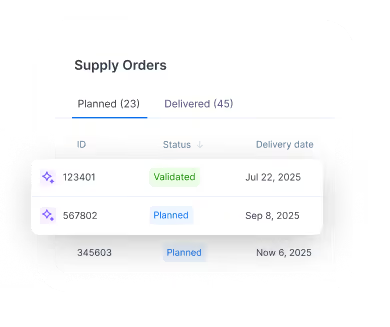
Des quantités commandées plus intelligentes par magasin
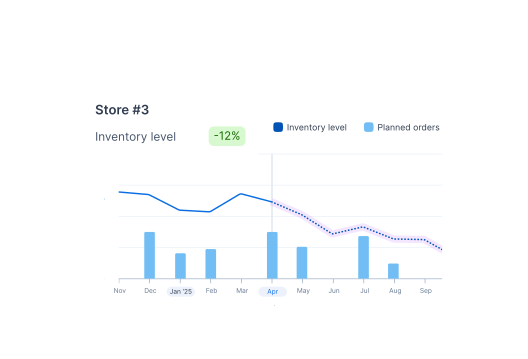
Adaptez le réapprovisionnement à la demande locale et à la volatilité
Chaque magasin se comporte différemment.
.svg)
Intelligence de la demande au niveau magasin
Ajustements en cours de saison
Automatisez le réapprovisionnement sans perdre le contrôle
Concentrez-vous sur l’exception, pas sur ce qui peut être automatisé
.svg)
Gestion des magasins par exception
.svg)
Priorisation des magasins en tenant compte des contraintes spécifiques
Automatisez intelligemment l’approvisionnement de vos magasins


Logiciel de réapprovisionnement magasin
De la planification réactive à des flux de stock optimisés
Pourquoi le réapprovisionnement magasin reste un défi dans les Supply Chains modernes

Dans beaucoup d'entreprises, le réapprovisionnement magasin repose encore sur un mélange de fichiers Excel, de règles statiques et d'ajustements manuels. Cette approche peut suffire dans un environnement stable, mais elle atteint vite ses limites dès que la complexité augmente.
Dès lors que vous gérez plusieurs points de vente, de larges catalogues produits ou une demande volatile, les mêmes problèmes apparaissent : ruptures sur les références à forte demande, surstock positionné au mauvais endroit et équipes qui réagissent en permanence au lieu d'anticiper.
Dans le retail, la disponibilité produit influe directement sur l'expérience client. Comme nous l'explorons dans notre livre blanc sur les enjeux d'expérience client dans les Supply Chains retail, la moindre rupture de disponibilité peut se traduire par du chiffre d'affaires perdu et une fidélité en recul.
Le problème de fond n'est pas opérationnel. Il tient à l'incapacité des outils traditionnels à absorber la variabilité à grande échelle.
À qui s'adresse le logiciel de réapprovisionnement magasin Flowlity
Un logiciel de réapprovisionnement magasin prend tout son sens là où la complexité retail rencontre une demande consommateur volatile. Flowlity s'adresse aux directeurs Supply Chain retail et aux category managers qui pilotent des réseaux multi-magasins où les règles statiques min/max ne suffisent plus à absorber la variabilité de chaque point de vente. Il accompagne aussi les responsables d'opérations magasin et les demand planners du retail et de l'e-commerce qui gèrent des milliers de SKU répartis entre magasins, entrepôts et marketplaces, chacun avec son propre profil de demande, sa saisonnalité et sa clientèle. Et il appuie les directions merchandising et planning du mid-market retail qui cherchent des décisions de réapprovisionnement scalables sans monter une équipe data science complète.
Les pain points reviennent toujours : ruptures sur les produits phares qui drainent le trafic et la fidélité, surstock immobilisé dans des magasins à faible rotation pendant que les magasins à forte demande sont à sec, pics promo qui débordent les cycles manuels, et équipes qui passent leur temps à revoir chaque SKU dans des fichiers Excel au lieu de se concentrer sur les exceptions stratégiques. Quand ces signaux s'accumulent, les règles statiques ont atteint leur limite.
Le logiciel de réapprovisionnement magasin pour améliorer les décisions de stock en point de vente
On réduit souvent le rôle d'un logiciel de réapprovisionnement magasin à de l'automatisation. En réalité, sa vocation est bien plus large : améliorer la qualité des décisions sur toute la Supply Chain.
Chaque décision de réapprovisionnement implique un arbitrage entre niveau de service, coût de stock et contraintes opérationnelles. Des règles statiques ne peuvent pas capter cette complexité.
Les solutions modernes y répondent en ajustant les décisions en continu à partir de données temps réel : signaux de demande, niveaux de stock et contraintes d'approvisionnement. Couplé à l'optimisation des stocks, le réapprovisionnement s'inscrit alors dans une stratégie plus large qui positionne le stock là où il crée le plus de valeur.
Ce changement fait passer le réapprovisionnement d'une tâche répétitive à un véritable levier de performance.
Comment l'IA améliore la précision et la réactivité du réapprovisionnement
Les outils de planification traditionnels reposent sur une prévision unique et des paramètres figés comme les points de commande ou les stocks de sécurité. Ces hypothèses ne tiennent pas dans des environnements où la demande fluctue et où l'incertitude est constante.
Les approches pilotées par l'IA introduisent une logique différente. Au lieu de prédire un seul résultat, elles modélisent une plage de scénarios possibles et ajustent les décisions en continu à mesure que de nouvelles données arrivent.
Prévision probabiliste de la demande
Au lieu de produire un chiffre unique, la prévision probabiliste génère une plage de scénarios de demande avec leurs probabilités associées. Les planificateurs comprennent ainsi l'incertitude et prennent des décisions robustes à la variabilité.
Au lieu de surréagir ou de surstocker « au cas où », les entreprises positionnent leur stock plus précisément en fonction des niveaux de risque et des cibles de service.
Cette approche est l'un des principaux leviers d'une meilleure précision de prévision et de décisions de réapprovisionnement plus stables.
Recommandations de réapprovisionnement automatisées
Les systèmes d'IA calculent en continu les quantités optimales à réapprovisionner en combinant signaux de demande, niveaux de stock et contraintes Supply Chain.
Ces recommandations ne sont pas figées. Elles évoluent à mesure que les conditions changent, ce qui permet aux entreprises de réagir plus vite sans alourdir la charge manuelle.
Les décisions de réapprovisionnement restent alignées sur les réalités opérationnelles comme sur les objectifs business.
Ces capacités se traduisent par des gains de précision mesurables. Chez Ravate, distributeur multi-catégories opérant dans un contexte de forte volatilité de la demande, la prévision probabiliste a fait gagner 6 points de taux de service, illustrant comment une meilleure prévision impacte directement la disponibilité.
De la gestion SKU par SKU à la planification par exception
L'une des principales limites des processus de réapprovisionnement traditionnels est l'obligation de passer en revue de grands volumes de données à la main. Les planificateurs passent souvent l'essentiel de leur temps à valider des décisions plutôt qu'à se concentrer sur ce qui compte vraiment.
Avec des systèmes pilotés par l'IA, cette logique change radicalement.
La gestion par exception
Les décisions routinières sont automatisées, tandis que l'attention se porte sur les situations qui réclament vraiment une expertise humaine : anomalies de demande, ruptures d'approvisionnement ou risques de stock émergents.
Au lieu de tout contrôler, les planificateurs se concentrent uniquement sur ce qui s'écarte du comportement attendu.
Ce basculement permet aux équipes de prioriser les décisions à fort impact, d'alléger leur charge de travail et de gagner en réactivité sur toute la Supply Chain.
Aligner le réapprovisionnement magasin avec toute la Supply Chain
Le réapprovisionnement magasin ne peut pas être optimisé en silo. Les décisions prises au niveau magasin ont des conséquences directes sur l'amont : entrepôts, fournisseurs et flux de distribution.
C'est pour cela que les solutions avancées intègrent le réapprovisionnement dans un cadre de planification plus large.
Optimisation multi-échelon des stocks
L'optimisation multi-échelon garantit que le stock est équilibré sur tous les nœuds de la Supply Chain, depuis les entrepôts centraux jusqu'aux magasins.
Au lieu d'optimiser chaque site indépendamment, le système évalue le réseau dans son ensemble et positionne le stock là où il délivre le plus de valeur.
En combinant cette approche avec le MEIO et le Distribution Requirement Planning (DRP), les entreprises alignent leurs décisions de réapprovisionnement sur la performance Supply Chain de bout en bout et évitent les optimisations locales qui créent des inefficacités globales. Plum Living a appliqué cette logique au niveau du réseau pour rééquilibrer ses stocks entre ses sites et a réduit la valeur totale du stock de 38%, de 598k€ à 367k€, sans dégrader la disponibilité.
Impact business : concilier disponibilité, coût et scalabilité
Améliorer le réapprovisionnement magasin a un impact direct sur la performance business.
D'abord, cela augmente la disponibilité produit. Un meilleur alignement entre offre et demande réduit les ruptures et améliore la satisfaction client. Dans un contexte retail, cela se traduit directement par plus de ventes.
Ensuite, cela réduit les niveaux de stock. En positionnant le stock plus précisément, les entreprises libèrent du besoin en fonds de roulement sans dégrader le taux de service. Sport 2000, retailer multi-magasins du sport, a réduit son stock de près de 40% grâce à cette approche tout en maintenant un taux de service stable.
Troisièmement, cela améliore la scalabilité. Comme illustré dans notre étude de cas sur la transformation Supply Chain de Camif, les entreprises absorbent une forte croissance sans augmenter leurs ressources logistiques, grâce à des processus de planification plus efficaces.
Enfin, cela stabilise les opérations en réduisant les décisions d'urgence et en améliorant la visibilité sur l'ensemble du réseau.
Intégrer le réapprovisionnement dans un environnement de planification unifié
Un réapprovisionnement efficace exige plus que des outils isolés. Il repose sur la capacité à relier prévision, optimisation des stocks et exécution au sein d'un même environnement.
Flowlity réunit ces capacités dans une plateforme unifiée qui combine Demand Planning, réapprovisionnement et gestion des promotions, pour que les décisions de stock restent alignées sur les objectifs opérationnels comme commerciaux.
Cette intégration améliore la coordination entre les équipes et garantit des décisions de planification cohérentes sur l'ensemble de la Supply Chain.
Donner aux planificateurs plus de visibilité et de meilleurs outils de décision
Au-delà de l'automatisation, l'un des principaux apports d'un logiciel de réapprovisionnement moderne est une meilleure visibilité.
Les planificateurs doivent comprendre non seulement quelles décisions prendre, mais aussi pourquoi. Cela suppose d'accéder à des informations claires et directement actionnables.
Grâce à des tableaux de bord intégrés, les équipes suivent en temps réel des indicateurs clés comme le niveau de service, la couverture de stock et la précision des prévisions. Cette visibilité leur permet d'anticiper les risques, d'évaluer les arbitrages et de décider en meilleure connaissance de cause.
Résultat : un processus de planification à la fois plus efficace et plus transparent.
Les capacités clés à rechercher dans un logiciel de réapprovisionnement magasin
Tous les outils de réapprovisionnement ne se valent pas. Choisir la bonne solution suppose de regarder au-delà de l'automatisation de base et d'identifier les capacités qui délivreront de la valeur sur le long terme.
Un réapprovisionnement piloté par la demande
Les systèmes modernes doivent s'adapter en continu aux signaux de demande réels plutôt que de s'appuyer sur des règles statiques. Une approche pilotée par la demande permet de réagir vite aux changements tout en maintenant des niveaux de stock stables.
Cette logique est étroitement liée au DRP, qui coordonne les flux de stock à travers les réseaux de distribution et maintient les décisions de réapprovisionnement alignées sur la consommation réelle.
L'intégration avec les systèmes existants
Un logiciel de réapprovisionnement doit s'intégrer naturellement aux systèmes Supply Chain en place : ERP, WMS et outils e-commerce.
Sans cette intégration, les décisions reposent sur des données incomplètes ou périmées. Avec elle, l'entreprise dispose d'un environnement de planification cohérent et fiable.
La simulation de scénarios
Les plateformes avancées permettent de tester différents scénarios avant de décider. Qu'il s'agisse d'un retard fournisseur, d'une campagne promotionnelle ou d'un pic de demande, la simulation aide à anticiper les impacts et à choisir la meilleure marche à suivre.
On passe ainsi d'une planification réactive à une prise de décision proactive.
Visibilité temps réel et tableaux de bord
La visibilité est essentielle pour bien planifier. Des tableaux de bord intégrés donnent une lecture en temps réel des indicateurs clés : niveau de service, couverture de stock et précision des prévisions.
Les planificateurs suivent ainsi la performance en continu et décident sur la base d'informations à jour.
FAQ
Les réponses aux questions les plus fréquentes.
Qu'est-ce qu'un logiciel de réapprovisionnement magasin ?
Un logiciel de réapprovisionnement magasin aide les retailers et distributeurs à déterminer quand et combien de stock doit être réapprovisionné sur chaque point de vente de leur réseau. Il combine prévisions de demande, niveaux de stock actuels, délais fournisseurs et contraintes opérationnelles pour générer des décisions de réapprovisionnement optimisées au niveau SKU-magasin.
Le rôle de l'outil est d'automatiser les milliers de petites décisions que les planificateurs prennent sinon à la main chaque semaine : quand déclencher un réapprovisionnement, combien d'unités envoyer, et comment arbitrer entre les magasins quand l'approvisionnement est contraint.
En travaillant à cette granularité, les logiciels modernes réduisent à la fois les ruptures (qui pèsent directement sur le chiffre d'affaires et l'expérience client) et les excédents de stock qui immobilisent du cash et génèrent des démarques en fin de saison.
Quelle est la différence entre le réapprovisionnement magasin et l'optimisation des stocks ?
Le réapprovisionnement magasin et l'optimisation des stocks sont étroitement liés, mais n'opèrent pas au même niveau.
Le réapprovisionnement magasin se concentre sur les décisions d'exécution : quand un magasin doit-il être réapprovisionné, et en quelle quantité ? Il opère au niveau local, en s'assurant que chaque point de vente dispose des produits nécessaires pour répondre à la demande.
L'optimisation des stocks, en revanche, intervient à un niveau plus global. Elle détermine la quantité de stock qui doit exister dans l'ensemble de la Supply Chain, et comment le répartir entre entrepôts, centres de distribution et magasins.
En pratique, le réapprovisionnement consiste à déplacer les stocks, tandis que l'optimisation des stocks consiste à les positionner correctement dès le départ.
Les deux sont profondément connectés. Sans une optimisation des stocks sur l'ensemble de la Supply Chain, les décisions de réapprovisionnement reposent sur des bases fragiles. Inversement, même la meilleure stratégie de stocks échoue si l'exécution du réapprovisionnement n'est pas alignée.
C'est pourquoi les plateformes de planification modernes combinent les deux capacités. En intégrant le réapprovisionnement magasin à l'optimisation des stocks, les entreprises s'assurent que chaque décision de restockage contribue à la performance globale de la Supply Chain, et pas seulement à l'efficacité locale.
Comment Flowlity améliore-t-il le réapprovisionnement magasin ?
Le réapprovisionnement magasin est la couche où les promesses de la planification rencontrent la réalité des linéaires. Chaque règle figée, chaque stock de sécurité statique, chaque cycle de planification hebdomadaire se paie tôt ou tard en rupture ou en démarque. L'approche de Flowlity part de ce constat pour construire un modèle de fonctionnement différent.
Flowlity améliore le réapprovisionnement en combinant la prévision de la demande par IA avec une optimisation dynamique des stocks. Au lieu de s'appuyer sur des règles fixes, la plateforme adapte continuellement ses décisions en fonction des données en temps réel, aidant les entreprises à réduire les ruptures tout en optimisant les niveaux de stock.
En opérant au niveau SKU-magasin, le moteur probabiliste fait remonter uniquement les exceptions qui méritent réellement l'attention d'un planificateur, au lieu de noyer les équipes sous des milliers de décisions à valider manuellement. Résultat concret : moins de ruptures, un stock total plus faible et une réactivité accrue lorsque promotions, événements météo ou mouvements concurrents font bouger la demande sur un site donné.
En combien de temps peut-on obtenir des résultats ?
Parce que Flowlity s'intègre aux ERPs, WMS et systèmes de données existants via connecteurs pré-intégrés, les entreprises commencent à générer de la valeur mesurable rapidement. Les améliorations sur les niveaux de stock, les taux de service et l'efficacité de la planification sont généralement constatées en quelques semaines plutôt qu'en 12 à 18 mois comme avec les suites de planification traditionnelles.
Plum Living, marque d'aménagement intérieur de 45 personnes qui gère 630 SKUs sur 2 entrepôts, a atteint 21% de réduction de stock dès le go-live avec Flowlity, puis a fait grandir ce gain jusqu'à 38% de réduction de valeur de stock à mesure que l'IA continuait d'affiner ses recommandations. D'autres clients constatent plusieurs points de taux de service gagnés dès le premier trimestre d'usage.
Le facteur clé de vitesse est la maturité des données : si ventes, commandes et stocks sont captés au niveau SKU, la valeur se met en place rapidement.
Flowlity remplace-t-il les systèmes ERP ?
C'est une des premières questions posées par les directions IT et Finance lorsqu'elles évaluent Flowlity, et la réponse structure toute l'approche de déploiement. Remplacer un ERP est un chantier pluriannuel. La valeur de Flowlity se délivre sur un tout autre calendrier, précisément parce qu'il se positionne au-dessus et non en remplacement.
Non. Flowlity complète les systèmes ERP en ajoutant une couche décisionnelle au-dessus des processus existants. Tandis que l'ERP gère l'exécution, Flowlity apporte des capacités de planification avancées qui améliorent la qualité des décisions de réapprovisionnement.
Les deux couches échangent automatiquement leurs données via des connecteurs pré-intégrés, ce qui permet aux planificateurs de bénéficier de meilleures décisions sans rien perturber dans les workflows ERP existants ni dans les équipes qui en dépendent. L'ERP continue de capter ce qui s'est passé et ce qui doit être exécuté, pendant que Flowlity décide de ce qu'il faut faire ensuite : quels produits réapprovisionner, en quelles quantités et à quel moment.
Comment Flowlity se compare-t-il aux outils de réapprovisionnement traditionnels ?
La plupart des outils de réapprovisionnement traditionnels ont été conçus pour un monde plus stable. Ils reposent sur des règles fixes, des paramètres statiques et des hypothèses simplifiées sur la demande : points de commande figés, stocks de sécurité statiques et cycles de planification périodiques.
Cette approche crée un système rigide qui peine à s'adapter quand les conditions changent. À mesure que la demande devient plus volatile et que les Supply Chains se complexifient, ces limites entraînent rapidement des déséquilibres de stock et des décisions inefficaces.
Flowlity adopte une approche fondamentalement différente. Au lieu d'appliquer des règles prédéfinies, la plateforme adapte ses décisions en continu à partir des données temps réel et de modèles probabilistes. Le réapprovisionnement n'est plus piloté par des seuils figés mais par une compréhension dynamique de la demande, des risques et des contraintes.
Cela se traduit par plusieurs différences clés. D'abord, les décisions sont adaptatives plutôt que fixes : les niveaux de stock et les quantités de réapprovisionnement évoluent en continu au lieu d'être recalculés périodiquement. Ensuite, la planification devient prédictive plutôt que réactive : en anticipant la variabilité, les entreprises peuvent agir avant que les problèmes n'apparaissent au lieu de les corriger après coup.
Le périmètre s'étend aussi de l'optimisation locale à la performance end-to-end. En combinant le réapprovisionnement avec des approches multi-échelons, Flowlity s'assure que les décisions prises au niveau magasin restent alignées sur l'ensemble du réseau.
Enfin, l'expérience utilisateur change : au lieu de vérifier manuellement de grands volumes de données, les planificateurs travaillent dans un environnement par exception, centré sur ce qui compte vraiment. Le résultat n'est pas seulement un meilleur réapprovisionnement, c'est une Supply Chain plus résiliente et plus scalable.
Flowlity peut-il gérer des Supply Chains multi-sites ?
Les Supply Chains des entreprises mid-market et enterprise opèrent rarement depuis un site unique. Entrepôts centraux, centres de distribution régionaux, magasins, hubs dédiés aux pièces détachées ou à l'e-commerce coexistent, et les décisions de planification à un nœud se propagent aux autres d'une manière que les outils site-par-site ne peuvent tout simplement pas voir.
Oui. La plateforme est conçue pour optimiser les stocks à travers des réseaux complexes, incluant plusieurs entrepôts, centres de distribution et magasins. En s'appuyant sur l'optimisation multi-échelons des stocks, elle garantit une allocation efficace des stocks sur l'ensemble des sites.
Plutôt que de laisser chaque site porter son propre matelas protecteur, le moteur alloue le stock aux échelons où il apporte la meilleure couverture ajustée au risque. Cela est particulièrement utile pour les retailers et distributeurs opérant sur de nombreuses localisations et zones géographiques, où la planification purement locale laisse chaque semaine des gains importants de stock et de service sur la table.
Comment Flowlity gère les promotions et la variabilité de la demande ?
Flowlity intègre la variabilité de la demande directement dans ses modèles probabilistes, plutôt que de la traiter comme une correction appliquée a posteriori. Chaque prévision est accompagnée d'un intervalle de confiance, de sorte que les décisions de réapprovisionnement tiennent compte du niveau d'incertitude, pas seulement de l'estimation centrale.
La plateforme peut également simuler l'impact attendu des promotions sur la demande future, en s'appuyant sur des promotions comparables passées, des signaux d'élasticité prix et la saisonnalité pour estimer l'uplift au niveau SKU-magasin. Les planificateurs peuvent ainsi pré-positionner le stock avant la promotion et éviter le double échec : rupture pendant le pic et surstock dans les magasins non-promotionnés.
Résultat : une stratégie de réapprovisionnement qui s'adapte de manière proactive plutôt que réactive, et qui préserve les taux de service pendant les périodes de plus forte incertitude, celles qui comptent le plus.