.svg)


.svg)
.svg)
.svg)

.svg)
.svg)
.svg)
.svg)
.svg)
.svg)


.svg)
.svg)


.svg)

La prima soluzione per la pianificazione della
supply chainche ti piacerà usare
Prodotto
Pensato per i team della Supply Chain moderna.

Intelligenza artificiale

Accessibilità

Collaborazione
Soluzioni
Tutto ciò di cui hai bisogno in un unico prodotto per pianificare i flussi della Supply Chain dall'inizio alla fine.


.svg)
.webp)
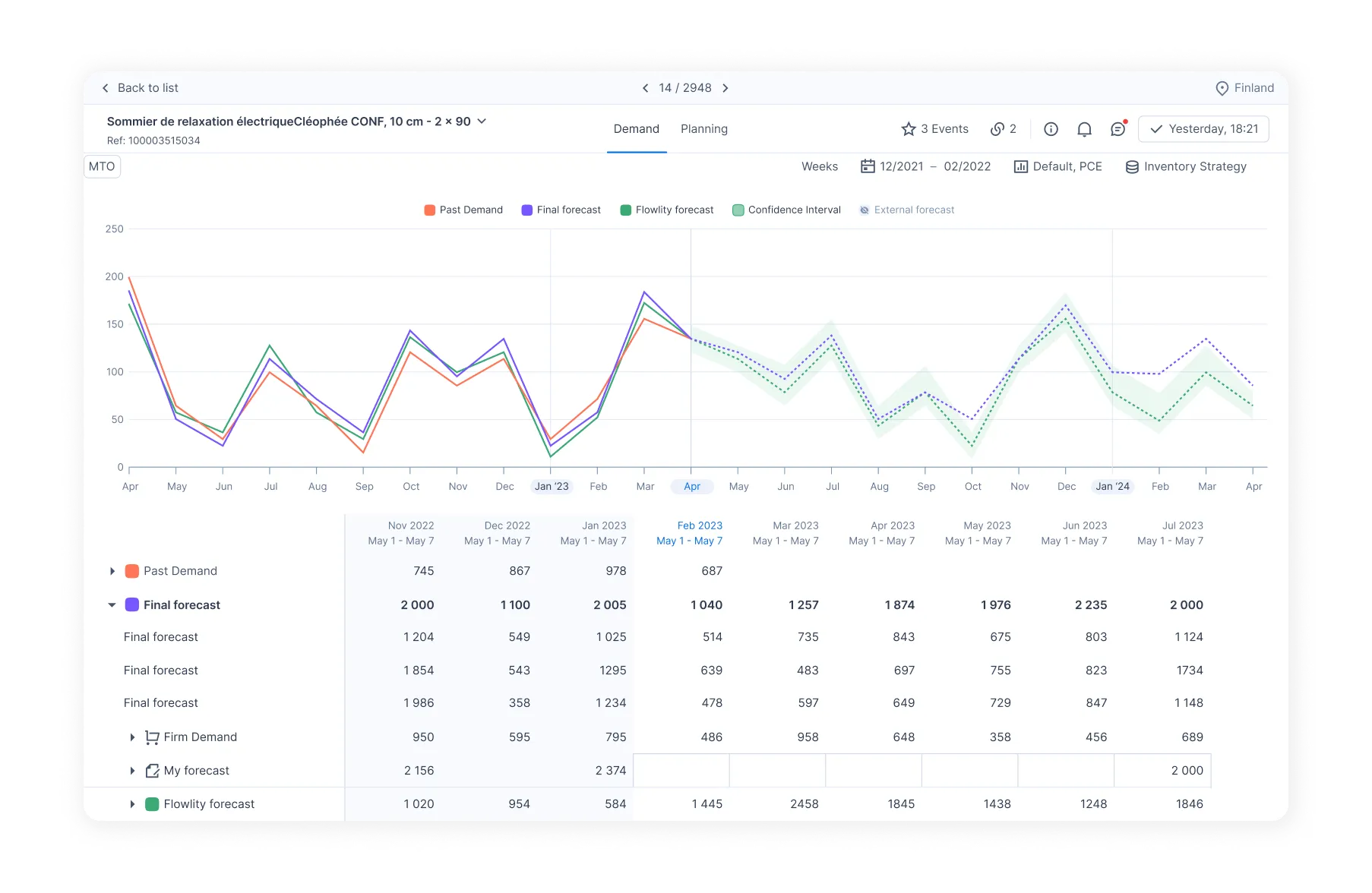
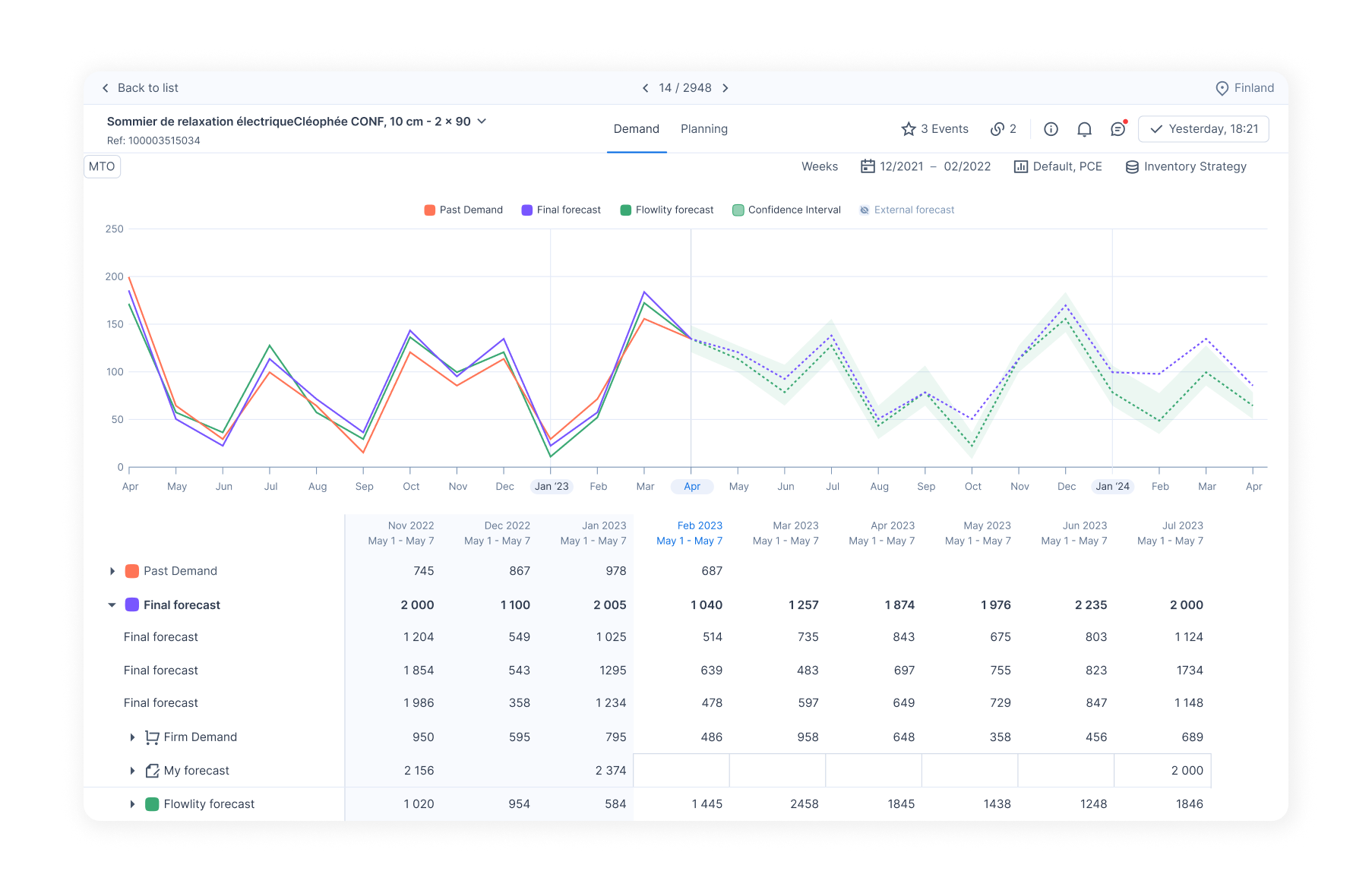
Pianificazione della domanda
Prevedi con precisione la domanda futura a livello di SKU per garantire una disponibilità ottimale dell'inventario e soddisfare efficacemente le esigenze dei clienti.

.webp)
Ottimizzazione dell'inventario
Sfrutta i dati e gli algoritmi avanzati per determinare i livelli di inventario ideali per ogni SKU, riducendo al minimo i costi e mantenendo i livelli di servizio.
.webp)
Pianificazione delle forniture
Allinea la tua offerta con le previsioni della domanda mantenendo livelli di inventario appropriati e considerando vincoli specifici come tempi di consegna e capacità.
.png)
Pianificazione delle vendite e delle operazioni
Sincronizza le operazioni quotidiane con obiettivi strategici per migliorare la collaborazione interfunzionale e promuovere le prestazioni aziendali
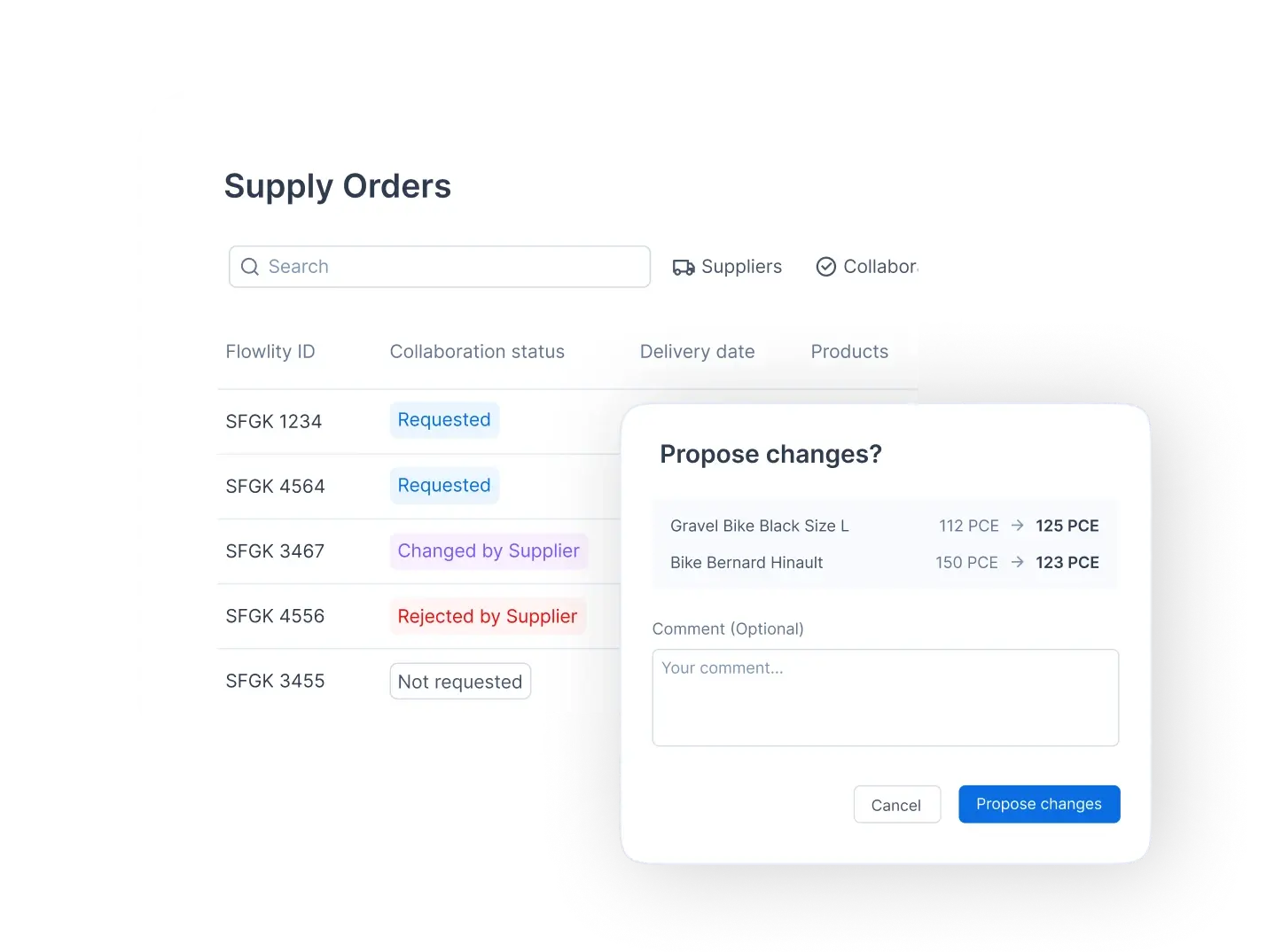
Pianificazione collaborativa
Offri visibilità in tempo reale sia al tuo team che ai tuoi fornitori, promuovendo un migliore coordinamento e reattività lungo tutta la supply chain
.webp)
Gestione dei margini basata sull'intelligenza artificiale
L'intelligenza artificiale di Flowlity ti consente di ottimizzare i margini regolando strategicamente prezzi e promozioni. La nostra tecnologia prevede l'impatto delle vostre decisioni sui prezzi dei volumi di vendita.
Clienti
L'esperienza Flowlity è semplicemente diversa. Semplice, rapida e con ROI immediato.


.avif)
.svg)
.avif)
.svg)
.avif)
.svg)

.svg)
.avif)
.svg)
.avif)
.svg)

.svg)


Prestazioni


Prestazioni

Prestazioni


delle previsioni

.svg)
Migliora la tua Supply Chain con IA.
Richiedi una demo
Tech
Tecnologie native IA e SaaS. Massimi standard di sicurezza e integrazione rapida.
.svg)



Everything You Need to Know About Supply Chain Planning Software
And how to choose right.
What is Supply Chain Planning Software (and why it matters more than ever)

Supply Chain Planning Software is the brain behind modern Supply Chain performance. It helps companies anticipate demand, align supply with reality, optimize inventory, and make smarter decisions — faster.
In a world of volatile demand, geopolitical disruptions, supplier uncertainty, and increasing pressure on margins, Excel spreadsheets and rigid legacy tools simply can’t keep up.
At its core, Supply Chain Planning Software enables companies to:
- Forecast demand more accurately
- Plan supply and replenishment based on real constraints
- Optimize Inventory levels across warehouses and production sites
- Improve collaboration between Sales, Operations, Procurement and Finance
- Anticipate risks instead of reacting to them
But not all Supply Chain Planning Software is created equal. Traditional tools rely on static forecasts and fixed heuristics. Modern AI-powered platforms like Flowlity embrace uncertainty instead of ignoring it. They generate probabilistic forecasts, continuously adapt buffers, and recommend actions in real time.
The result?
Less firefighting. More control. And a Supply Chain that works for you — not against you.
What Does Supply Chain Management Software Actually Do?
If you’re asking, “What does Supply Chain Management Software do?” — you’re not alone. In simple terms, it connects data, people, and decisions across your Supply Chain. More specifically, it helps you:
Improve Demand Planning
Accurate Demand Planning is the foundation of everything. AI-driven forecasting analyzes historical sales, seasonality, promotions, trends, and anomalies to produce more reliable forecasts — complete with confidence intervals.
Instead of betting on a single number, you understand uncertainty.
Optimize Inventory Levels
Inventory Optimization ensures you hold the right stock, in the right location, at the right time. That means:
- Fewer stockouts
- Less overstock
- Lower carrying costs
- Better cash flow
Modern systems dynamically adjust Safety Stock based on variability, lead times, and service objectives.
Enable Sales & Operations Planning (S&OP)
Supply Chain Planning Software aligns departments around one single source of truth. No more endless Excel versions.
No more siloed decisions.
No more “whose forecast is correct?”Instead, S&OP becomes collaborative, structured, and measurable.
Increase Visibility Across the Network
Supply Chain Visibility Software enables real-time tracking of Inventory, orders, and supply constraints. It integrates with ERP, WMS, and TMS systems to provide a clear picture of what’s happening. Better visibility means better decisions.
Support Scenario Planning & Simulation
What happens if a supplier is delayed? What if demand spikes 20%? What if you change your service level target?
With simulation capabilities (Digital Twin), you test scenarios before acting. That’s how resilient Supply Chains are built.
How Supply Chain Planning Software Optimizes Inventory Levels
Inventory is often the biggest lever for profitability. Too much stock → cash is frozen. Too little stock → customers leave. This is especially true in Spare Parts Supply Chains, where demand is intermittent, lead times are long, and the cost of a stockout can stop production entirely. AI-powered Supply Chain Planning Software optimizes Inventory by:
Moving from Deterministic to Probabilistic Forecasting
Instead of relying on one forecast value, probabilistic forecasting models generate demand ranges with confidence levels. This enables dynamic Safety Stock sizing based on real variability — not assumptions.
Multi-Level Optimization
Modern platforms optimize across the entire network:
- Production sites
- Distribution centers
- Retail locations
- Suppliers
This end-to-end approach reduces the Bullwhip Effect and prevents local optimizations that damage global performance.
Working by Exception
Instead of reviewing every SKU manually, planners focus only on what truly requires attention: anomalies, risks, and high-impact deviations. At Flowlity, up to 95% of routine planning tasks can be automated — allowing teams to shift from operational firefighting to strategic value creation.
- At Saint-Gobain, improved SKU-level forecasting led to a +15% increase in forecast accuracy and up to 40% inventory reduction, significantly lowering stockout risk and emergency shipments.
- For Danone, the first year alone resulted in an average 34% inventory reduction, alongside a 79% improvement in forecast efficiency — with performance maintained even during the early COVID crisis.
- In retail, Sport 2000 achieved a 39% inventory reduction, while La Redoute cut storage inventory by 50%, freeing up warehouse space and generating tangible annual savings.
- Other companies have focused on service performance: Groupe Lemoine improved its service level by 11%, and Ravate increased product availability by 6.3%.
- For growing brands like Camif, reducing stockouts by six points not only protected revenue but enabled the company to absorb +44% growth without increasing logistics headcount.
These are not isolated improvements. They are structural performance gains.
Inventory Optimization is no longer about cutting stock blindly.
It’s about intelligently balancing service, risk, and working capital — with measurable business impact.
How Supply Chain Management Software Improves Visibility
Supply Chain Visibility Software provides a unified, real-time view of:
- Stock levels
- Open orders
- Lead times
- Supplier performance
- Forecast accuracy (MAE, MAPE)
But visibility is not just about dashboards.
True visibility means actionable insights. Modern platforms integrate seamlessly with ERP systems via API, SFTP, or EDI connections. They extract master data, sales history, and supply parameters to continuously refresh planning models. The result:
- Faster reaction to disruptions
- Reduced blind spots
- Better cross-functional collaboration
Visibility is not a luxury. It’s a competitive advantage.
How to Choose the Right Supply Chain Planning Software
Choosing Supply Chain Planning Software is a strategic decision. It impacts operations, finance, and growth. Here’s what to evaluate:
Forecasting Capabilities
Does the solution use Machine Learning? Does it handle outliers automatically? Does it provide probabilistic forecasts? Avoid tools that rely solely on static statistical models if you want to rely on accurate forecasts.
Inventory Optimization Logic
Is Safety Stock dynamic? Can it optimize across multiple echelons? Does it adapt to variability in lead time and demand?
Ease of Implementation
Some legacy APS systems require 12–24 months to deploy. Modern SaaS solutions should go live in weeks — not years. At Flowlity, average go-live happens in less than 2 months.
Total Cost of Ownership (TCO)
Look beyond license price:
- Implementation costs
- Maintenance
- IT infrastructure
- Change management
Cloud-native Supply Chain Software reduces heavy IT burdens.
Usability & Planner Adoption
The most advanced algorithm is useless if planners don’t trust it. User-friendly interfaces, explainable AI, and collaborative features are critical.
Vendor Expertise
Does the vendor understand Supply Chain deeply? Do they provide mesurable ROI proof? Can they support change management? The right partner doesn’t just sell software — they help you transform your Supply Chain.
How to Evaluate Supply Chain Planning Software Vendors
When evaluating vendors, ask the right questions:
- What measurable results have clients achieved?
- How long is the average deployment?
- What industries do they specialize in?
- How do they handle data security and compliance?
- What's their current customers' ROI
Look for:
- Real customer case studies
- Transparent pricing models
- Clear implementation methodology
Supply Chain Planning Software is not a commodity. It’s a strategic partnership.
How Much Does Supply Chain Management Software Cost?
Cost varies significantly depending on:
- Number of SKUs managed
- Number of modules included
- Forecasting horizon
- Supply Chain complexity
- Multi-site production needs
Generally, pricing can range from tens of thousands per year for mid-market companies to enterprise-level investments for global corporations. However, cost should never be evaluated in isolation. The real question is: what is the ROI? If a solution reduces Inventory by 20–40% and cuts stockouts dramatically, the payback period is often short. In many cases, improved working capital alone justifies the investment.
AI-Powered Supply Chain Planning: The Flowlity Approach
At Flowlity, we believe Supply Chain Planning should be:
- Predictive
- Probabilistic
- Dynamic
- Simple to use
Our AI-powered platform was designed specifically for manufacturers, distributors, and retailers struggling with volatility and Excel-based planning.
What Makes Flowlity Different?
- Proprietary probabilistic forecasting algorithms
- Continuous recalibration of Safety Stock
- Digital Twin simulations
- Working by exception
- Collaborative supplier portal
- Cloud-native architecture (Microsoft Azure – France Central)
Unlike heavy legacy APS solutions, Flowlity combines performance with simplicity. We help companies move from Supply Chain stress to Supply Chain control.
FAQ - Supply Chain Planning & Management Software
Quali sono le principali funzionalità di Flowlity per ottimizzare la pianificazione della Supply Chain?
Flowlity è una soluzione all-in-one che copre tutte le esigenze di pianificazione della Supply Chain, dalla previsione all'operatività, con l'aiuto dell'intelligenza artificiale.
Tra le sue principali funzionalità troviamo:
Demand planning
Flowlity genera previsioni di vendita affidabili sfruttando i vostri dati storici ed esterni. Il suo algoritmo di previsione probabilistica produce diversi scenari e identifica il più probabile, fornendo anche un intervallo di confidenza per visualizzare l'incertezza. Questo vi aiuta ad anticipare la domanda in modo più accurato rispetto ai metodi tradizionali.
Ottimizzazione delle scorte
La soluzione raccomanda livelli di stock ottimali per ogni articolo e ogni ubicazione. Tenendo conto delle variazioni della domanda e dei tempi di consegna dei fornitori, Flowlity calcola soglie di riapprovvigionamento dinamiche. Avvisi intelligenti segnalano rotture di stock imminenti o sovrastock, permettendovi di agire in modo proattivo.
Supply Planning
Flowlity elabora proposte di riapprovvigionamento per i vostri magazzini o punti vendita, sincronizzando monte e valle. Visualizzate gli ordini suggeriti ai fornitori o gli ordini di produzione raccomandati, adattati in base ai vincoli (es. MOQ – quantità minime d'acquisto, lead time, capacità). Il motore di pianificazione mira a garantire una disponibilità dei prodotti fino al +50% superiore evitando le carenze e riducendo le scorte in eccesso.
Production Planning
Per i produttori, Flowlity permette di costruire un piano di produzione ottimale tenendo conto dei vincoli di capacità. Lo strumento può integrare le distinte base (BOM) e calcolare i fabbisogni netti dei componenti. Aiuta a determinare dove posizionare le scorte cuscinetto sulle catene multi-livello per massimizzare l'OTD (On Time Delivery) e rendere più affidabile l'MRP esistente.
S&OP e reportistica
Come accennato, Flowlity offre dashboard di monitoraggio in tempo reale e indicatori chiave (KPI) per la gestione della supply chain. Questi report aiutano ad allineare i dipartimenti durante il S&OP e a prendere decisioni basate sui dati grazie a una visibilità globale della situazione (copertura stock, proiezione delle carenze sotto diversi scenari, ecc.).
Collaborazione fornitore-cliente
Flowlity offre uno spazio collaborativo per condividere previsioni, fabbisogni e conferme d'ordine con i vostri partner. Questo semplifica la comunicazione e riduce l'incertezza lungo tutta la supply chain.
Gestione delle contingenze e resilienza
Grazie all'AI, Flowlity rileva precocemente i segnali di interruzione (domande anomale, ritardi annunciati) e suggerisce azioni correttive (ad esempio, anticipare un ordine fornitore o riposizionare lo stock da un sito all'altro). Questa automazione intelligente aiuta i team a navigare l'incertezza e a rendere la supply chain più resiliente agli imprevisti.
Gestione Pricing e Promozioni
Flowlity include ora un modulo Pricing & Promozioni basato sull'AI progettato per retail, e-commerce e distribuzione. Questo modulo simula scenari di pricing e promozioni, visualizza il loro impatto sui volumi di vendita, i margini e le scorte, e aiuta a definire la strategia più redditizia. Completamente integrato con la pianificazione della domanda e dell'approvvigionamento, assicura che le decisioni di pricing non creino carenze o sovrastock, permettendo ai team commerciali di massimizzare la redditività mantenendo il controllo operativo.
In sintesi, Flowlity si distingue per la sua potenza algoritmica (previsioni probabilistiche, ottimizzazione multi-echelon) e la sua facilità d'uso.
Automatizza fino al 95% delle attività di pianificazione lasciando al planner il controllo delle decisioni importanti. I responsabili Supply Chain apprezzano questo approccio che combina risparmio di tempo (riduzione dei compiti manuali) e migliori prestazioni (stock ridotto fino al -60% in alcuni casi migliorando il tasso di servizio). (Per maggiori dettagli su ogni modulo, possiamo fornirvi una presentazione dedicata – non esitate a contattarci per saperne di più.)
Cosa fa concretamente un software di Supply Chain Management?
Un software di Supply Chain Management centralizza i dati e supporta decisioni migliori lungo tutta la Supply Chain.
In concreto, consente di:
- Prevedere la domanda dei clienti con maggiore precisione
- Pianificare gli approvvigionamenti in base ai vincoli reali
- Ottimizzare i livelli di scorta nei magazzini e nei siti produttivi
- Migliorare la collaborazione tra i team Vendite, Operations, Acquisti e Finanza
- Anticipare i rischi invece di subirli
Invece di lavorare con file Excel scollegati o affidarsi esclusivamente agli output dell'ERP, il software diventa un vero motore di supporto alle decisioni.
L'obiettivo è semplice:
Ridurre le rotture di stock, diminuire le eccedenze di magazzino e migliorare il livello di servizio — simultaneamente.
Come ottimizza i livelli di scorta un software di Supply Chain Planning?
L'ottimizzazione delle scorte non significa ridurre lo stock alla cieca. Si tratta di trovare l'equilibrio tra servizio, costo e rischio.
I moderni software di Supply Chain Planning utilizzano:
- Previsione della domanda con IA
- Analisi della variabilità (tempi di consegna + volatilità della domanda)
- Calcolo dinamico dello stock di sicurezza
- Ottimizzazione multi-echelon su tutta la rete
Invece di buffer fissi, il sistema adatta continuamente le politiche di scorta in base ai dati reali.
Ciò significa:
- Minor capitale circolante impegnato
- Meno ordini di emergenza
- Meno giorni senza stock
- Maggiore soddisfazione del cliente
Le piattaforme più avanzate utilizzano la previsione probabilistica per modellare l'incertezza — permettendo alle aziende di definire obiettivi di servizio basati sulla tolleranza al rischio, non su stime approssimative.
Come migliora la visibilità un software di Supply Chain Management?
La visibilità va oltre le dashboard e le analisi.
Una buona soluzione Supply Chain si integra con il vostro ERP, WMS o TMS per fornire:
- Posizioni di stock in tempo reale
- Indicatori di performance dei fornitori
- Metriche di accuratezza delle previsioni (MAE, MAPE)
- Alert di rischio su potenziali rotture
- Simulazioni di scenari
Una vera visibilità end-to-end significa poter rispondere istantaneamente alle domande critiche:
- Dove siamo esposti?
- Quali SKU sono a rischio?
- Cosa succede se la domanda aumenta del 15%?
- Quale sarà l'impatto di un ritardo del fornitore sul livello di servizio?
Una migliore visibilità riduce la gestione delle emergenze e rafforza la fiducia nelle decisioni.
Come scegliere il software di Supply Chain Management giusto per la vostra azienda?
Scegliere la soluzione giusta richiede di guardare oltre le funzionalità.
Ecco i criteri di valutazione chiave:
1. Sofisticatezza delle previsioni
Lo strumento si basa su modelli statici o utilizza il Machine Learning e la previsione probabilistica?
2. Logica di gestione delle scorte
Lo stock di sicurezza è dinamico? Può ottimizzare su più siti?
3. Rapidità di deployment
Servono 18 mesi — o 8 settimane?
4. Facilità d'uso
I pianificatori lo adotteranno? È intuitivo?
5. Costo totale di proprietà (TCO)
Quali sono i costi nascosti di IT, manutenzione e personalizzazione?
6. Competenza del fornitore e prove di ROI
Il fornitore può dimostrare risultati misurabili in aziende simili alla vostra?
La soluzione migliore non è quella più complessa.
È quella che produce un impatto misurabile rapidamente.
Come valutare i fornitori di software di Supply Chain Planning?
Quando valutate i fornitori, concentratevi sui risultati — non sui discorsi di marketing.
Ponete le domande giuste:
- Quale riduzione media delle scorte ottengono i vostri clienti?
- In quanto tempo si raggiunge il ROI?
- In quali settori siete più forti?
- Potete simulare i miei guadagni potenziali prima che firmi?
- Come gestite la sicurezza dei dati e la conformità?
Valutate anche la dimensione della partnership:
- C'è un team Customer Success dedicato?
- Supportano la gestione del cambiamento?
- Sono reattivi e trasparenti?
La trasformazione della Supply Chain richiede allineamento interno.
Il vostro fornitore di software deve essere un partner strategico a lungo termine — non un semplice venditore.
Cos'è un software di visibilità Supply Chain e come consente il monitoraggio in tempo reale?
I software di visibilità Supply Chain si concentrano sul monitoraggio dei flussi e delle perturbazioni lungo tutta la rete.
Consentono alle aziende di:
- Monitorare i movimenti di stock in tempo reale
- Supervisionare le performance dei fornitori
- Rilevare i ritardi in anticipo
- Identificare le anomalie nella domanda
- Condividere le informazioni con i partner
Integrati con i sistemi ERP e logistici, gli strumenti di visibilità offrono una vista operativa in tempo reale.
Tuttavia, la visibilità da sola non basta.
Serve visibilità + intelligenza Supply Chain.
Le piattaforme Supply Chain più avanzate combinano il monitoraggio con raccomandazioni basate sull'IA — così non solo vedete il problema, ma sapete anche cosa fare dopo.