.svg)
Anticipa la volatilità della domanda con il demand sensing AI
Mantieni alti i livelli di servizio in contesti volatili grazie al rilevamento della domanda in tempo reale, potenziato dall'IA.
Richiedi una demo.webp)
Trasforma i segnali di domanda in tempo reale in azioni immediate
I mercati sono più volatili che mai. Promozioni, interruzioni ed eventi esterni generano variazioni improvvise della domanda che le previsioni tradizionali non riescono ad assorbire — mettendo a rischio i livelli di servizio e l'inventario. Devi poter reagire — e reagire in fretta.

Rilevamento dei segnali intrinseci ed estrinseci
.svg)
Alert e prioritizzazione guidate dall'IA
.svg)

Proteggi i livelli di servizio senza gonfiare l'inventario grazie alle previsioni IA in tempo reale
La previsione della domanda costruisce la baseline. La demand sensing la mantiene rilevante intempo reale — specialmente quando la domanda diventa imprevedibile.
Previsioni IA in tempo reale
Scopri come la domanda storica viene pulita automaticamente (eliminando mancanze di stock e anomalie) e come le previsioni vengono generate in automatico, con la possibilità di essere modificate a qualsiasi livello della gerarchia.
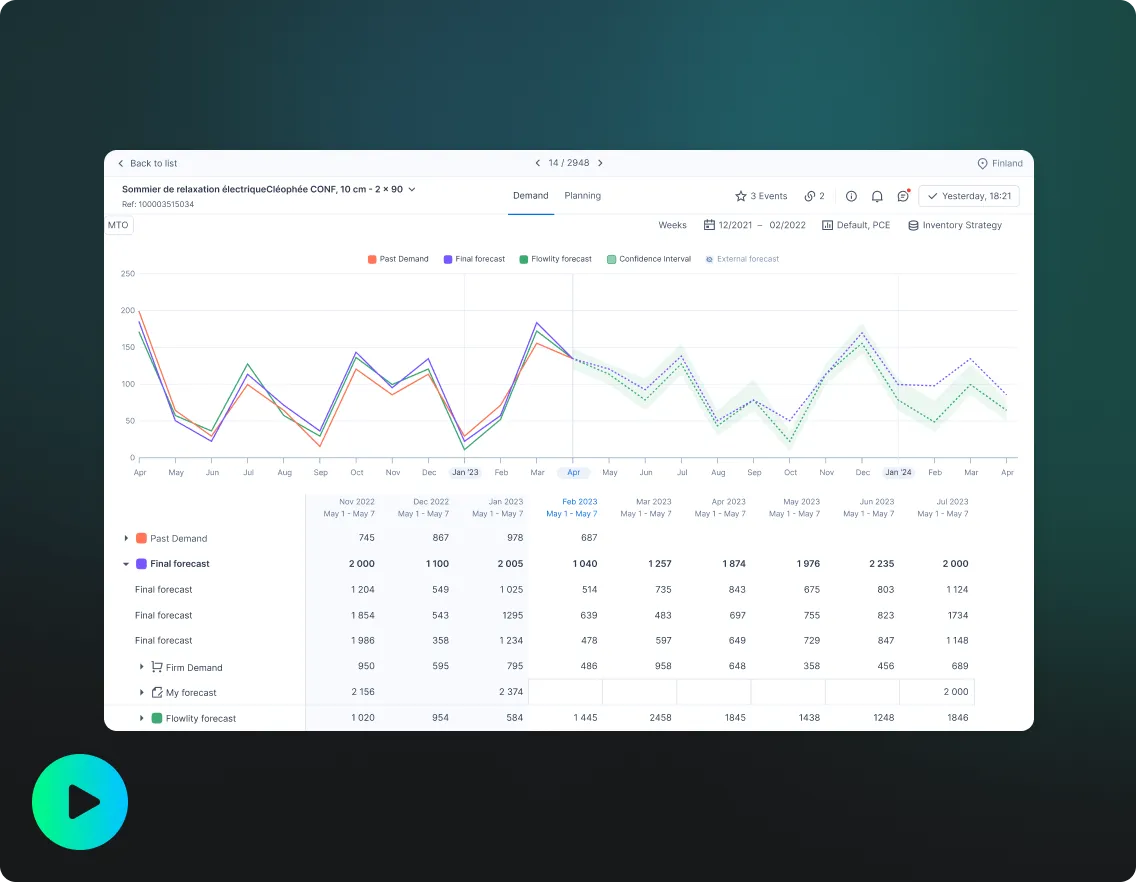

Reagisci più rapidamente alla volatilità della domanda

Evita stockout e scorte eccessive

Meno gestione delle emergenze per i pianificatori
Come i software di demand sensing captano i segnali in tempo reale per aggiustare la tua Supply Chain
Perché la volatilità di breve termine è la vera minaccia per i livelli di servizio

La maggior parte delle disruption Supply Chain non arriva con settimane di preavviso. Un picco improvviso di sell-through in un punto vendita chiave, un evento meteo imprevisto che modifica il comportamento d'acquisto, una rottura di un competitor che redirige la domanda sui tuoi prodotti: questi spostamenti avvengono in pochi giorni, a volte poche ore. E quando un ciclo di pianificazione mensile tradizionale riesce a recuperare, il danno è fatto: le rotture erodono il livello di servizio, oppure l'eccesso di stock immobilizza capitale circolante.
È qui che il demand sensing gioca un ruolo critico nella Supply Chain. A differenza dei metodi di pianificazione di lungo periodo che si appoggiano a pattern storici proiettati su più mesi, il demand sensing opera su un orizzonte molto più corto: tipicamente da giorni a settimane. Ingerisce continuamente segnali in tempo reale (dati POS, pattern d'ordine, indicatori esterni) per intercettare gli spostamenti non appena emergono. L'obiettivo non è sostituire il tuo processo di demand forecasting nel suo complesso, ma affinare la visione di breve periodo affinché i team agiscano prima che la volatilità si trasformi in mancato fatturato o in spreco.
Per le aziende del retail e dell'e-commerce, dove promozioni, stagionalità e tendenze di consumo si muovono rapidamente, questa reattività è essenziale. Ma la stessa logica vale negli ambienti manifatturieri, dove i lead time delle materie prime e i piani di produzione richiedono visibilità precoce sui cambiamenti di domanda per evitare aggiustamenti costosi a valle.
Come funziona in pratica il processo di demand sensing
Il processo di demand sensing può essere scomposto in alcuni passaggi chiave, ciascuno costruito sul precedente per ridurre il tempo tra un segnale di mercato e una risposta operativa.
Ingestion dei segnali
È il punto di partenza. Le soluzioni di demand sensing raccolgono dati da un ventaglio ampio di fonti:
- Sell-through e dati POS
- Ordini aperti e tracking spedizioni
- Posizioni di stock su tutta la rete
- Indicatori esterni come meteo, indici economici o calendari eventi
Più i dati sono granulari e frequenti, più precisamente il sistema rileva i pattern emergenti.
Rilevamento dei pattern e aggiustamento
Gli algoritmi di IA e machine learning analizzano questi segnali in ingresso rispetto al piano di breve termine esistente. Invece di ricostruire una previsione da zero, il sistema identifica gli scostamenti (un'accelerazione improvvisa della velocità di vendita su uno specifico SKU in un determinato sito, ad esempio) e aggiusta la visione di breve termine di conseguenza. Tutto avviene in automatico e con un livello di granularità (SKU × sito × giorno) impossibile da raggiungere manualmente.
Output azionabile
È ciò che distingue un demand sensing utile da un semplice monitoraggio dei segnali. La vista di breve termine aggiustata alimenta direttamente le decisioni di riassortimento, lo scheduling di produzione e i processi di gestione delle scorte. I planner non devono revisionare ogni aggiustamento: si concentrano sulle eccezioni e sugli scostamenti ad alto impatto segnalati dal sistema, esattamente come funzionano gli alert e la prioritizzazione IA di Flowlity.
Per approfondire come i modelli probabilistici sostengono questo tipo di aggiustamento in tempo reale, il webinar su i modelli di previsione Supply Chain guidati dall'IA e l'approccio probabilistico entra nel dettaglio della metodologia.
Cosa cercare in una soluzione di demand sensing
Non tutte le soluzioni di demand sensing producono lo stesso valore. In fase di valutazione, alcune capacità separano gli strumenti efficaci da quelli che aggiungono solo complessità senza un reale miglioramento.
Granularità e frequenza degli aggiornamenti
Le migliori soluzioni di demand sensing operano a livello SKU-sito e si aggiornano quotidianamente o anche intraday. Se uno strumento si aggiorna solo su base settimanale o lavora a livello di famiglia di prodotto aggregata, il vantaggio di reattività scompare.
Ampiezza e flessibilità dei segnali
La tua soluzione deve essere in grado di ingerire dati interni (POS, ordini, spedizioni, scorte) accanto a segnali esterni (meteo, indicatori di mercato, eventi) senza richiedere mesi di integrazione custom. Le aziende mid-market in particolare hanno bisogno di soluzioni che si colleghino rapidamente a ERP e fonti dati esistenti: è un principio di design centrale dell'architettura plug-and-play di Flowlity.
Esplicabilità e fiducia del planner
Il demand sensing funziona solo se i planner comprendono e accettano i segnali aggiustati. Algoritmi black-box che producono cambiamenti inspiegabili generano resistenza. Cerca soluzioni che mostrino il "perché" dietro ogni aggiustamento:
- Quale segnale ha innescato il cambiamento
- Qual è il livello di confidenza del modello
- Qual è l'impatto atteso
Flowlity risponde a questo bisogno tramite dashboard e analytics trasparenti che mostrano esattamente quali fattori guidano ciascuna raccomandazione.
Integrazione nel workflow di pianificazione globale
Il demand sensing non deve esistere come modulo a sé stante, scollegato dal resto della tua pianificazione Supply Chain. Deve alimentare in modo fluido i processi S&OP, l'ottimizzazione delle scorte e il riassortimento punto vendita, creando un loop continuo e non un flusso dati parallelo.
Demand sensing tra settori: dagli scaffali del retail alle linee di produzione
Il demand sensing nella Supply Chain non è una capacità "taglia unica". I segnali che contano, la velocità di risposta richiesta e le azioni a valle variano sensibilmente da settore a settore.
Retail ed e-commerce
Nel retail e nell'e-commerce, il demand sensing è guidato principalmente da dati POS e di sell-through. Promozioni, aggiustamenti di prezzo della concorrenza e perfino i trend sui social media possono provocare rapidi cambiamenti nei comportamenti d'acquisto. La capacità di rilevare una promozione che sta sovraperformando (o sottoperformando) in 24-48 ore e aggiustare di conseguenza il riassortimento può fare la differenza tra catturare fatturato incrementale e ritrovarsi con scaffali vuoti, o con montagne di stock invenduto.
Per i retailer che stanno valutando strumenti di pianificazione con IA, l'articolo sui migliori software di demand planning per PMI fornisce un utile schema di confronto.
Manifatturiero
Nel manifatturiero, i segnali sono diversi ma altrettanto sensibili al tempo. I pattern di intake degli ordini, i livelli di stock dei distributori e la disponibilità di materie prime influenzano tutti il modo in cui i piani di produzione devono essere aggiustati nel breve termine. Un produttore che intercetta un improvviso aumento di ordini da un distributore chiave può mettere al sicuro proattivamente le materie prime e aggiustare le serie di produzione, evitando ritardi e costi di spedizione urgente.
Per uno sguardo più approfondito su come la detection in tempo reale si collega al riassortimento delle materie prime, il white paper su la gestione della volatilità della domanda e il suo impatto Supply Chain attraverso un riassortimento materie prime più intelligente esplora il tema in dettaglio.
In entrambi i casi, il filo conduttore è la velocità: ridurre la latenza tra la comparsa di un segnale di domanda sul mercato e la risposta della Supply Chain.
L'impatto misurabile del demand sensing sulle performance Supply Chain
Il business case del demand sensing si fonda su miglioramenti concreti e misurabili su più dimensioni.
Miglioramento della precisione di breve termine
Le aziende che implementano il demand sensing osservano tipicamente un miglioramento del 20 % al 40 % della precisione di breve termine (1-14 giorni) rispetto all'utilizzo del solo piano di base. Non si tratta di essere "più accurati in media": si tratta di intercettare i momenti precisi in cui la realtà si discosta dal piano.
È esattamente ciò che fornisce il motore probabilistico di Flowlity. Saint-Gobain, ad esempio, ha migliorato la precisione delle proprie previsioni del 15 % e portato il livello di servizio dal 95,8 % al 97,2 % dopo aver implementato Flowlity, traducendo questo in meno vendite mancate e in una lettura più fine della domanda reale di breve termine su tutta la rete distributiva.
Protezione del livello di servizio
Quando il sistema rileva che la domanda di un prodotto sta accelerando oltre il piano in un determinato sito, può innescare azioni di riassortimento prima della rottura. Ravate, retailer multi-categoria, ha migliorato il proprio livello di servizio del 6,3 % dopo aver implementato le capacità di demand sensing di Flowlity, traducendo questo direttamente in fatturato protetto e in una migliore disponibilità a scaffale.
Efficienza degli stock
Captare meglio la domanda non significa stoccare di più, significa stoccare in modo più intelligente. Identificando quando la domanda sta decelerando, le aziende evitano il sovrariassortimento e riducono gli eccessi. Magotteaux, ad esempio, ha ridotto il valore del proprio inventario del 13 % e la copertura stock del 22 % diminuendo al contempo le rotture dell'8 %, perché il sistema distingue gli spostamenti reali di domanda dal rumore.
Produttività del planner
Senza demand sensing, i planner dedicano molto tempo a rivedere manualmente le previsioni, rincorrere segnali tra fogli di calcolo e dashboard, e spegnere incendi quando arrivano le sorprese. Un demand sensing automatizzato riduce questo carico reattivo e libera i planner per attività a maggior valore aggiunto, come la gestione delle eccezioni e le decisioni strategiche.
Come Flowlity affronta il demand sensing in modo diverso
La capacità di demand sensing di Flowlity si appoggia su un motore IA probabilistico che non si limita a fornire un singolo numero aggiustato: restituisce un range di esiti probabili per ciascun SKU in ciascun sito, accompagnato da un livello di confidenza. Conta perché non tutti i segnali pesano allo stesso modo e non tutti gli spostamenti di domanda richiedono la stessa risposta.
Alert prioritizzati, non rumore
Invece di costringere i planner a fidarsi alla cieca o a sovrascrivere manualmente ogni aggiustamento, l'approccio di Flowlity mette in evidenza solo gli scostamenti significativi: i segnali che meritano davvero attenzione. Il sistema cattura segnali deboli da tendenze di vendita, promozioni, rotture, pattern meteorologici ed eventi esterni, e li fa emergere come alert prioritizzati. I planner vedono esattamente cosa è cambiato, perché, e qual è l'azione raccomandata.
Costruito per il mid-market, non solo per le grandi aziende
Questo design riflette un principio fondante: il demand sensing deve ridurre la complessità, non aggiungerla. Molte soluzioni enterprise in questo segmento richiedono mesi di implementazione e team di data science dedicati per essere operative. Flowlity è costruito per le aziende mid-market che vogliono lo stesso livello di reattività guidata dall'IA, senza quella pesantezza:
- Deploy rapido, con connettori ERP preconfezionati
- Intuitivo, senza necessità di un team di data science
- Integrazione fluida nei workflow di pianificazione quotidiani, accanto all'ottimizzazione delle scorte e al Sales and Operations Planning
Interroga i tuoi segnali di domanda tramite IA conversazionale
Con il server MCP Flowlity Co-planner, i planner possono ora porre domande sull'accuratezza delle previsioni, sugli scostamenti di domanda e sui livelli di stock direttamente da Claude, ChatGPT o Microsoft Copilot, in linguaggio naturale. Nessuna dashboard da navigare, nessun report da esportare: l'assistente IA interroga i tuoi dati Flowlity in tempo reale e spiega cosa sta succedendo, compreso il motivo per cui uno specifico SKU si sta discostando dal piano.
FAQ
Find everything you need to know right here.
Cos'è il demand sensing?
Il demand sensing è una capacità Supply Chain a breve termine che utilizza IA, machine learning e segnali di dati in tempo reale per rilevare e rispondere ai cambiamenti della domanda nel momento in cui si verificano. A differenza degli approcci di pianificazione tradizionali che si aggiornano mensilmente o settimanalmente sulla base di medie storiche, il demand sensing analizza continuamente i segnali del mercato — dati punto vendita, pattern di ordini, posizioni di inventario e fattori esterni — per adeguare le previsioni a breve termine a un livello granulare (tipicamente SKU × ubicazione × giorno).
L'obiettivo non è prevedere la domanda a mesi di distanza, ma affinare i prossimi 1-14 giorni del piano affinché le decisioni di riapprovvigionamento, produzione e allocazione riflettano ciò che sta realmente accadendo sul mercato. Questo lo rende un potente complemento al processo di previsione della domanda più ampio. Il motore probabilistico di Flowlity è progettato specificamente per questo: ricalibra continuamente le previsioni a breve termine a livello SKU-ubicazione, offrendo ai pianificatori un quadro della domanda sempre aggiornato senza rilavorazioni manuali.
Qual è la differenza tra demand sensing e previsione della domanda?
Il demand sensing e la previsione della domanda svolgono ruoli diversi ma complementari nella pianificazione Supply Chain.
La previsione della domanda opera generalmente su un orizzonte più lungo — da settimane a mesi — e si basa in gran parte su pattern storici di vendita, stagionalità e analisi delle tendenze per costruire un piano base. Risponde alla domanda: cosa ci aspettiamo in termini di domanda nel prossimo periodo?
Il demand sensing opera su un orizzonte molto più breve — da giorni a due settimane — e si concentra nel rilevare scostamenti rispetto al piano attraverso segnali in tempo reale. Risponde a una domanda diversa: cosa sta realmente accadendo adesso e come dovremmo adeguarci?
In altre parole: la previsione stabilisce la rotta, e il demand sensing effettua le correzioni di rotta in tempo reale. Flowlity combina entrambi in un'unica piattaforma — il motore probabilistico costruisce la previsione base e la adegua continuamente con il sensing in tempo reale, così i pianificatori lavorano da una vista unificata anziché riconciliare due output separati.
Quali tipi di dati utilizza il demand sensing?
Le soluzioni di demand sensing ingeriscono un'ampia combinazione di dati interni ed esterni:
Segnali interni: dati punto vendita e sell-through, ordini clienti aperti, dati di spedizione e consegna, livelli di inventario in tempo reale nell'intera rete, calendari promozionali.
Segnali esterni: dati meteorologici, indicatori economici, tendenze sui social media, attività della concorrenza, eventi locali e festività, variazioni degli indici di mercato.
L'aspetto chiave è la frequenza e la granularità. Il demand sensing funziona al meglio quando i dati vengono aggiornati quotidianamente o più frequentemente, e quando opera a livello di singolo SKU-ubicazione anziché per categorie aggregate. La piattaforma Flowlity acquisisce tutti questi segnali tramite connettori ERP preintegrati, il che significa che le aziende non necessitano di pipeline dati personalizzate né di risorse dedicate di data engineering per iniziare a trarre valore dal demand sensing.
Come migliora il demand sensing la gestione dell'inventario?
Il demand sensing ha un impatto diretto e misurabile sulle performance dell'inventario. Rilevando le accelerazioni della domanda in anticipo, attiva riapprovvigionamenti tempestivi per prevenire le rotture di stock. Altrettanto importante, quando la domanda decelera, previene il sovra-approvvigionamento che genera eccedenze, svalutazioni o sprechi — un problema critico nel food & beverage e nei prodotti deperibili.
L'effetto netto è un allineamento più preciso tra i livelli di inventario e la domanda reale del mercato: maggiore disponibilità con meno stock totale. Saint-Gobain, ad esempio, ha ottenuto una riduzione del 9,25% dei livelli di inventario con Flowlity, perché il sistema ricalibra continuamente la posizione ottimale di stock sulla base di segnali in tempo reale anziché regole statiche di scorta di sicurezza.
Il demand sensing funziona per le medie imprese, non solo per le grandi aziende?
Assolutamente — ed è esattamente il terreno su cui Flowlity opera ogni giorno. Storicamente, il demand sensing era accessibile solo alle grandi aziende con team di data science dedicati e budget di implementazione pluriennali. Oggi, Flowlity rende il demand sensing accessibile alle medie imprese grazie a un'architettura plug-and-play che si connette ai sistemi ERP esistenti senza progetti IT pesanti.
I clienti Flowlity spaziano da aziende di 45 persone come Plum Living, un brand digitale di arredamento che gestisce circa 1.000 SKU, a produttori industriali come Magotteaux e distributori multicategoria come Ravate. Ciò che condividono è la necessità di una reattività guidata dall'IA senza la complessità degli strumenti enterprise. Per team ancora più piccoli, Flowlity Lite offre un percorso accelerato verso il forecasting con IA con setup minimo.
Il demand sensing sostituisce il S&OP?
No — il demand sensing rafforza il S&OP, non lo sostituisce. Il S&OP è un processo trasversale che allinea i piani commerciali, operativi e finanziari su un orizzonte medio-lungo. Il demand sensing opera su un orizzonte molto più breve e alimenta questo processo con segnali a breve termine più accurati.
Nella pratica, il demand sensing migliora la qualità dell'input di domanda che entra nel ciclo S&OP. Quando la visione a breve termine è più accurata, le discussioni S&OP possono concentrarsi su decisioni strategiche ed eccezioni invece di dibattere sull'affidabilità dei numeri. Flowlity è progettato con questa integrazione in mente — il demand sensing alimenta direttamente il flusso di lavoro S&OP, spostando la conversazione da “la previsione è accurata?” a “cosa facciamo riguardo agli scostamenti rilevati?”.
In quanto tempo si può implementare il demand sensing?
I tempi di implementazione variano in base alla maturità dei dati e alla complessità della Supply Chain. Le piattaforme enterprise possono richiedere da 6 a 12 mesi o più. Flowlity è progettato per un time-to-value rapido, e i deployment reali lo dimostrano.
Plum Living, un'azienda di interior design con 45 dipendenti, è andata live con Flowlity su 630 SKU e 2 magazzini — ottenendo una riduzione dell'inventario del 21% al go-live. Supply Caddy, cliente Flowlity Lite, ha generato le sue prime previsioni IA istantaneamente dopo la firma ed era completamente operativo in meno di due settimane.
I deployment tipici per le medie imprese richiedono settimane anziché mesi, grazie ai connettori preintegrati per i principali sistemi ERP e un'architettura cloud-native che elimina la necessità di infrastruttura IT pesante.