.svg)
.svg)
Cold chain inventory management: stop planning in silos

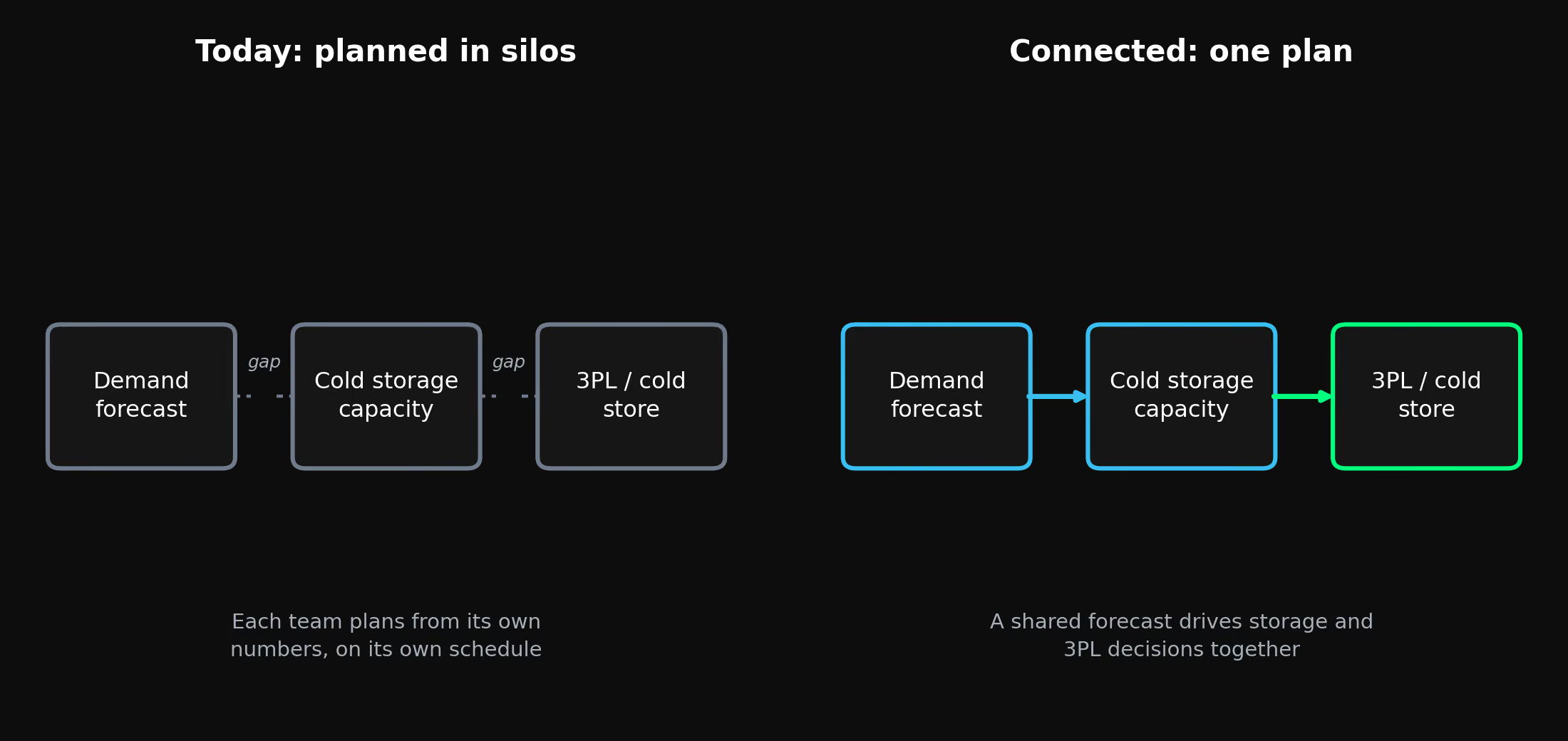
Cold chain inventory management usually gets split into two separate problems: demand forecasting and storage capacity. In frozen food, that split is the root cause of most stockouts and write-offs. A forecast that is wrong by even a few points either books freezer space that goes unused or leaves a shipment with nowhere cold to go. Treating demand and capacity as one connected decision, instead of two handoffs, is what an AI-native advanced planning system (APS) is built to do.
Most cold chain inventory advice reads like two separate conversations. The same split runs through the tooling, which is why most food and beverage inventory software comparisons cover one side or the other, rarely both. One camp talks about freezer real estate: how expensive it is, how old the average facility is, how automation can squeeze more pallets into the same footprint. The other camp talks about demand: promotions, shelf life, how unreliable historical sales data has become. Rarely do the two meet on the same page, and that is exactly backwards for frozen food. A freezer slot booked against a bad forecast is not a small error. It is either wasted cold storage sitting empty at a premium price, or a truck full of product with nowhere to go. In frozen food, the forecast and the capacity decision are the same decision, made twice, by two teams that usually do not talk to each other.
Why frozen food breaks conventional demand forecasting
Frozen products carry all the usual demand forecasting headaches, and then add a temperature-controlled clock on top of them. Shelf life restrictions mean a forecast error cannot simply be absorbed by holding a bit more stock: product frozen too long, or refrigerated too long in transit rather than in a controlled warehouse, can lose meaningful shelf life before it ever reaches a shelf. Retail promotions in food and beverage compound the problem, since a single retailer's last-minute promotional push can create a demand spike that has no equivalent in the historical sales data a traditional forecasting model relies on. And the wider market has made historical data even less trustworthy than it used to be: inflation, shifting consumer habits and repeated supply disruptions mean that what sold last year is a weaker guide to what will sell next month than it once was.
On top of that, most frozen food manufacturers sell through more than one channel at once, and each channel behaves differently. A manufacturer might ship full pallets directly to a handful of major grocery chains, who are precise about delivery windows, and simultaneously supply a much longer tail of independent stores through a third-party distributor who breaks those same pallets into smaller case picks. The big accounts need forecast granularity down to the SKU and the week; the long tail is better forecast in aggregate. Retailers increasingly hold suppliers to on-time-in-full delivery rates above 99%, with financial penalties for missing that bar, so a forecast that is directionally right but poorly timed can still cost real money.
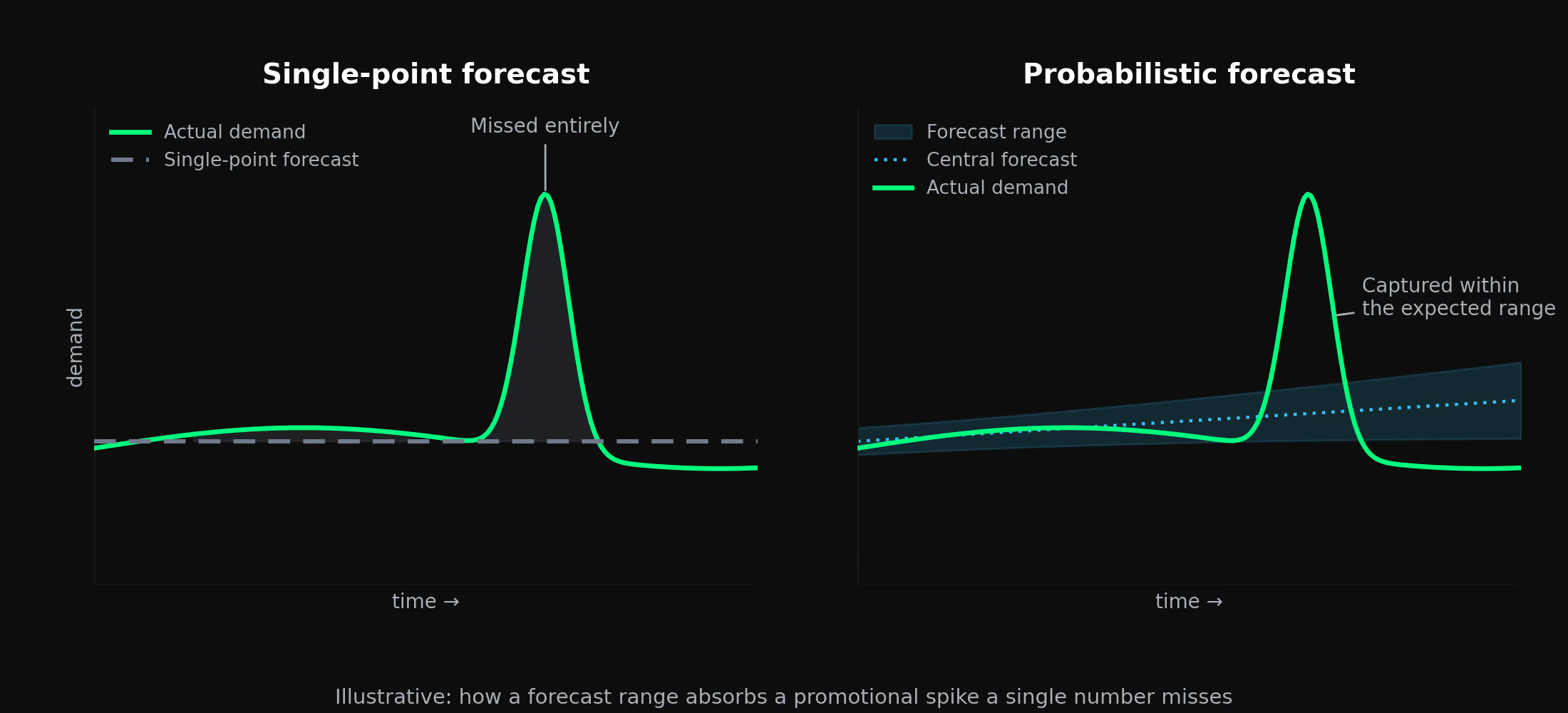
A single-point forecast, the "we think we'll sell 4,000 units next month" style of planning, cannot represent any of this well. It collapses shelf life risk, promotional uncertainty and channel differences into one number and hopes for the best. What frozen food actually needs is a forecast that carries a range and a confidence level with it, so that the decisions built on top of it, including the storage decision, can be made with the actual uncertainty in view rather than a false sense of precision.
Why storage capacity can't be planned as an afterthought
Cold storage is not a commodity a company can simply buy more of when a forecast turns out wrong. Temperature-controlled space costs roughly four times more per square foot to build than a standard warehouse, frequently exceeding $300 per square foot for new construction against $75 to $100 for conventional space, and much of the existing cold storage network is decades old and was not designed with today's throughput in mind (Food Logistics). Meanwhile demand for frozen products keeps climbing: the global frozen food market is on track to grow from roughly $290 billion today to $504.4 billion by 2030 (Aptean), which means the freezer space every manufacturer is fighting over is only getting scarcer relative to what needs to move through it.
That scarcity is exactly why a storage plan built independently of the demand forecast is so costly when it is wrong. Overestimate demand and a company is paying premium rates to hold pallets that should have been produced later, tying up space that another SKU needed during a promotional spike. Underestimate it and the alternative is not a small stockout: it is an emergency production run, an expedited and often non-temperature-optimal shipping lane, or a retailer relationship damaged by a missed delivery window. Neither failure mode is really a storage problem or a forecasting problem on its own. Both are the same problem, arriving in a different department.
This is also why several frozen food companies, in our own conversations with prospects evaluating a planning tool, ask for the same capability almost immediately: the ability to simulate different starting stock positions at a third-party cold store and see how future receipts and outbound deliveries would need to change in response. In other words, they want to treat their third-party logistics (3PL) provider's cold store as a live, rolling ledger that responds to the forecast, not a static daily file someone reconciles by hand. That instinct is correct. It is also very hard to build in a spreadsheet.
Treating demand and cold storage as one system, not two handoffs
The fix is not a better spreadsheet template shared between the demand planner and the warehouse manager. It is planning both from the same underlying signal. A mid-market frozen food manufacturer we have worked with had, until recently, no formal forecasting process at all: purchasing and production ran off spreadsheets and instinct, with no system connecting what the sales pipeline suggested to what the cold store could actually hold. Moving to a system-driven approach was less about adding a new tool and more about giving the demand signal and the storage decision a shared source of truth for the first time.
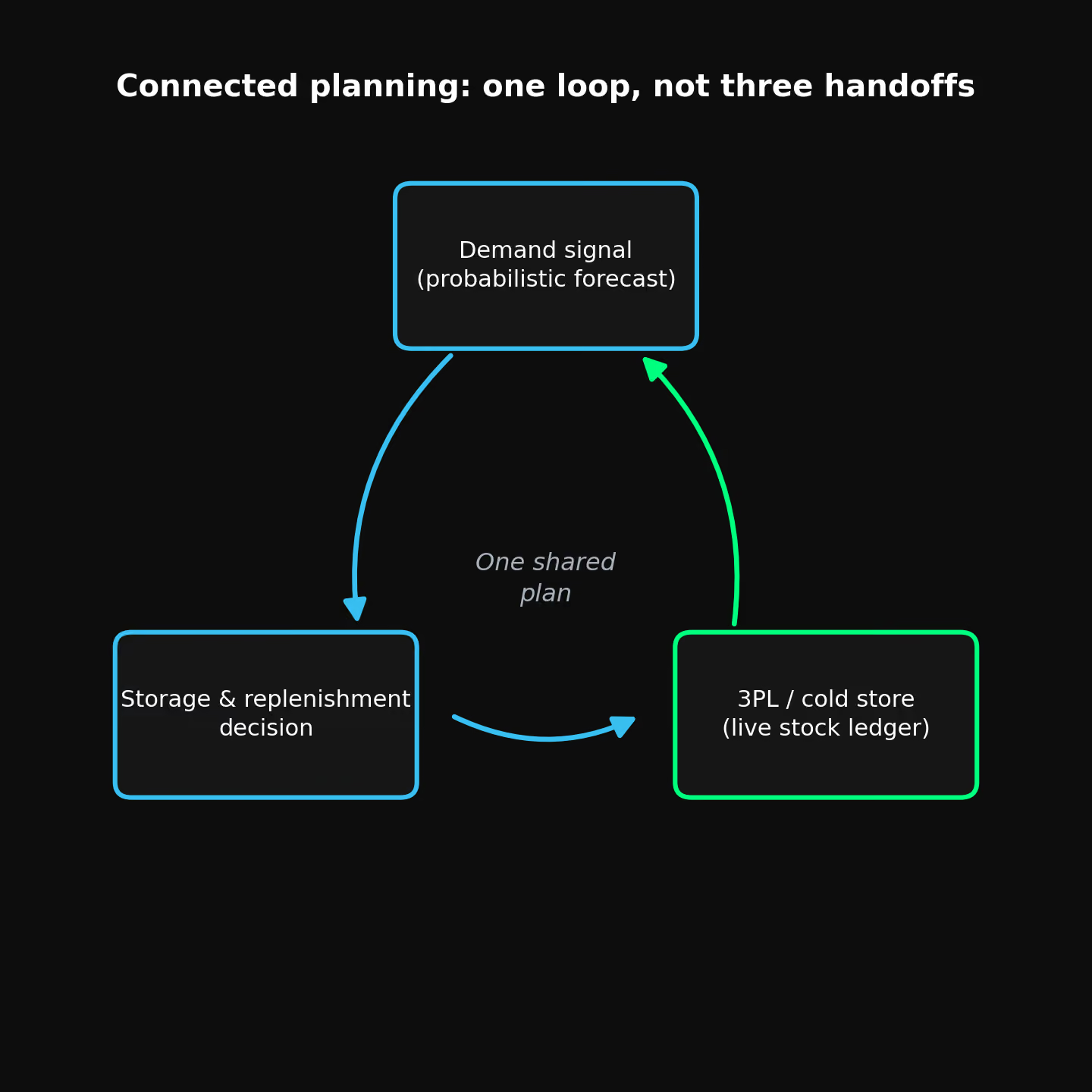
That is the core idea behind an AI-native APS applied to cold chain inventory. Instead of a single-point forecast handed to a warehouse team as a fixed instruction, the system carries the forecast's full range of likely outcomes through to the storage and replenishment decision, and continuously narrows that range as new sales data, promotional calendars and lead times come in. Planners then work by exception: the system automatically produces a plan for the routine cases and flags the ones that genuinely need a person's judgment, such as an unexpected promotional spike at one retailer or a lead time slipping at one supplier. For a frozen food manufacturer juggling large direct accounts and a long tail of independent stores through a distributor, that also means forecasting each channel at the granularity it actually needs, rather than forcing one method onto both.
The same connected approach extends naturally to the 3PL relationship. Rather than a static stock file updated once a day, a live view of the cold store, tied to the same forecast driving production and purchasing, lets a planner simulate what happens to receipts and deliveries under a different starting stock position before committing to it, catching a capacity crunch or an excess position weeks before it becomes a costly surprise. That is what multi-tier, collaborative planning looks like in practice: not a dashboard everyone checks separately, but one plan that the manufacturer, the 3PL and the retailer are effectively working from together.
Building a cold chain that plans as one system, not three
Cold chain inventory management keeps getting treated as three separate disciplines: demand forecasting, warehouse operations and logistics. Each has its own software category, its own metrics, its own team. For ambient, long-shelf-life goods, that separation is inefficient but survivable. For frozen food, where a forecasting error becomes a storage cost or a spoiled shipment within days, it is the actual source of the problem. The manufacturers making progress on this are not the ones buying more freezer space or a slightly better forecasting model in isolation. They are the ones connecting the demand signal, the cold storage position and the 3PL relationship into a single plan that updates as reality changes, so that the forecast a planner trusts is the same number the warehouse and the distributor are already working from.
If your team is still reconciling a demand forecast against a separate cold storage plan by hand, that gap is worth closing before the next promotional season, not after a costly one. Closing it means treating cold storage capacity and inventory optimization as a single decision rather than two.
Level up your supply chain with AI.
Get a demo

FAQ
Find everything you need to know right here.
What is cold chain inventory management?

Cold chain inventory management is the practice of planning and controlling stock that must stay within a specific temperature range, typically frozen or refrigerated, from production through storage, transport and final delivery. It covers the same core decisions as any inventory management discipline, such as how much to produce, when to replenish, and how much safety stock to hold, but adds temperature and shelf life as hard constraints on every one of those decisions.
A product that would simply sit on a shelf a little longer in ambient inventory management can lose meaningful value or become unsellable in a cold chain if it is held too long, moved too slowly, or exposed to a temperature excursion in transit. Effective cold chain inventory management also has to account for where a product physically sits at any given time, since time spent in transit or in a loading dock can eat into shelf life just as much as time spent in storage. That is part of why cold chain inventory is harder to manage with a generic inventory system: the storage and transport network is not just a cost to minimize, it is a constraint that actively shapes how much can safely be produced and held at any point in time.
How is frozen food demand forecasting different from forecasting for ambient goods?
Frozen food forecasting has to deal with shorter effective decision windows, since a forecast error cannot simply be corrected by holding extra stock the way it often can for shelf-stable goods. It also tends to see sharper promotional spikes relative to baseline demand, because retailers use frozen categories heavily in seasonal and value promotions, and those spikes often do not resemble anything in the historical sales data a standard statistical model was trained on.
On top of that, frozen food manufacturers commonly sell through several channels with very different order patterns at once, such as large direct retail accounts alongside a long tail of independent stores served through a distributor, which means a single forecasting method applied uniformly across all customers tends to perform poorly for at least one of those channels. The practical implication is that frozen food forecasting benefits more than most categories from a probabilistic approach, one that expresses a range of likely demand outcomes rather than a single number, because that range is what allows a storage and production plan to be built with the actual uncertainty of frozen demand in view.
What usually causes frozen food stockouts and overstock at the same time?
It is common for a frozen food operation to be simultaneously out of stock on some SKUs and sitting on excess cold storage inventory of others, and the root cause is almost always a forecast that is too coarse for how the business actually sells. A single aggregate forecast, or one built primarily from a spreadsheet and manual adjustment, tends to average out real differences between SKUs, channels and locations, overcorrecting for the loudest recent signal (a stockout, a big order, a promotion) while missing quieter but persistent shifts elsewhere in the range.
Because cold storage capacity is expensive and limited, that averaging error shows up immediately as both a shortage somewhere and an excess somewhere else, rather than being absorbed the way it might be in a cheaper, less constrained storage environment. Fixing it generally requires forecasting at a finer grain, by SKU, channel and sometimes location, and connecting that forecast directly to replenishment and storage decisions so that the plan reflects where demand is actually moving rather than a single blended average.
Cold chain inventory management vs cold chain logistics: what's the difference?
Cold chain logistics refers to the physical movement and handling of temperature-sensitive goods: refrigerated trucks, cold storage warehouses, temperature monitoring, and the routing and scheduling that keeps a shipment within its required range from origin to destination. Cold chain inventory management is the planning layer that sits above that: deciding how much to produce, when to replenish, how much safety stock to hold, and how to allocate available cold storage capacity across products and channels.
The two are closely linked, since a logistics network can only execute the plan inventory management hands it, and inventory decisions are only as good as the physical network's real constraints, such as available freezer capacity, transit times and temperature control reliability. In practice, the companies that struggle most tend to be the ones where these two functions are planned by different teams using different tools and rarely comparing notes, since a logistics constraint discovered after the inventory plan is set almost always costs more to fix than one built into the plan from the start.
How does Flowlity help with cold chain inventory and frozen food planning?
Flowlity is an AI-native supply chain planning platform that replaces single-point demand forecasts with a probabilistic view of likely demand, so that the uncertainty inherent in frozen food, from promotions to shelf life risk to shifting channel mix, is visible throughout the planning process rather than hidden behind one number. That forecast feeds directly into replenishment, production and capacity decisions, including tactical simulations that let a planner test different cold storage or third-party logistics stock positions before committing to them, rather than discovering a capacity problem after the fact.
Planners work by exception: the system handles the routine forecasting and replenishment decisions automatically and surfaces only the cases that genuinely need human judgment, such as an unusual promotional spike or a slipping supplier lead time. For manufacturers selling through multiple channels at once, such as large direct retail accounts alongside a longer tail of independent stores, Flowlity can also forecast and plan each channel at the level of detail it actually needs, instead of forcing one method across all of them.