Soluciones
Planificación de la demanda
Optimización del inventario
Planificación del suministro
Planificación de ventas y operaciones (S&OP)
Planificación colaborativa
Optimización de precios y promociones
Gestión de la Demanda
Previsión de la demanda
Ajuste dinámico de la demanda
Gestión de la Demanda
Optimización de ingresos
Optimización de precios
Gestión de promociones
Planificación de surtidos
NUEVO
Optimización de ingresos
Gestión de inventarios
Planificación de suministro
Gestión de órdenes de abastecimiento
Optimización multinivel de inventarios (MEIO)
DRP (Planificación de requerimientos de distribución)
Reabastecimiento de tienda
Gestión de inventarios
Planificación de producción
Planificación y capacidad productiva
MRP (Planificación de requerimientos de materiales)
Planificación de producción
Estrategia de Supply Chain
S&OP / IBP
Simulación estratégica
Reporting y análisis
Colaboración con proveedores
Estrategia de Supply Chain
tailor-made for SMBs
Tecnología
Inteligencia artificial
Integración y seguridad
Agentes de IA
Flowlity Co-Planner
NEW
Industrias
Todos nuestros clientes
Retail & E-commerce
Manufactura
Industria del recambio
Industria mayorista
Recursos
Casos de éxito
Blog
Calculadores y simuladores gratís
NUEVO
Informes
Webinars
Preguntas Frecuentes (FAQ)
Sobre Flowlity
Nuestra misión
Empleos
Iniciar sesión
Obtenga una demostración
Comience la prueba gratuita
Loading…
en
fr
es
it
Iniciar sesión
Agenda una demo
Comience la prueba gratuita
Recursos
DESTACADO
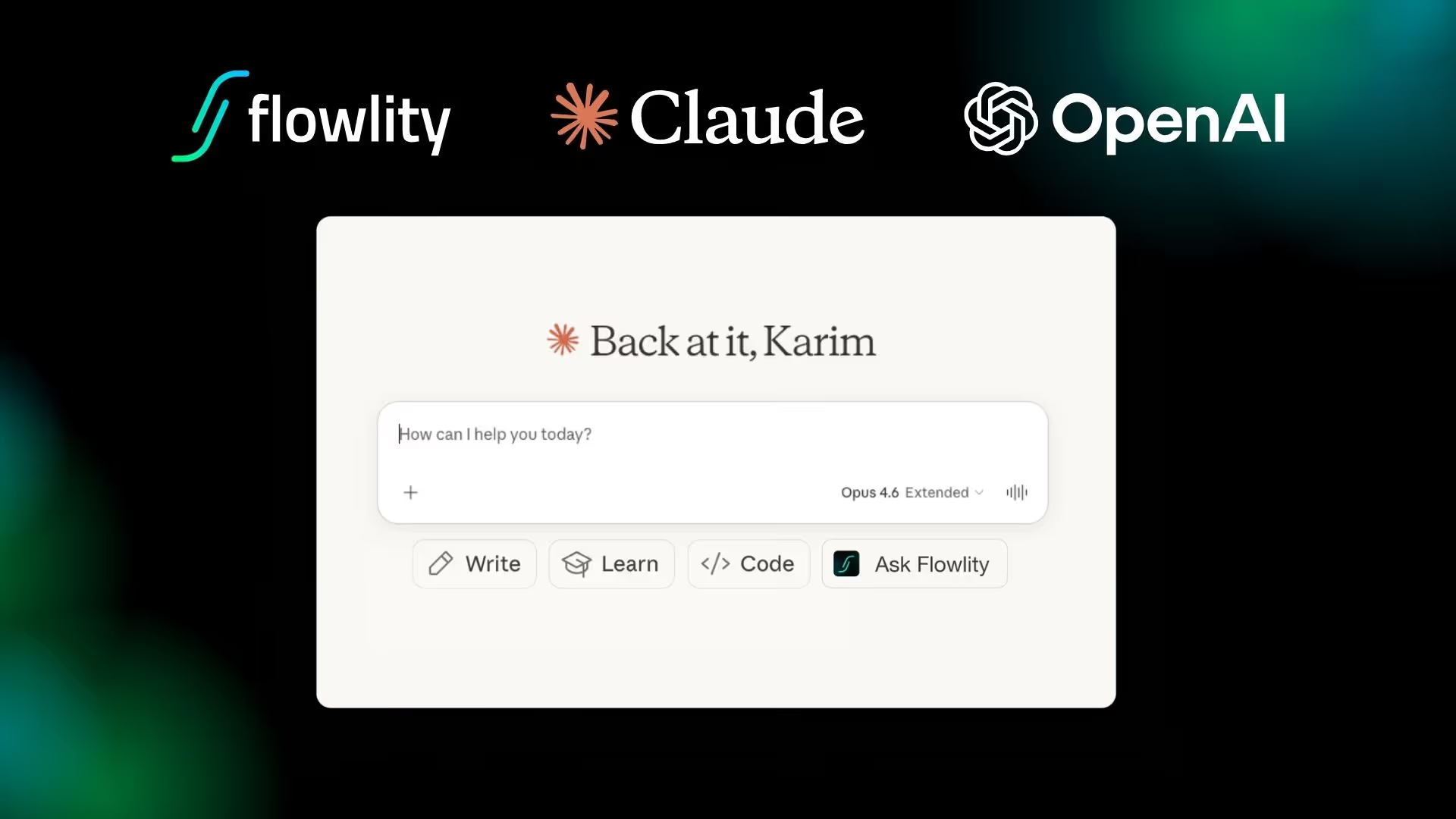
El MCP de Flowlity: consulta, simula y decide directamente
El MCP de Flowlity conecta tus datos Supply Chain con tu asistente IA. Consulta en lenguaje natural, simula y decide desde Claude o ChatGPT.
Recursos
Todos
Webinars
Informes
Articulos
Casos de éxito
April 10, 2026
El MCP de Flowlity: consulta, simula y decide directamente
El MCP de Flowlity conecta tus datos Supply Chain con tu asistente IA. Consulta en lenguaje natural, simula y decide desde Claude o ChatGPT.
January 30, 2026
Herramientas de automatización supply chain escalables
Herramientas de automatización Supply Chain escalables para empresas en crecimiento y expansión retail. Encuentra la solución adaptada a tus flujos.
November 27, 2025
Software de gestión de inventarios para Food & Beverage
Compara Flowlity, Katana, Relex, QuickBooks y Odoo: encuentra el software F&B que se adapta a tu Supply Chain para reducir el desperdicio.
November 13, 2025
Los mejores software de demand planning para pymes
Compara Flowlity, Netstock, Streamline y Datup: encuentra el software IA de demand planning que se adapta a tu pyme. Comparativa 2026.
November 6, 2025
Top supply chain planning solutions for manufacturers: Flowlity vs ToolsGroup vs Logility vs Blue Yonder vs Relex
Compare the top supply chain planning solutions for manufacturers — ToolsGroup, Logility, Blue Yonder, Relex, and Flowlity. Discover how Flowlity’s AI-driven forecasting and dynamic inventory optimization deliver fast ROI, higher service levels, and simpler collaboration
November 6, 2025
Machine learning en supply chain: caso Plum Living
Descubra cómo Plum Living redujo su inventario un 21% con machine learning en planificación supply chain. Un caso real de IA aplicada.
November 6, 2025
Digitalización del S&OP con IA: guía estratégica
Digitaliza tu S&OP con IA y automatización: guía estratégica para responsables Supply Chain. Buenas prácticas y beneficios medidos.
November 6, 2025
Buenas prácticas S&OP: optimiza tu proceso con IA
Automatización del S&OP: cómo la IA evoluciona el proceso de Ventas y Operaciones hacia más agilidad y predicción. Webinar bajo demanda.
November 6, 2025
Predictive analytics in Supply Chain: how data empowers prediction to avoid disruptions
Discover how predictive analytics in supply chain helps anticipate disruptions, optimize safety stocks, and improve service levels. Free whitepaper.
November 6, 2025
Machine learning y supply chain: hacia la madurez de datos
Descubra cómo el machine learning transforma la gestión de la cadena de suministro. Guía práctica gratuita sobre madurez y calidad de datos.
November 6, 2025
Crecimiento y gestión de la cadena de suministro
Cómo construir una Supply Chain escalable para apoyar el crecimiento, reducir rupturas y optimizar el inventario. Buenas prácticas y casos reales.
November 6, 2025
Modelos de previsión con IA en la supply chain
Cómo la IA transforma la previsión Supply Chain: enfoque probabilístico vs modelos clásicos. Masterclass con Arnaud Cadas, R&D Flowlity.
See More Content
August 27, 2023
Mejorar la visibilidad end-to-end en la supply chain
La visibilidad end-to-end en la cadena de suministro es clave frente a escasez y subidas de precios. Acceda a nuestro webinar experto.
September 28, 2023
Modelos de previsión con IA en la supply chain
Cómo la IA transforma la previsión Supply Chain: enfoque probabilístico vs modelos clásicos. Masterclass con Arnaud Cadas, R&D Flowlity.
January 29, 2024
Buenas prácticas S&OP: optimiza tu proceso con IA
Automatización del S&OP: cómo la IA evoluciona el proceso de Ventas y Operaciones hacia más agilidad y predicción. Webinar bajo demanda.
September 29, 2023
Predictive analytics in Supply Chain: how data empowers prediction to avoid disruptions
Discover how predictive analytics in supply chain helps anticipate disruptions, optimize safety stocks, and improve service levels. Free whitepaper.
September 29, 2023
Machine learning y supply chain: hacia la madurez de datos
Descubra cómo el machine learning transforma la gestión de la cadena de suministro. Guía práctica gratuita sobre madurez y calidad de datos.
September 29, 2023
Crecimiento y gestión de la cadena de suministro
Cómo construir una Supply Chain escalable para apoyar el crecimiento, reducir rupturas y optimizar el inventario. Buenas prácticas y casos reales.
March 20, 2024
Digitalización del S&OP con IA: guía estratégica
Digitaliza tu S&OP con IA y automatización: guía estratégica para responsables Supply Chain. Buenas prácticas y beneficios medidos.
April 13, 2026
El MCP de Flowlity: consulta, simula y decide directamente
El MCP de Flowlity conecta tus datos Supply Chain con tu asistente IA. Consulta en lenguaje natural, simula y decide desde Claude o ChatGPT.
January 30, 2026
Herramientas de automatización supply chain escalables
Herramientas de automatización Supply Chain escalables para empresas en crecimiento y expansión retail. Encuentra la solución adaptada a tus flujos.
November 27, 2025
Software de gestión de inventarios para Food & Beverage
Compara Flowlity, Katana, Relex, QuickBooks y Odoo: encuentra el software F&B que se adapta a tu Supply Chain para reducir el desperdicio.
November 13, 2025
Los mejores software de demand planning para pymes
Compara Flowlity, Netstock, Streamline y Datup: encuentra el software IA de demand planning que se adapta a tu pyme. Comparativa 2026.
November 5, 2025
Top supply chain planning solutions for manufacturers: Flowlity vs ToolsGroup vs Logility vs Blue Yonder vs Relex
Compare the top supply chain planning solutions for manufacturers — ToolsGroup, Logility, Blue Yonder, Relex, and Flowlity. Discover how Flowlity’s AI-driven forecasting and dynamic inventory optimization deliver fast ROI, higher service levels, and simpler collaboration
March 20, 2024
Digitalización del S&OP con IA: guía estratégica
Digitaliza tu S&OP con IA y automatización: guía estratégica para responsables Supply Chain. Buenas prácticas y beneficios medidos.
Previsión de la demanda con IA: caso de éxito Saint-Gobain Sekurit
Cómo Saint-Gobain Sekurit mejoró la precisión de sus previsiones en un 15%, redujo el inventario un 9,25% y elevó el nivel de servicio al 97,2% gracias a la solución de planificación de la demanda con IA de Flowlity.
August 25, 2023
Caso Danone: reaprovisionamiento automatizado con IA
Descubra cómo Danone mejoró su nivel de servicio y redujo el exceso de inventario con reaprovisionamiento automatizado y optimización IA.
August 26, 2023
Optimización del packaging en La Redoute
En un contexto donde el e-commerce genera cada vez más residuos, elegir el embalaje adecuado es clave para el impacto ambiental y la experiencia cliente.
May 15, 2024
Machine learning en supply chain: caso Plum Living
Descubra cómo Plum Living redujo su inventario un 21% con machine learning en planificación supply chain. Un caso real de IA aplicada.
.svg)




.svg)