.svg)
.svg)
Machine Learning Supply Chain Platforms: AI for Planning
The upgrade most teams think they need is a better forecast. The one that actually changes their Supply Chain is stranger: they stop trying to predict a single number at all.
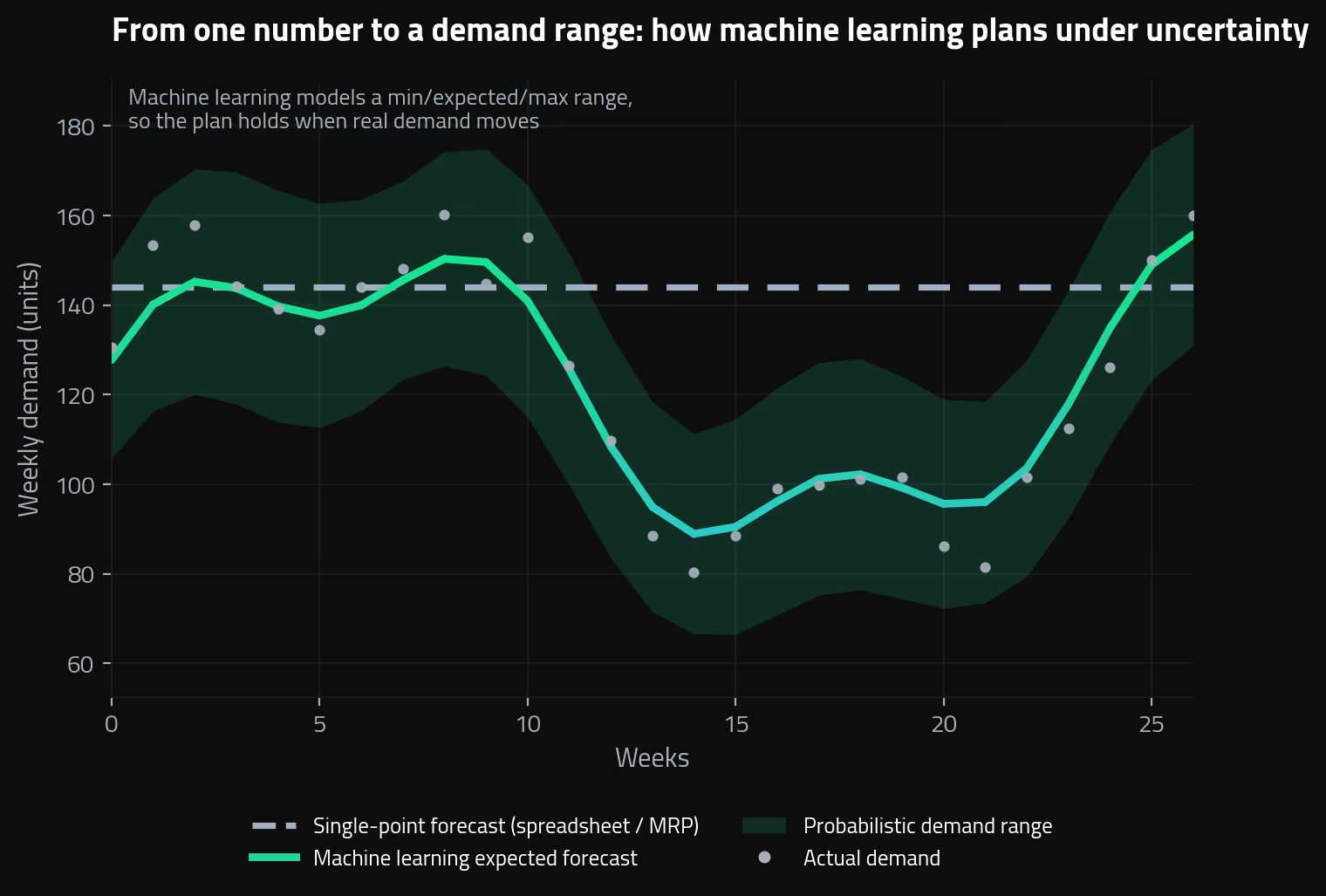
For decades, planning ran on one figure per product per period, typed into a spreadsheet cell. It felt precise. It was usually wrong, just wrong in a way nobody measured until the stockout or the write-off showed up. Machine learning Supply Chain platforms break that habit. Instead of one best guess, they learn demand patterns from data and plan around a range of outcomes. That move, from a point to a distribution, is what separates a real machine learning platform from a spreadsheet with a trend line bolted on.
Why spreadsheet planning quietly breaks as you scale
Most companies still run large parts of Supply Chain planning in Excel, and for good reason: it is flexible, familiar, and free to start. The trouble is that flexibility hides the cost. Data gets consolidated by hand from several systems. Visibility stops at the edge of the file. Forecasts lean on the intuition of whoever owns the workbook, and that knowledge walks out the door when they do.
The failure mode is rarely a single big miss. It is being long and short at the same time. In conversations with a seasonal consumer goods importer, the pattern was textbook: a single master forecast fed several sales channels, each with long overseas lead times. Over forecast one channel and stock piled up. Under forecast another and a shortage appeared the same week, on the same catalogue. A spreadsheet cannot resolve that tension because it commits to one number and then defends it. As portfolios grow and lead times stretch, the gap between the plan and reality widens faster than a monthly review can close it.
What a machine learning Supply Chain platform actually is
A machine learning (ML) Supply Chain platform is software that uses artificial intelligence (AI) and advanced data analytics to automate and improve planning decisions. Rather than applying a fixed formula, it studies large volumes of historical and live data and produces predictive recommendations that adapt as conditions change.
The practical difference is how many signals it can weigh at once. A machine learning model considers demand history, seasonality, supplier lead times, production constraints, promotions, pricing, and external market signals together, then updates itself as new data arrives. That lets it answer the operational questions planners actually ask: what will demand look like next month, how much stock should we hold, when should we reorder, and how do we avoid a stockout without inflating inventory. The result is a shift from reacting after the fact to deciding ahead of it.
The real shift: from a single number to a demand range
Traditional planning, whether in Excel or classic material requirements planning (MRP), is deterministic. It assumes demand, supply, and lead times behave like fixed inputs, then propagates that single assumption through the plan. Reality does not cooperate, so the plan is corrected by hand, again and again, which is the gap that demand-driven MRP and probabilistic AI set out to close.
Machine learning platforms take the opposite stance. They treat demand as a probability distribution and plan for the whole range, from a cautious low to an optimistic high, with an expected path in between. Safety stock stops being a static parameter and becomes a buffer that flexes with real volatility. This is the mechanism most generic AI coverage skips, and it is where the measurable gains come from. McKinsey estimates that AI-driven forecasting can cut Supply Chain errors by 20 to 50% and reduce lost sales from product unavailability by up to 65%.
Where machine learning changes planning day to day
Machine learning does not just sharpen the forecast. It reshapes four connected parts of the planning process.
Demand forecasting becomes data driven rather than intuition led. Models process thousands of demand signals at once to produce forecasts across several horizons, which lets planners see shifts earlier and align purchasing before the shortage forms. At Saint-Gobain, this approach lifted forecast accuracy by about 15% at the item level, giving the team a reliable base plan to work from instead of a number they distrusted.
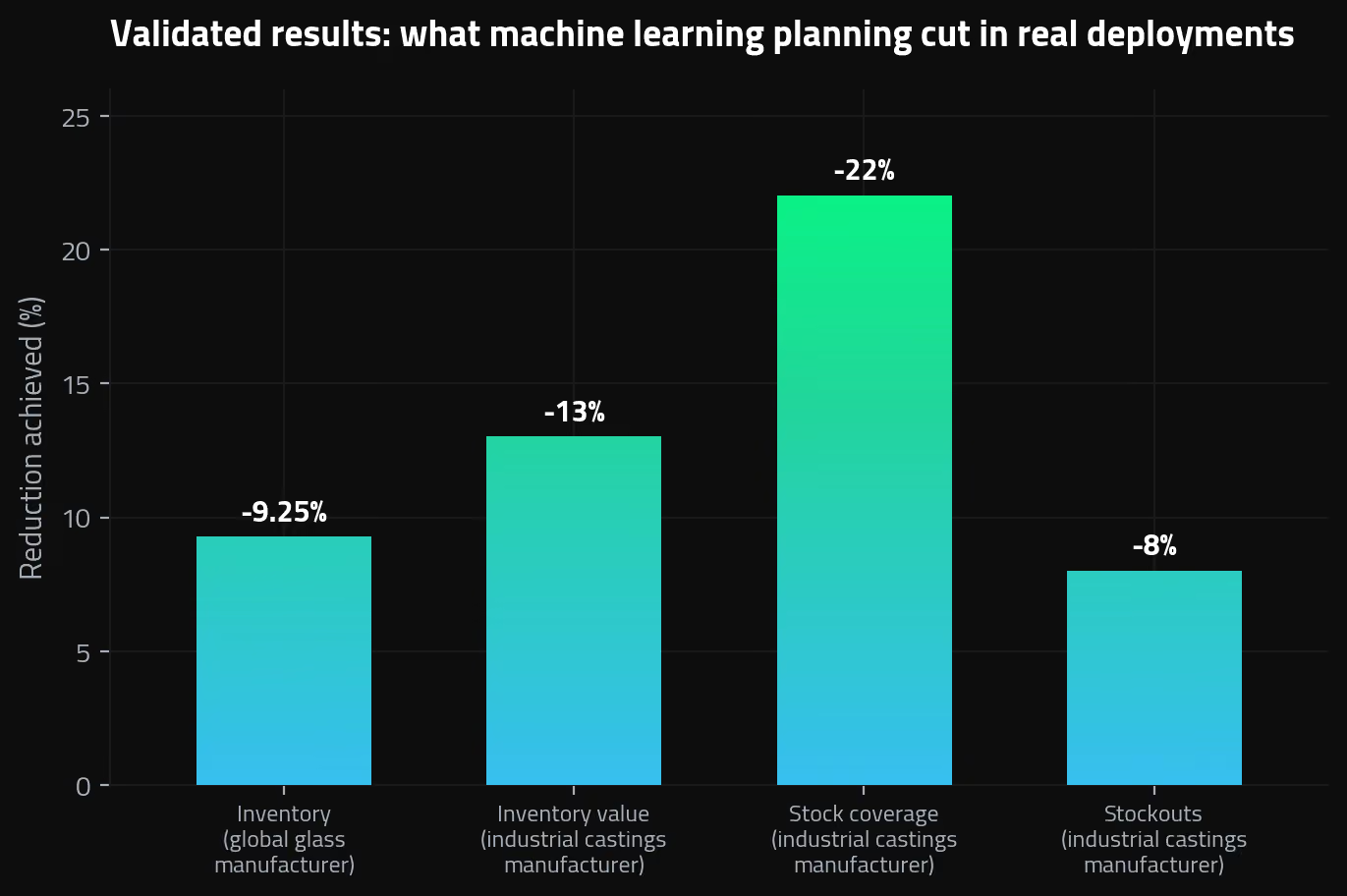
Inventory optimization turns the forecast into the right stock in the right place. Because the platform continuously weighs demand signals against supply constraints, it recommends stock levels that protect service without tying up cash. The same manufacturer cut inventory by 9.25% while lifting its service level from 95.8% to 97.2%, proof that carrying less and serving more are not opposites when the buffer is calculated dynamically.
Automated replenishment removes the manual math. Instead of recalculating order quantities by hand, planners receive purchase proposals they review and approve, part of the wider move toward automation and AI agents in the Supply Chain. This frees hours for the decisions that need judgment, and it is where mid-market teams feel the change first, because it lets a small team support a much larger operation.
Collaboration closes the loop across partners. When demand signals and forecasts are shared with suppliers rather than trapped in a file, suppliers can anticipate orders and adjust production, which steadies the whole network and reduces the shortages that ripple upstream.
What this looks like in real deployments
Beyond the theory, the impact shows up in operational numbers that hold up to scrutiny.
Magotteaux, an industrial castings manufacturer, used machine learning planning to reduce inventory value by 13% and stock coverage by 22% while cutting stockouts by 8%, integrating the platform directly with its enterprise resource planning (ERP) system. As its Sales and Operations Planning manager put it, the tool first exposed real differences between regional markets, revealing that one region was consistently ordering more than it needed. That is machine learning earning its place: not a flashy prediction, but a quieter correction of a bias no spreadsheet had surfaced.
Plum Living, a fast-growing interior design brand, tells a similar story. After moving off spreadsheets to AI-driven planning, it gained replenishment visibility across its suppliers that it had never had before, and freed the team from patching workbooks by hand. The human side matters just as much. At an automotive components manufacturer, planners were still building a critical stock plan in Excel during a volatile period, and the friction was not the model, it was the uncertainty around it. People worried about what an automated tool meant for their roles. That is worth naming plainly, because adoption succeeds when planners see the platform as leverage rather than a threat. The systems that stick are the ones that hand judgment back to people while taking the manual calculation away.
Why mid-market teams are moving now, and how to start
The shift from spreadsheets to machine learning platforms is accelerating for reasons that compound: portfolios and supplier networks keep growing, demand keeps getting noisier, operational data is finally abundant enough to learn from, and competitors who forecast better win on both cost and service. What changed most recently is accessibility. Modern platforms are built to deploy in weeks, not years, and to run without a dedicated forecasting department, which is why mid-market companies, long stuck with spreadsheets, are often the ones adopting fastest. This is part of a broader shift toward an automated Supply Chain 4.0, and it is why it pays to be deliberate when comparing the available AI/ML supply chain platforms, since they differ sharply in how much Supply Chain expertise they build in.
Starting well is less about the algorithm than the foundation beneath it. Machine learning needs structured, trustworthy data, so the teams that succeed usually spend early effort on building the data foundation the models depend on and agree on a few clear service targets before scaling AI across the network. From there, the platform augments the planner: it handles the heavy analysis, and the planner owns the exceptions, the trade offs, and the conversations with suppliers and commercial teams.
For a practical walkthrough of how advanced optimization and AI raise Supply Chain efficiency, this webinar shows the approach in action.
Planning for a range, not a number
The companies pulling ahead are not the ones with the single most accurate forecast. They are the ones that stopped betting the plan on one number and started planning for the range of outcomes their Supply Chain actually faces. Machine learning platforms make that practical at scale, turning volatility from something to survive into something to plan around.
If your team is still planning in spreadsheets, the question worth asking is not whether your forecast could be a little better. If you want to see what your Supply Chain could do if it planned for uncertainty by design, book a free demo.
Level up your supply chain with AI.
Get a demo
FAQ
Find everything you need to know right here.
Does machine learning replace human planners?

No. They automate far more of the work than people expect, but they do not replace the planner. These platforms take over the large majority of routine planning tasks, the data crunching, the recalculation, the first-pass forecasts and replenishment proposals Flowlity, for example, automates up to 95 percent of this repetitive work. What they do not automate is judgment: planners still validate decisions, manage the exceptions the model flags, and align the plan with commercial priorities. In practice, this changes what the job feels like: less time on manual recalculation, more time on scenarios, supplier collaboration, and the judgment calls a model cannot make. Adoption tends to succeed when teams treat the tool as leverage for planners rather than a substitute for them.
What is a machine learning Supply Chain platform?
It is a planning solution that uses machine learning (ML) algorithms to improve demand forecasting, inventory optimization, and replenishment decisions. Unlike tools built on static rules or spreadsheets, it continuously analyses historical and real time data to generate predictive recommendations. Rather than committing to a single forecast number, it models demand as a range of likely outcomes, so plans stay robust when actual demand moves. The goal is to help planning teams make faster, more reliable decisions while reducing inventory risk and operational complexity.
How accurate are machine learning (ML) demand forecasts?
This is the first question most buyers ask, and the honest answer is that there is no single universal accuracy figure, because it depends heavily on the industry, the product, and the quality of the underlying data. A fast moving staple forecasts very differently from a long tail seasonal item. What machine learning does better than a person is weigh many demand signals at once, seasonality, promotions, lead times, price changes, and spot patterns a planner scanning a spreadsheet cannot hold in their head, then update the prediction the moment new data lands rather than once a month. That predictive analytics edge is also where the time savings come from, since planners review the exceptions the model flags instead of rebuilding forecasts by hand. At Camif, a mid-market furniture retailer, that shift freed the equivalent of a full-time role, around 1,760 hours a year. The more useful benchmark is forecast value add, which measures how much better a machine learning forecast performs against a simple statistical baseline. What matters operationally is not chasing a perfect number but shrinking the error enough to carry less safety stock at the same service level.
Can machine learning Supply Chain software integrate with existing ERP systems?
Yes. Most modern platforms are designed to connect with existing enterprise resource planning (ERP), warehouse management, and legacy planning systems, including SAP, Microsoft Dynamics, and Oracle. Those integrations let the platform pull historical demand, current inventory, supplier lead times, and operational constraints, which is exactly the data the models need to produce accurate forecasts and replenishment proposals. A clean, bidirectional link to the ERP, set up with the right integration and security foundations, is usually what turns recommendations into orders planners can act on without rekeying data.
Can mid-sized companies benefit ML for their Supply Chain, or is this only for large enterprises?
Mid-sized companies often benefit the most. Many still plan in spreadsheets, which creates real inefficiency as they scale, yet they rarely have a large planning team or heavy IT resources to run traditional Supply Chain software. Modern machine learning platforms are increasingly built to deploy quickly and run lean, which puts advanced forecasting and inventory optimization within reach of companies that were previously priced out of it. For the smallest teams, lighter plug and play offers like Flowlity Lite, a streamlined version of the platform that deploys in days rather than months, push that reach even further. That accessibility, as much as the algorithms, is what is driving adoption in this segment.
What is machine learning in Supply Chain?
Machine learning in Supply Chain is the use of algorithms that learn patterns from historical and live data and keep improving their own predictions as more data arrives, instead of following fixed rules a person codes by hand. In planning, it reads signals like past demand, seasonality, supplier lead times, and promotions to estimate what is likely to happen next and how uncertain that estimate is. The practical shift is from describing the past to anticipating the future, so teams can decide before a shortage or an overstock forms rather than reacting once it already has.
How do you implement machine learning in your Supply Chain?
Start smaller than most roadmaps suggest, and begin with data rather than algorithms. Consolidate clean demand and inventory history and connect the source systems, usually the enterprise resource planning (ERP), so the model has something reliable to learn from. Then pick one scope where the pain is clear, a category or a site, agree on the service targets that define success, and run the machine learning forecast alongside the current process before switching over. Modern platforms shorten this from the six-month projects of traditional tools to weeks, sometimes days for lighter deployments. Widen the scope once planners trust the output and the first results hold, rather than trying to automate everything at once.
How can you use machine learning to optimize your Supply Chain?
Most teams start where the data is richest and the payback is quickest: demand forecasting. A model turns messy sales history into a forward view with a confidence range, which then feeds inventory and replenishment. From there it extends to setting dynamic safety stock that flexes with real volatility, generating replenishment and purchase proposals a planner reviews and approves, and sharing forecasts with suppliers so they can plan around you. The sequence matters more than the ambition: clean the core data first, agree on a few clear service targets, prove value on one scope, then widen it. Used this way, machine learning removes the manual recalculation and frees planners for the judgment calls a model cannot make.
What are the main use cases of machine learning in Supply Chain?
Four recur across industries. Demand forecasting is the foundation, weighing many signals at once to predict demand as a range rather than a single number. Inventory optimization turns that forecast into the right stock in the right place, protecting service without tying up cash. Replenishment and procurement automation generate order proposals so planners stop recalculating by hand. Supplier collaboration shares demand signals upstream so partners can anticipate rather than react. A fifth is growing fast: scenario simulation, testing how a plan holds under a demand spike or a supply disruption before committing to it. Which of these matters most varies by business, easiest to see across Flowlity's customer stories. For Plum, a fast-scaling design brand, the first win was simply the replenishment visibility it never had on spreadsheets.